
Last updated November 15, 2026
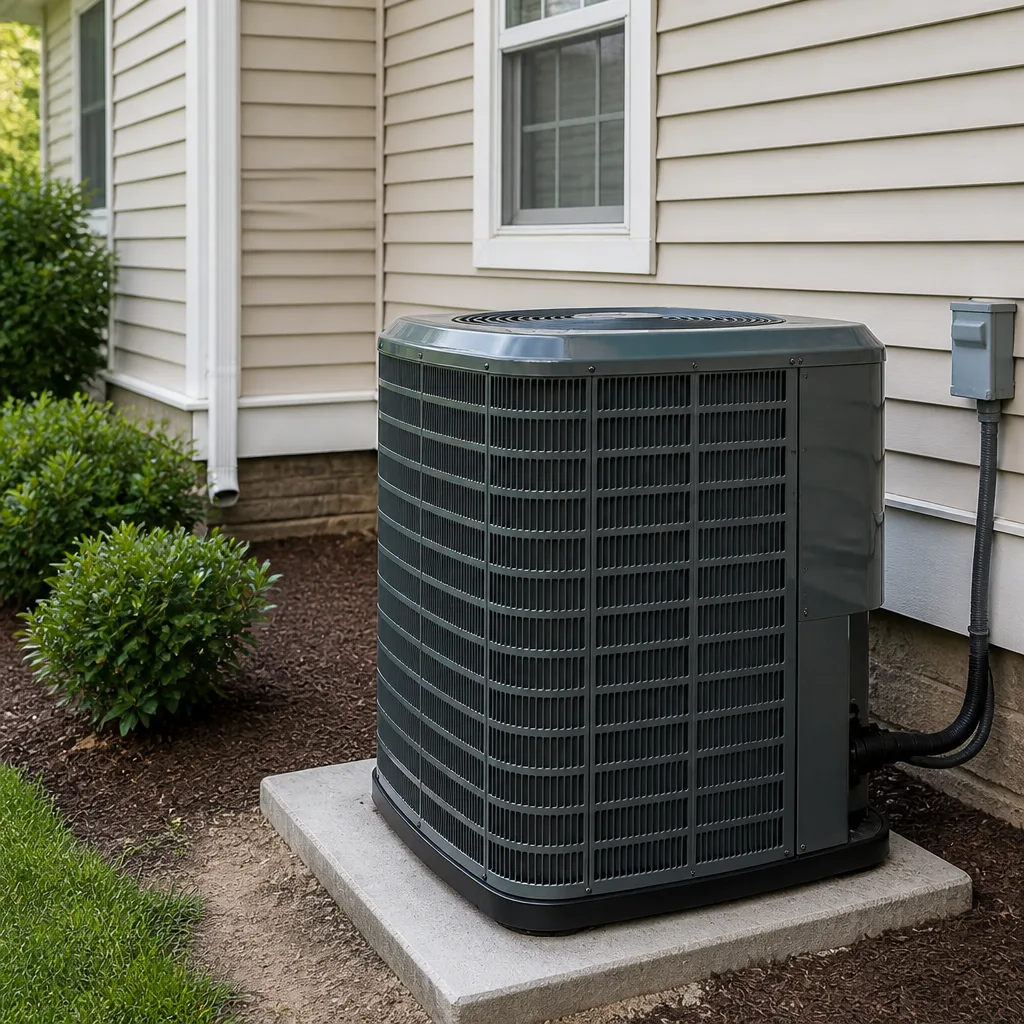 AC repair
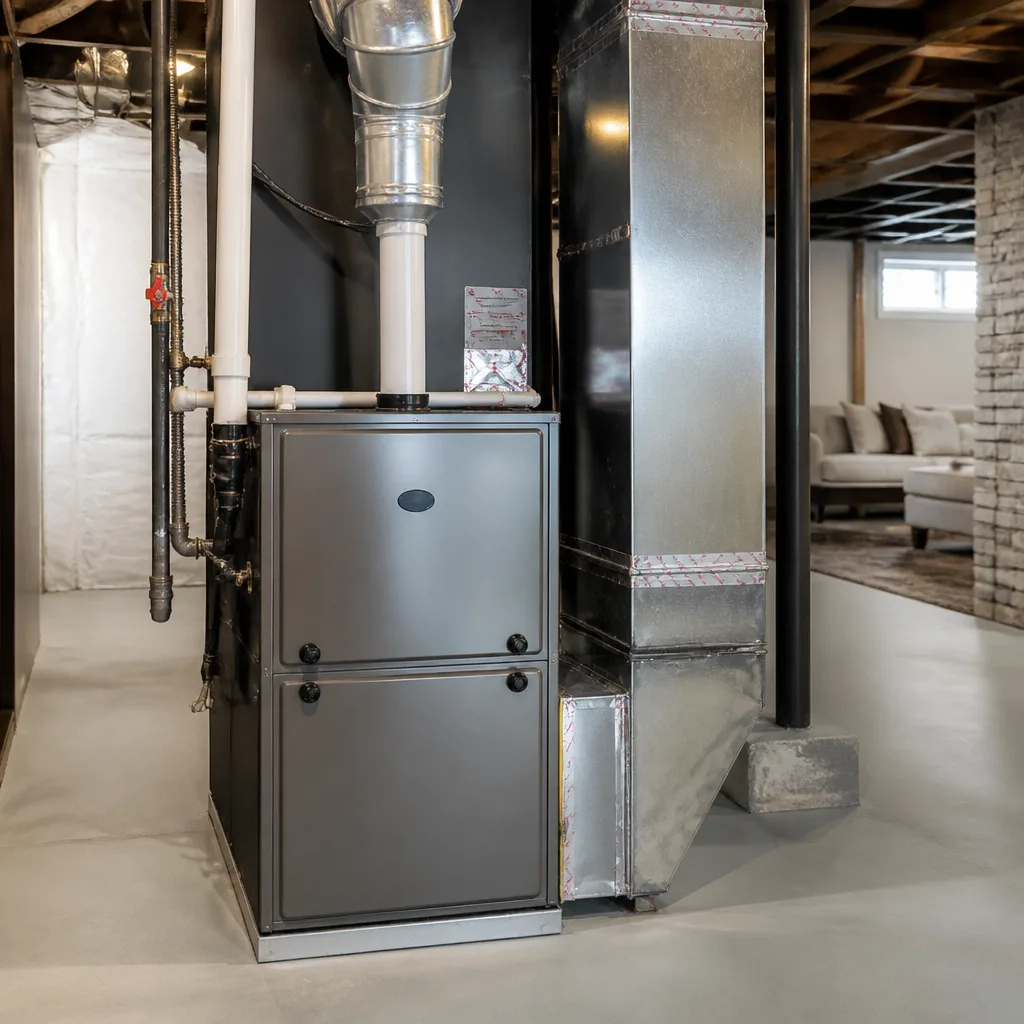 Furnace & heating
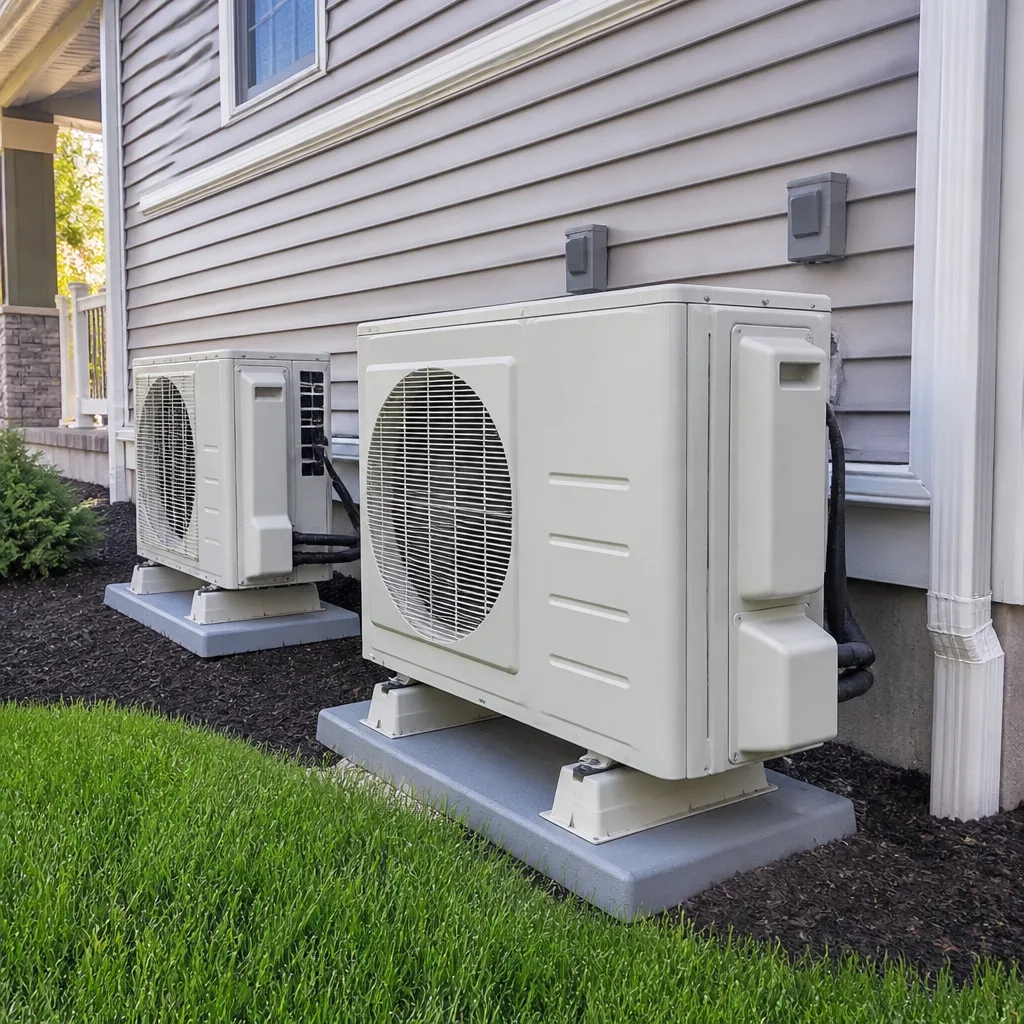 Heat pumps
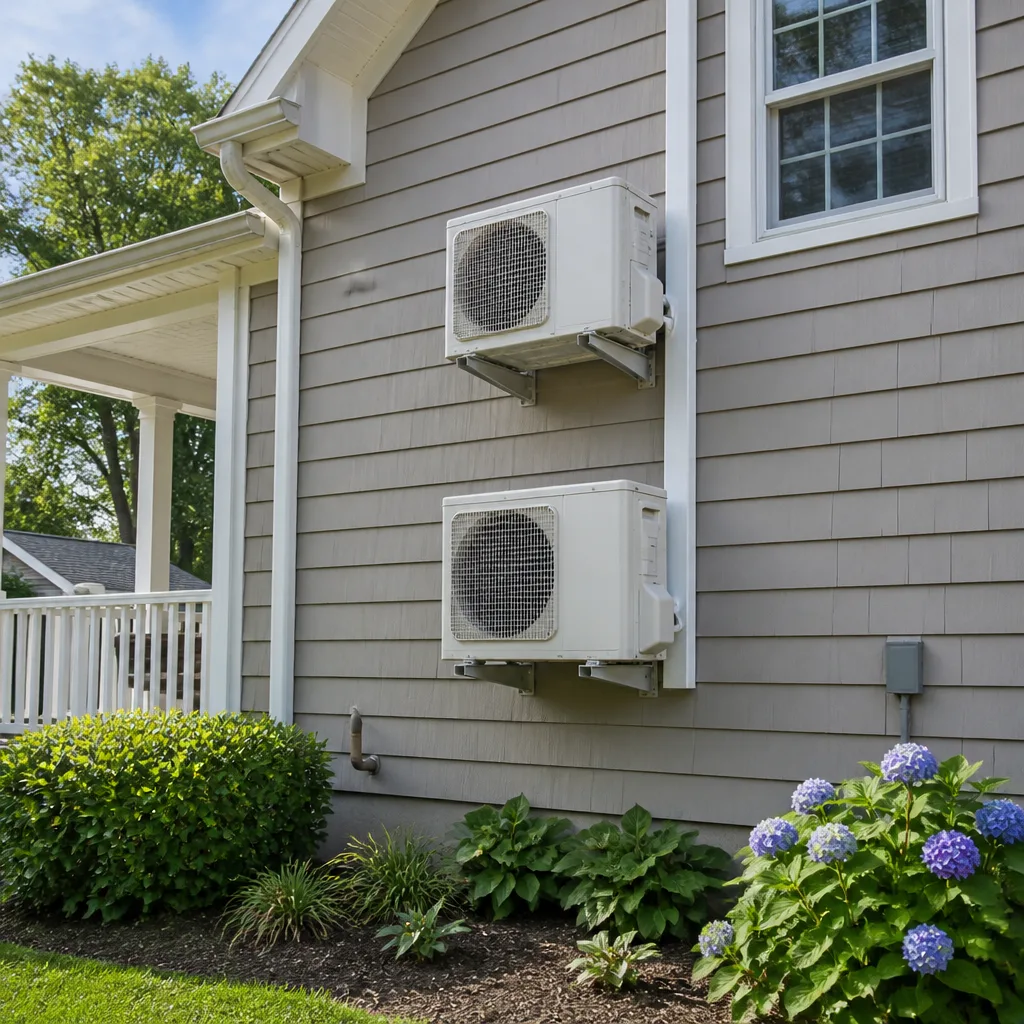 Ductless mini splits
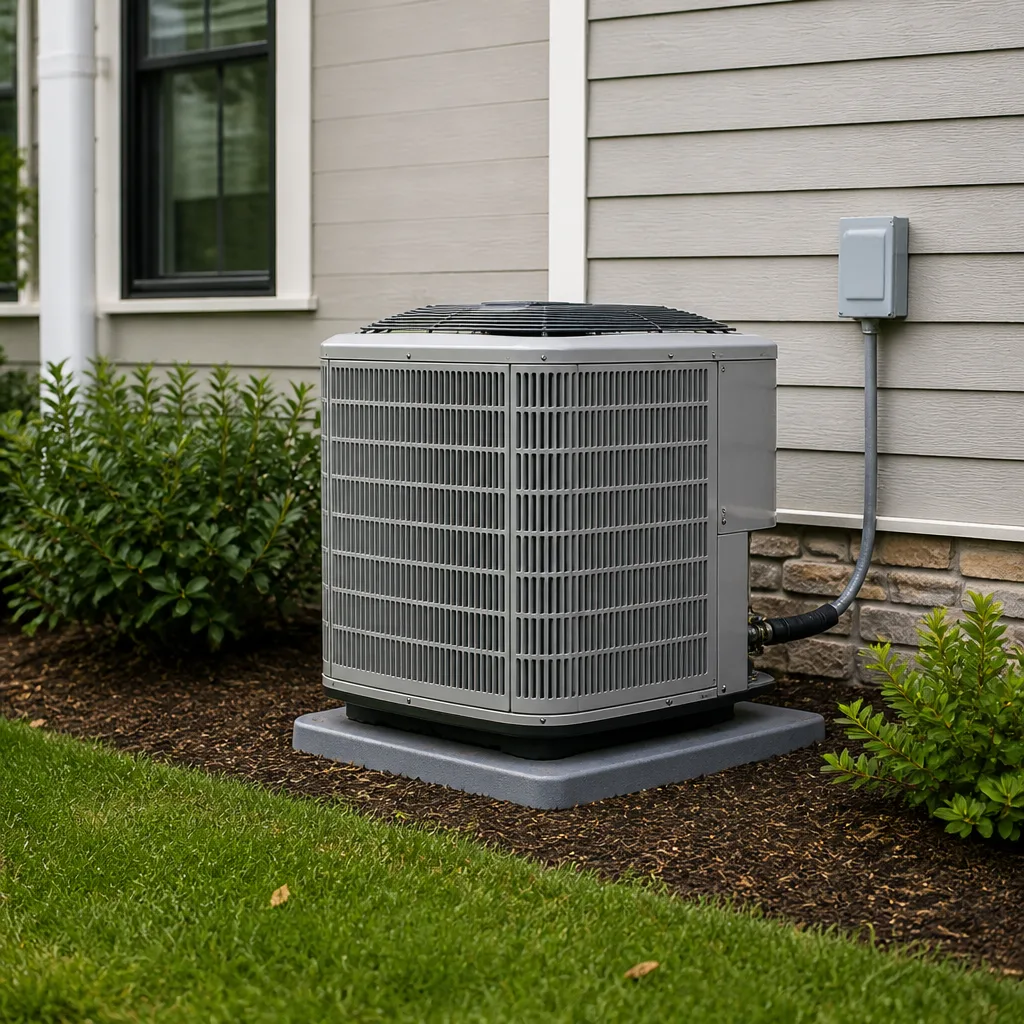 Carrier
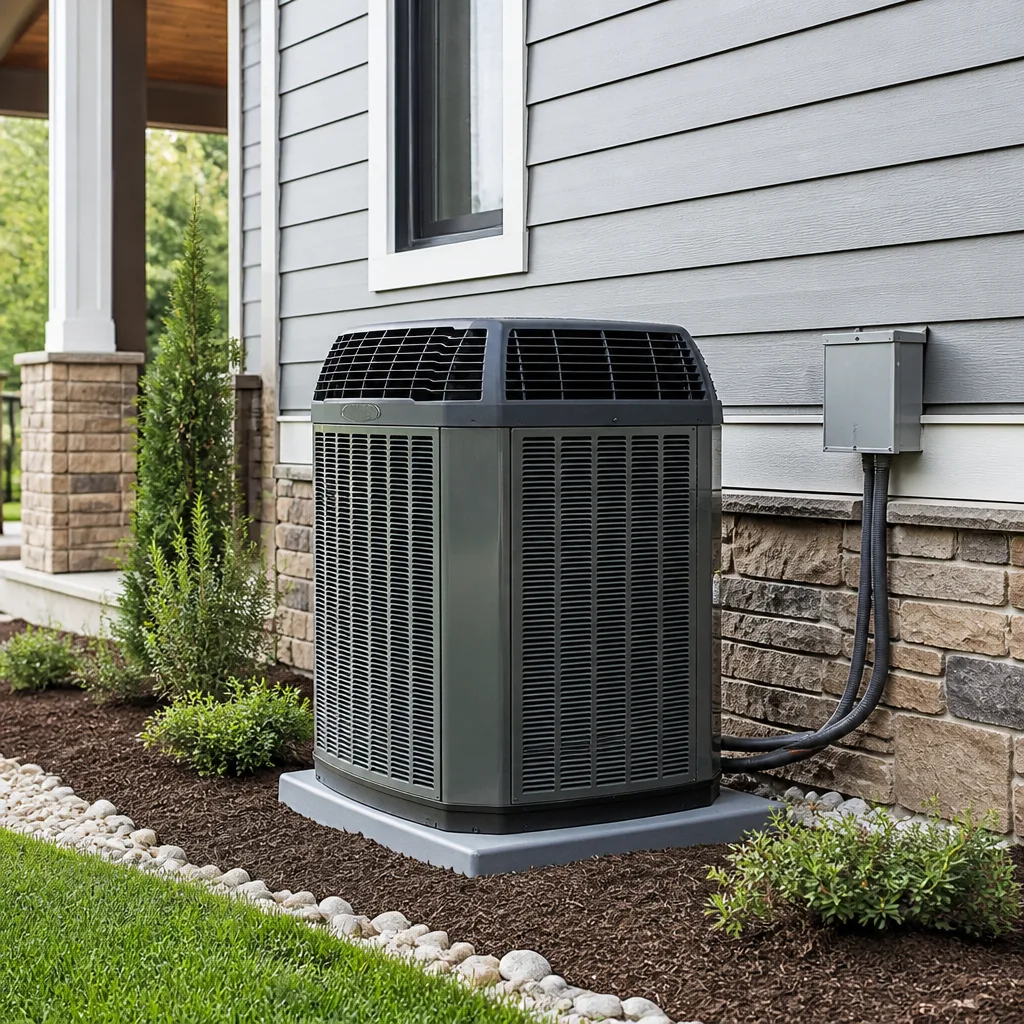 Trane
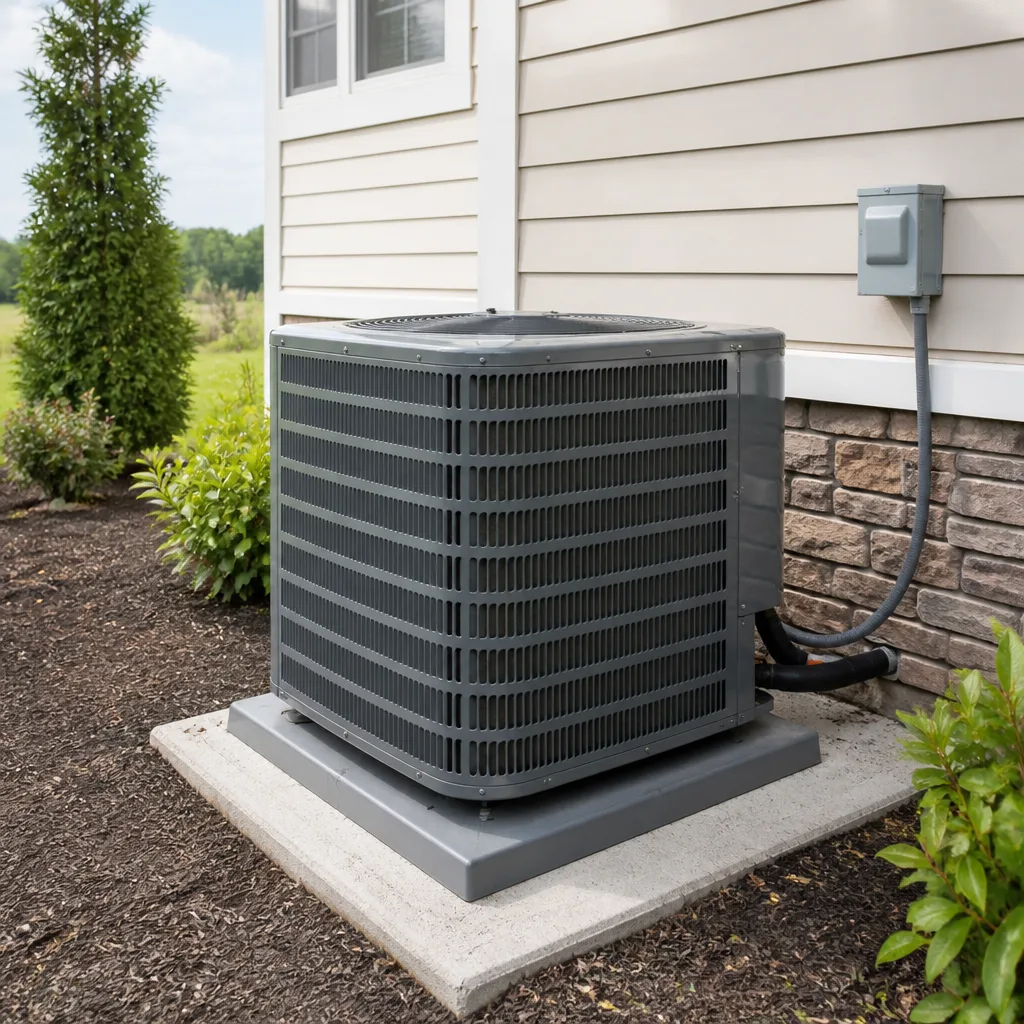 Goodman
Seasonal tune-up and full diagnostic on your Carrier, Trane, or Goodman system - readings shown to you before any repair is proposed
Diagnosis first, numbers second - you approve the repair price before a single part goes in.
Get your free estimateAC Installation Maintenance Checklist for Richardson Homeowners
Most AC maintenance checklists you’ll find online are manufacturer PDFs with a new cover page. They cover the equipment, not the homeowner, and none of them account for what happens between the day the installer leaves the driveway and the end of that first cooling season.
That gap matters. A system installed correctly can still run below its rated capacity within two summers if the first months of ownership are handled badly. There’s a break-in window after installation – roughly the first 90 days – where your habits, your filter schedule, and a handful of things only a technician can check decide whether the equipment settles into an efficient rhythm or a strained one.
This guide covers that window in detail, then the years that follow. You’ll learn what to check yourself, what to leave alone, how to confirm the installation was permitted and inspected, and how to set an annual schedule that matches Richardson’s long cooling season – not a calendar written for a milder climate. If you’d rather hand all of it to a technician who already knows your equipment, Juniper AC Repair works on nine major brands and can pick up wherever this checklist leaves off.
Quick Answer
After AC installation in Richardson, your maintenance priorities are: keep filters clean on a 30-day summer schedule, leave the thermostat on one setpoint rather than adjusting it daily, watch for abnormal runtimes or warm supply air during the first 90 days, and confirm that your installer pulled a permit and scheduled the inspection sign-off. Around the one-year mark, arrange a professional tune-up timed for late spring, before the long cooling season starts. Everything beyond filter changes, thermostat settings and visual checks should go to a licensed technician.
Styles & brands we work with
- AC repair
- Furnace & heating
- Heat pumps
- Ductless mini splits
- Carrier
- Trane
- Goodman
Table of Contents
- Why the first 90 days after installation matter more than any other period
- What you control after installation and what you shouldn’t touch
- How to verify your installer pulled a permit in Richardson
- Ductwork pressure testing: the step most installers skip
- Setting an annual maintenance schedule around Richardson’s season length
- Warning signs in the first year that mean call, don’t wait
- A month-by-month checklist for your first year
- Brand-specific notes on common Richardson systems
Why the first 90 days after installation matter more than any other period
A new air conditioner doesn’t arrive at peak efficiency on day one. The refrigerant charge settles, the system’s internal pressures stabilize as it runs under real load, and the ductwork either proves it can move the designed airflow or it doesn’t. That settling period is what we mean by break-in. It’s not a mechanical requirement in the manual, and no manufacturer will mail you a reminder about it. But it’s the window where small installation issues either get caught or quietly become permanent.
In Richardson, the first summer is a hard test. A system installed in spring meets a cooling season that runs long, with stretches of sustained heat that push equipment harder than the national average the manufacturer tested against. A unit installed in October gets a gentler introduction and a full mild season to settle before its first real load. Both scenarios need watching, but the spring install needs it sooner.
Three things deserve attention during this window:
- Runtime behavior. A properly sized system in a well-sealed Richardson home should run in long, steady cycles rather than short bursts. Short cycling in the first month points at an airflow or charge issue, not a thermostat quirk.
- Supply air temperature. Air coming from your registers should feel distinctly cold, not just cool. If it feels lukewarm on a hot afternoon, the charge or the airflow needs checking before the system runs that way all summer.
- Refrigerant pressure signs. You can’t read gauges, and you shouldn’t try. What you can notice is ice forming on the refrigerant lines or the indoor coil, or the outdoor unit cycling on and off in a pattern that doesn’t match the thermostat’s call for cooling. Both are signs a technician should check pressures.
The point of the 90-day window isn’t that something will go wrong. It’s that if something did go wrong at installation, this is when it’s cheapest and easiest to correct. A charge adjustment in month two is a quick visit. The same issue discovered in year three may have stressed the compressor for two full summers.
What you control after installation and what you shouldn’t touch
The clearest line in HVAC maintenance runs between homeowner tasks and technician tasks. Most checklists blur it, which leads homeowners to either neglect things they could easily handle or attempt things that put them and their equipment at risk. Here’s where the line actually sits.
What you can and should do
- Change or clean the filter. In Richardson’s cooling season, that means roughly every 30 days during peak months. A clogged filter strains the blower and drops efficiency faster than almost anything else under your control.
- Set the thermostat and leave it. Pick a temperature you can live with and hold it. Constant adjustment makes the system work harder, not smarter, and the energy penalty shows up on your bill.
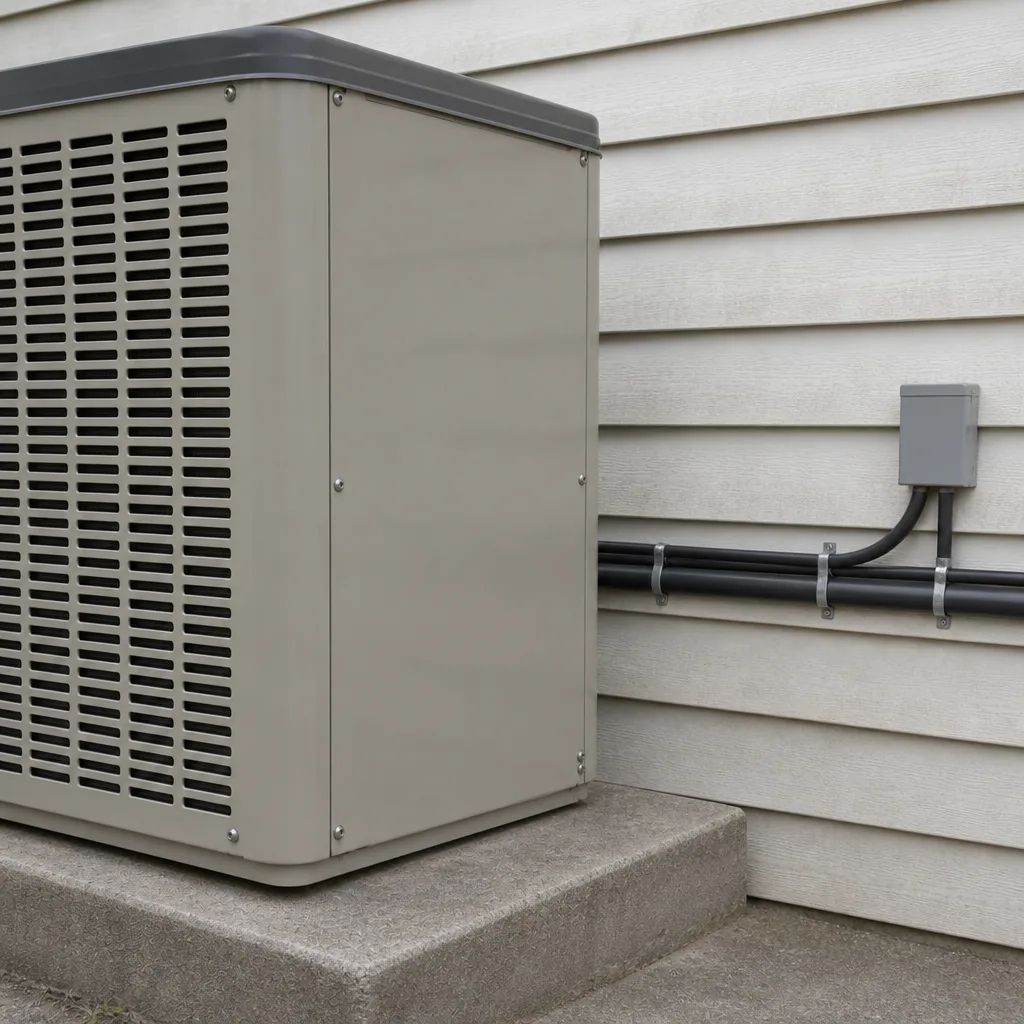
- Keep the outdoor unit clear. Trim vegetation back, clear leaves and debris from around the cabinet, and make sure nothing is stacked against it. Airflow around the condenser matters as much as airflow through the filter.
- Check the condensate drain path. A visual check that water is draining and the line isn’t blocked or algae-clogged prevents the most common summertime water damage call we see.
- Look and listen. New noises, vibration, ice, or water where it shouldn’t be. You’re not diagnosing; you’re reporting.
What belongs to a licensed technician
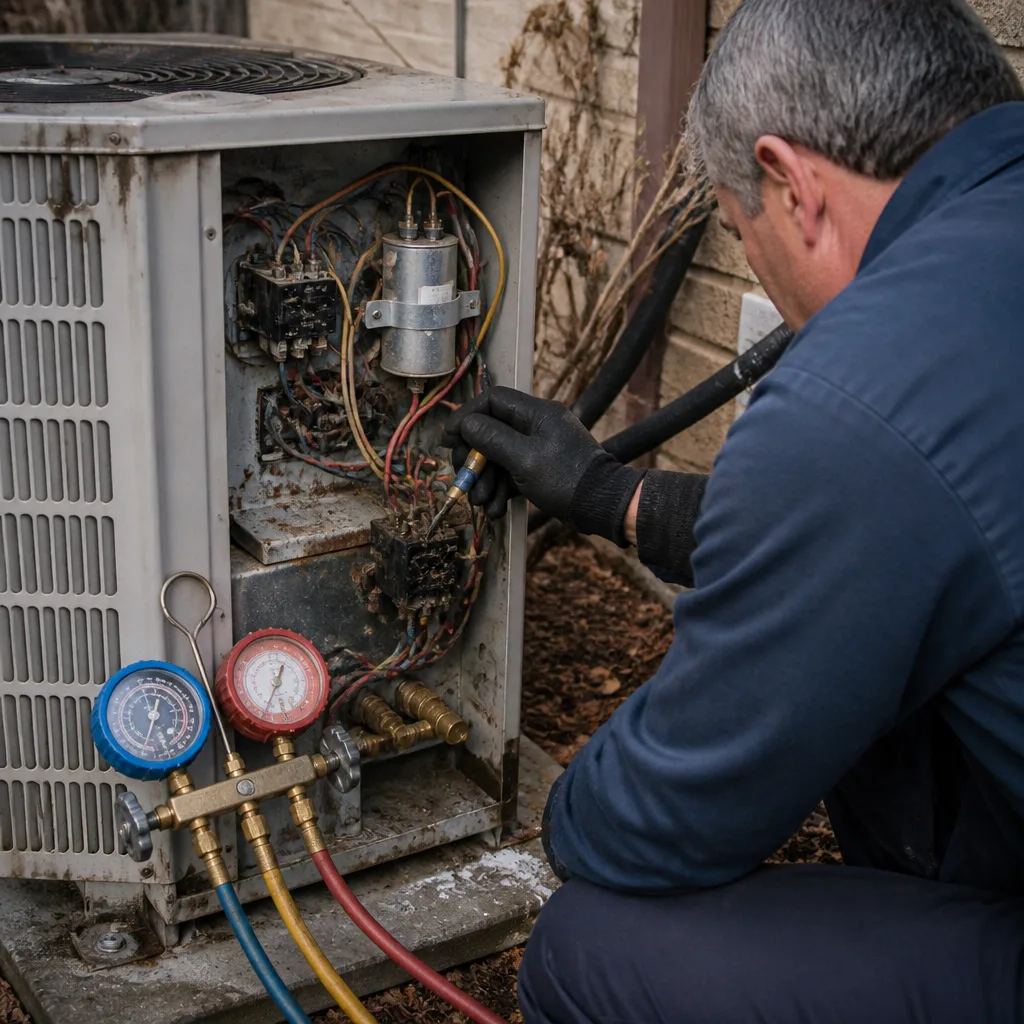
- Refrigerant handling. Checking and adjusting charge requires gauges, training and legal handling of refrigerant. This is not a homeowner task, and attempting it can damage the system and injure you.
- Electrical work. Capacitors, contactors, wiring and the disconnect at the outdoor unit all carry live voltage and stored charge. This is dangerous work that requires a technician.
- Ductwork changes. Sealing, resizing or rerouting ducts affects system pressure and performance in ways that need measurement, not guesswork.
- Compressor and coil work. Anything involving the sealed refrigerant circuit belongs to a professional, full stop.
The rule of thumb: if it needs a tool beyond a screwdriver and a garden hose, or if it involves electricity or refrigerant, call someone. If it’s a filter, a thermostat setting or a visual inspection, that’s yours. The best time to schedule AC installation follow-up checks is before the first summer peak, and a technician can verify in one visit what would take you a season of guessing.
How to verify your installer pulled a permit in Richardson
In most Texas cities, replacing an air conditioning system requires a permit, and the work requires inspection before it’s signed off. Richardson is no exception to that general pattern, and homeowners who skip this step often discover it years later at resale, when a buyer’s inspector asks for documentation that doesn’t exist. The permit protects you, not just the city. It creates a record that the installation was inspected by someone other than the company that did the work.
Here’s how to confirm your installation is properly permitted and inspected:
- Ask before work starts. When you accept an installation estimate, ask directly whether the permit is included. A clear yes or no tells you a lot about how the company operates.
- Get the permit number. Once the permit is issued, ask for the number. You can then verify it with the city’s building department. If the installer can’t produce a number, that’s a warning sign.
- Know what the inspection sign-off looks like. After the work is complete, a city inspector visits and either approves the installation or issues a correction notice. The approval should be documented – a stamped or signed inspection record, or a status update showing the permit closed as approved. Ask your installer for that documentation and keep it with your system paperwork.
- Don’t accept “we’ll handle it later.” An inspection that never happens is a permit that never closes. Follow up until you have the sign-off in hand.
If you’re not sure whether your current system was permitted, or you’re buying a home in Richardson with a recently replaced AC, that’s a reasonable thing to check before closing. It’s also the kind of question a technician can help you sort out when they’re already on site.
Ductwork pressure testing: the step most installers skip
Here’s the part of an AC installation nobody talks about at the kitchen table. The equipment is only half the system. The other half is the ductwork, and a perfectly good air conditioner connected to leaky or undersized ducts will underperform no matter how well it was installed.
Ductwork pressure testing measures how much air the system is losing before it reaches your rooms. In older Richardson homes, especially those built decades ago with ductwork that’s been patched and modified over the years, leakage can be significant. The result is a system that runs longer, cools unevenly, and costs more to operate than the equipment’s rating suggests it should.
Most installers skip this step because it’s extra work and it can surface problems that complicate the job. Homeowners never know to ask. That’s the gap.
What to request:
- Ask whether the installer tests static pressure after installation. This confirms the blower is moving the airflow the system was designed for.
- Ask about duct leakage testing if your home is older or your ducts have been modified. The answer tells you whether the installer is looking at the whole system or just the box.
- Ask about sealing if testing reveals leakage. Sealing accessible duct joints is a straightforward step that pays back in comfort and efficiency.
This is also the point where system sizing matters. An oversized unit cools fast, shuts off early, and never runs long enough to remove humidity properly. That’s a comfort problem in a Richardson summer, when humidity control is half the job. If your installer sized the system by square footage alone, without a room-by-room load calculation, ask about it. A system sized to your actual home performs better than one sized to a rule of thumb.
Setting an annual maintenance schedule around Richardson’s season length
National HVAC maintenance schedules are written for an average climate that doesn’t exist. They’ll tell you to schedule service in spring and fall and call it done. In Richardson, the cooling season runs long and the heating season is short and mild, which changes the math.
What that means for your schedule:
- Spring tune-up, timed early. Schedule your cooling system check before the first sustained heat arrives, not after. Once everyone’s AC is struggling, appointment calendars fill up. Early spring is the window when a technician has time to do the job thoroughly rather than squeeze it in.
- Filter changes, on a summer rhythm. Every 30 days during the heavy cooling months. That’s more often than a national schedule suggests, and it’s the single easiest thing you can do for your system’s efficiency.
- A fall check for the heating side. Your heating system gets less use here, but it still needs an annual look before winter. A furnace that sat idle for eight months can surprise you on the first cold morning. Juniper AC Repair also handles furnace repair, so you’re not hunting for a second contractor when the seasons change.
- One professional visit per system per year, minimum. That’s the baseline for keeping warranty coverage intact and catching small issues before they’re expensive.
The most common maintenance mistake in Richardson isn’t skipping tune-ups. It’s timing them wrong. A spring tune-up in June is a spring tune-up that happens in the middle of a heat wave, when every technician in the area is booked and your system is already under load.
Warning signs in the first year that mean call, don’t wait
Most system problems announce themselves well before they become failures. The homeowners who avoid big repair bills aren’t lucky; they call early. Here’s what should trigger a call during your first year of ownership:
- Ice on the outdoor unit or refrigerant lines. Ice means the system is struggling with charge or airflow. Turn it off and call. Running it with ice does damage.
- Warm air from the registers on a hot afternoon. Some temperature difference between rooms is normal. Supply air that feels lukewarm across the whole house is not.
- Short cycling. If the system runs in short bursts and never settles into a longer cycle, something’s off with sizing, charge or airflow.
- Water around the indoor unit. A clogged condensate line or a frozen coil can both cause this. It’s also the most common source of ceiling and floor damage from an AC system.
- New sounds. Grinding, rattling, or a clicking that wasn’t there before. These often mean a failing component, and catching them early keeps the repair small.
- Rising energy bills with no change in habits. Efficiency loss shows up on the bill before it shows up anywhere else.
Any of these during your first year is worth a call rather than a wait-and-see. A system under warranty that’s behaving oddly should be checked while the warranty is doing the heavy lifting. For a fast assessment of a Richardson system that isn’t cooling the way it should, Juniper AC Repair offers free estimates. Call (855) 419-6908. We answer 24/7. Fast dispatch from 7am to 7pm, Sunday through Friday.
A month-by-month checklist for your first year
This is the practical version. Print it, put it on the fridge, and treat the first year as the settling-in period it is.
Month 1
- Confirm the permit is pulled and note when inspection is scheduled.
- Record the installation date and the model and serial numbers of the indoor and outdoor units in one place.
- Locate your filter and note its size and type so replacements are easy to buy.
- Set the thermostat to one temperature and leave it. Resist the urge to tinker during the adjustment period.
Month 2
- Change or clean the filter.
- Walk the outdoor unit. Clear debris, check vegetation clearance, listen for new sounds.
- Note how long the system runs on a hot afternoon. Long cycles are right. Short bursts are not.
Month 3
- Change the filter again.
- Confirm the inspection has been completed and get the sign-off documentation.
- Feel the supply air on a hot day. It should be distinctly cold. If it isn’t, call.
- Check around the indoor unit for water or ice.
Months 4-9
- Filter check every 30 days during peak cooling.
- Monthly outdoor unit clearance check.
- Watch the energy bill for unexplained movement.
Month 10-12
- Schedule the first professional tune-up for early spring, before the cooling season starts.
- Schedule a heating system check before the first cold snap.
- Review your warranty terms and keep service records with your installation paperwork.
If you string two or three of these months together without touching any of it, that’s the point where the maintenance gap starts costing you. Nothing here is complicated. It just needs doing.
Brand-specific notes on common Richardson systems
Different equipment has different maintenance rhythms and known sensitivities. Most technicians specialize by familiarity, and it pays to know which brands the company you’re calling actually handles. Juniper AC Repair is certified to install and repair nine of the most widely-owned HVAC brands, including Carrier, Trane, Lennox, Goodman, Rheem, York, Daikin, Bryant and American Standard. If you own one of these, a technician arrives already familiar with your equipment, not figuring it out on site.
A few notes that hold across the range:
- Value-tier equipment (Goodman, for example) responds especially well to disciplined filter changes and annual tune-ups. The components are built to a price, and keeping the airflow and charge right is what stretches their lifespan.
- Premium-tier equipment (Trane, Lennox) has efficiency features that only pay back if the installation was done properly. If a high-efficiency system never seems to deliver the savings you expected, the charge or the ductwork is usually why.
- Bryant and American Standard systems are common across Richardson’s older and newer neighborhoods alike, and both benefit from a ductwork check as they age. The equipment is rarely the limiting factor; the ducts around it usually are.
- Daikin systems, particularly in newer installations, need their commissioning verified. A quick check of static pressure after installation confirms the system is running at its design airflow rather than just running.
Whatever you own, ask the technician whether they’ve worked on your specific model before. It’s a fair question, and the answer is usually obvious in how quickly they find what they’re looking for.
Common Mistakes to Avoid
- Treating installation day as the finish line. It’s the start of a settling-in period. The first 90 days are when installation issues surface, and the homeowner who’s watching catches them early.
- Setting the thermostat like a light switch. Turning it way down doesn’t cool the house faster, and it makes the system run longer than it needs to. Hold one setpoint.
- Skipping the permit. It’s the difference between an inspected installation and an unverified one, and it matters at resale. If your installer brushed it off, push back.
- Never asking about duct testing. The ducts are half the system and most homeowners never think about them. A few questions at installation can prevent years of uneven cooling.
- Stretching filter changes to 90 days in summer. In a Richardson cooling season, 30 days is the realistic interval. Letting it slide is the most common efficiency killer there is.
- Waiting on warning signs. Ice, warm air, short cycling and water around the indoor unit are all signals. Every one of them is cheaper to fix in week two than in month eight.
- Assuming one contractor covers both seasons. Many homeowners end up with an AC company and a furnace company and two sets of records. One company handling both keeps the history in one place.
See the difference
 Before
 After
 Before
 After
 Before
 After
When to Call a Professional
Call when you see ice, hear new noises, feel warm supply air, or find water around your indoor unit. Call if the system short cycles, if your energy bill jumps without explanation, or if you’ve never confirmed your installation was inspected and permitted. Call if your system is under warranty and behaving oddly – a documented visit protects your coverage. Call if your filter intervals are getting skipped because life gets busy, and set up an annual tune-up instead. And call if you’re nearing the end of your first year and haven’t had a professional look at the system since installation day. Juniper AC Repair offers free estimates in Richardson – call (855) 419-6908. Our technicians have up to 14 years of experience, and we cover both cooling and heating, so the same company handles your AC and your furnace. We answer 24/7. Fast dispatch from 7am to 7pm, Sunday through Friday.
Frequently Asked Questions
Every 30 days during the cooling season, if you’re running the system daily. Richardson’s long summer means the filter loads up faster than schedules written for milder climates assume. Stretch it to 60 days only if you’ve checked the filter and it’s still clean.
In most Texas cities, yes, and Richardson generally follows the same pattern. Ask your installer directly whether the permit is included in the estimate, get the permit number once it’s issued, and keep the inspection sign-off with your system records. Replacement without a permit can complicate a future home sale.
Watch runtime patterns, feel the supply air on hot afternoons, check the indoor unit for ice or water, and stay on a 30-day filter schedule. Leave the thermostat at one setpoint. These aren’t formal maintenance tasks; they’re how you confirm the system settled in correctly.
Maybe, maybe not. A properly sized system runs longer and cools more steadily than an oversized one, and the register temperature may not feel as dramatic even though the house holds its setpoint better. If the whole house struggles to reach temperature, or supply air feels lukewarm, that’s worth a call.
With Juniper AC Repair, yes. We handle installation and repair on the cooling side, plus furnace repair and replacement on the heating side. Keeping both under one name means one service history and one company to call when seasons change.
Ask. A company that’s certified on your brand will say so directly and name it, and the technician will locate components quickly. Juniper AC Repair works on nine widely-owned brands including Carrier, Trane, Lennox, Goodman, Rheem, York, Daikin, Bryant and American Standard. During a visit, a technician familiar with your equipment will recognize it on sight and already know its service history quirks.
The Bottom Line
Your AC installation is finished when the technician leaves, but it isn’t settled. The first 90 days decide whether the system runs at its rated efficiency for years or quietly underperforms. Stay on a 30-day filter schedule during the cooling season, hold one thermostat setpoint, watch for ice, warm air, short cycling and water, and confirm your permit and inspection are documented. Ask about ductwork pressure testing while the installer is still involved. Then set an annual tune-up on a Richardson rhythm rather than a national one: early spring for cooling, before the first cold snap for heating. The equipment does the work. Your job is making sure it’s doing it under good conditions.
If you’re unsure whether your system is running the way it should, or you’d rather have someone check it for you, call Juniper AC Repair at (855) 419-6908 for a free estimate. We answer 24/7. Fast dispatch from 7am to 7pm, Sunday through Friday. Our technicians have up to 14 years of experience with the major brands, and we handle both cooling and heating so you’re not looking for a second company when the seasons change. We also serve homeowners across Richardson with free estimates, transparent written pricing before work begins, and a technician who already knows your equipment.
Written by the team at Juniper AC Repair.