
Last updated November 15, 2026
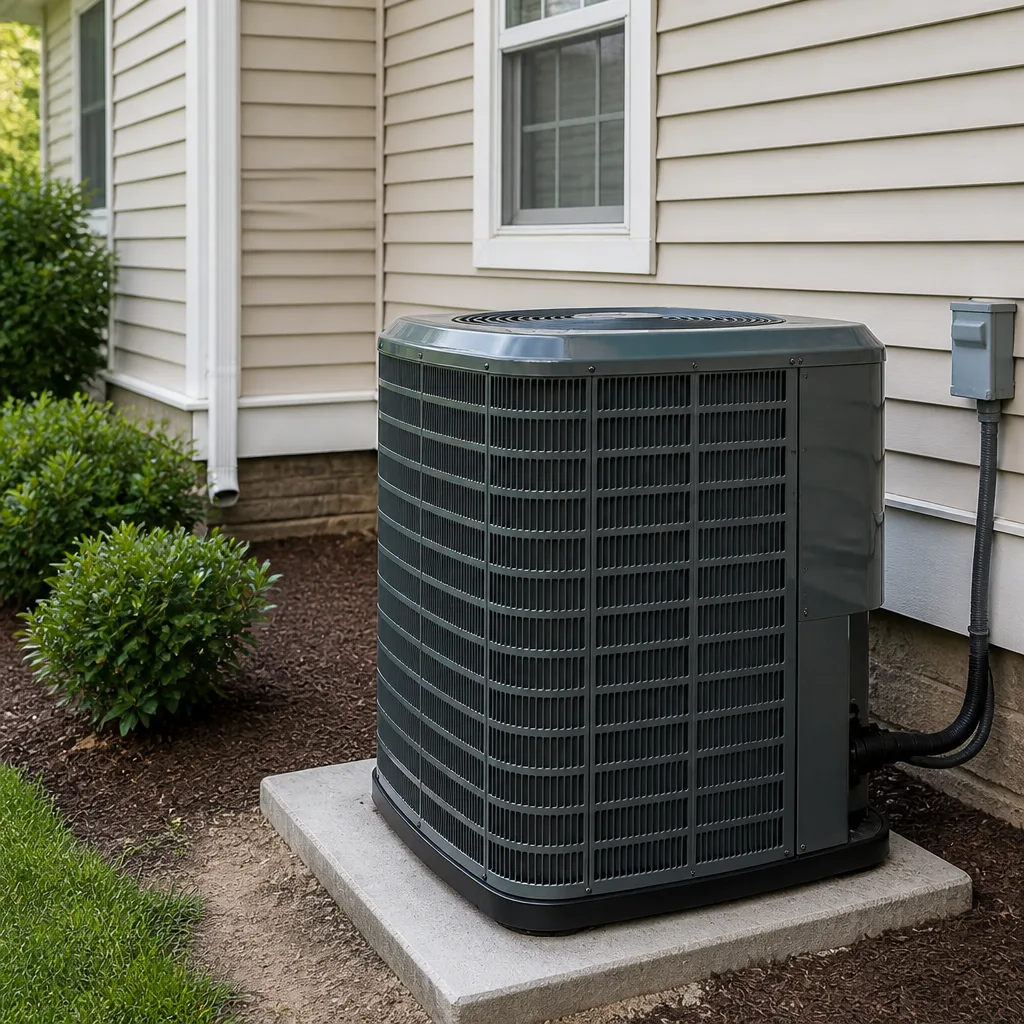 AC repair
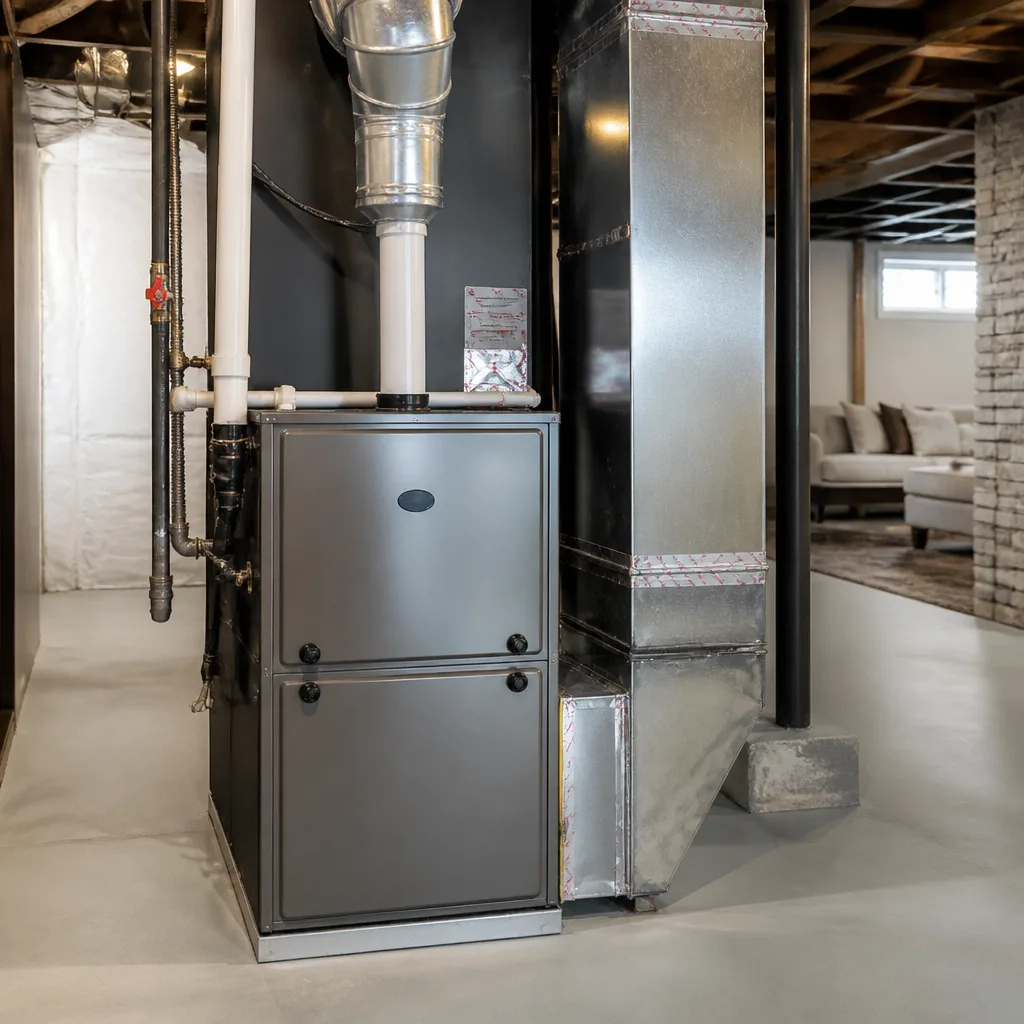 Furnace & heating
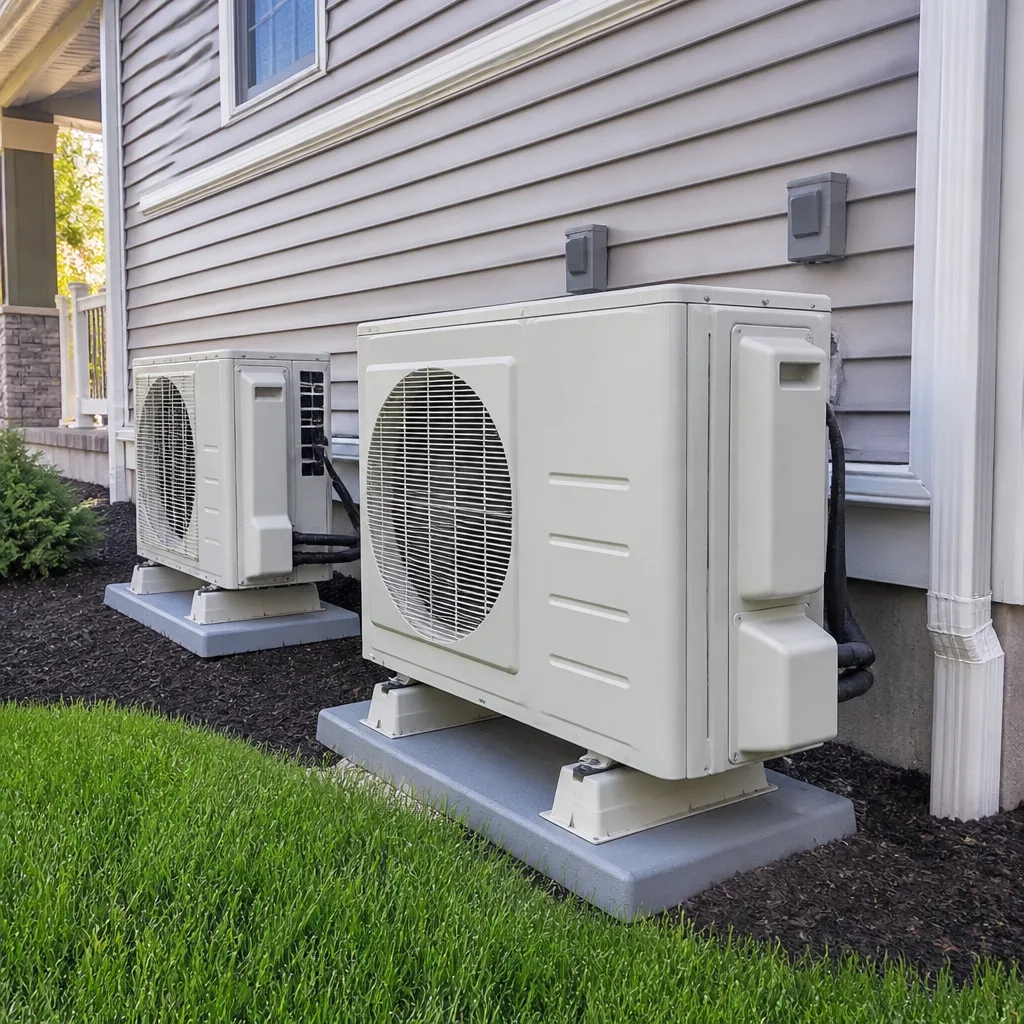 Heat pumps
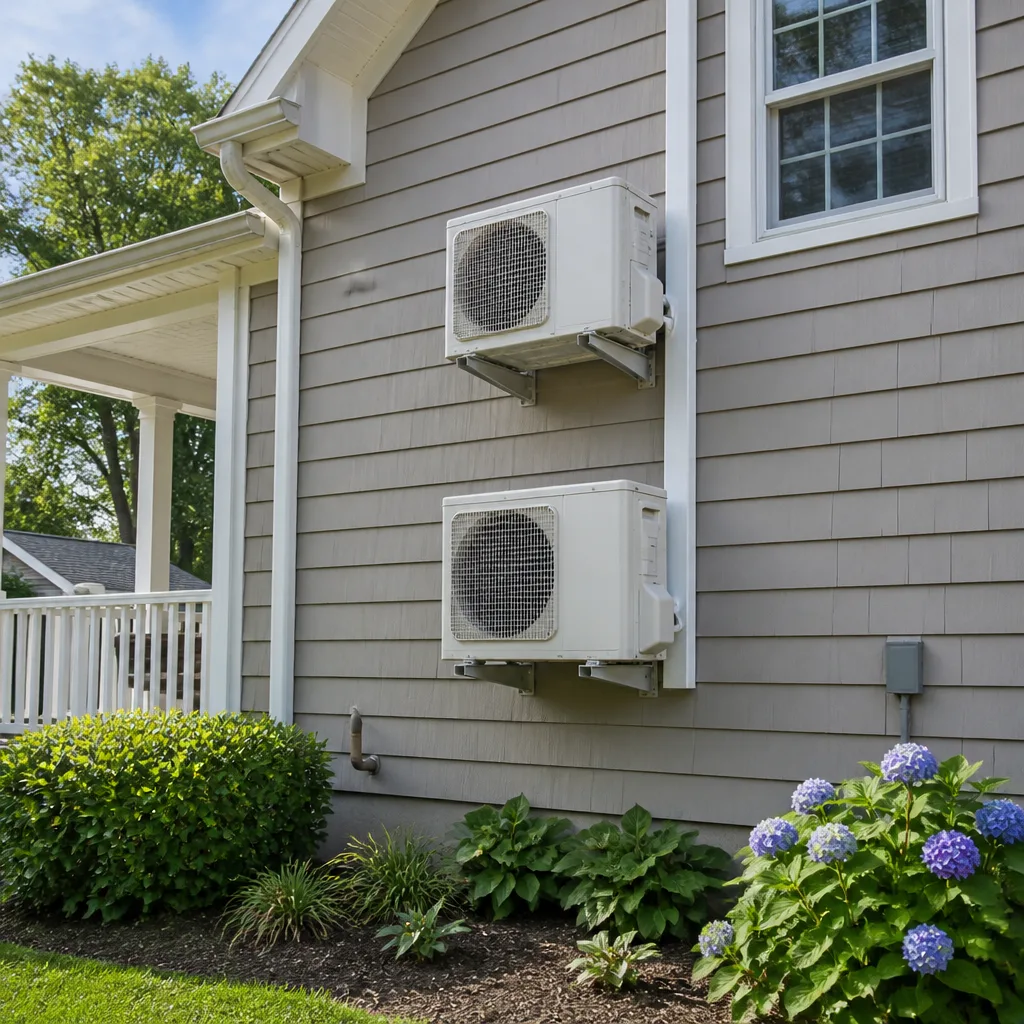 Ductless mini splits
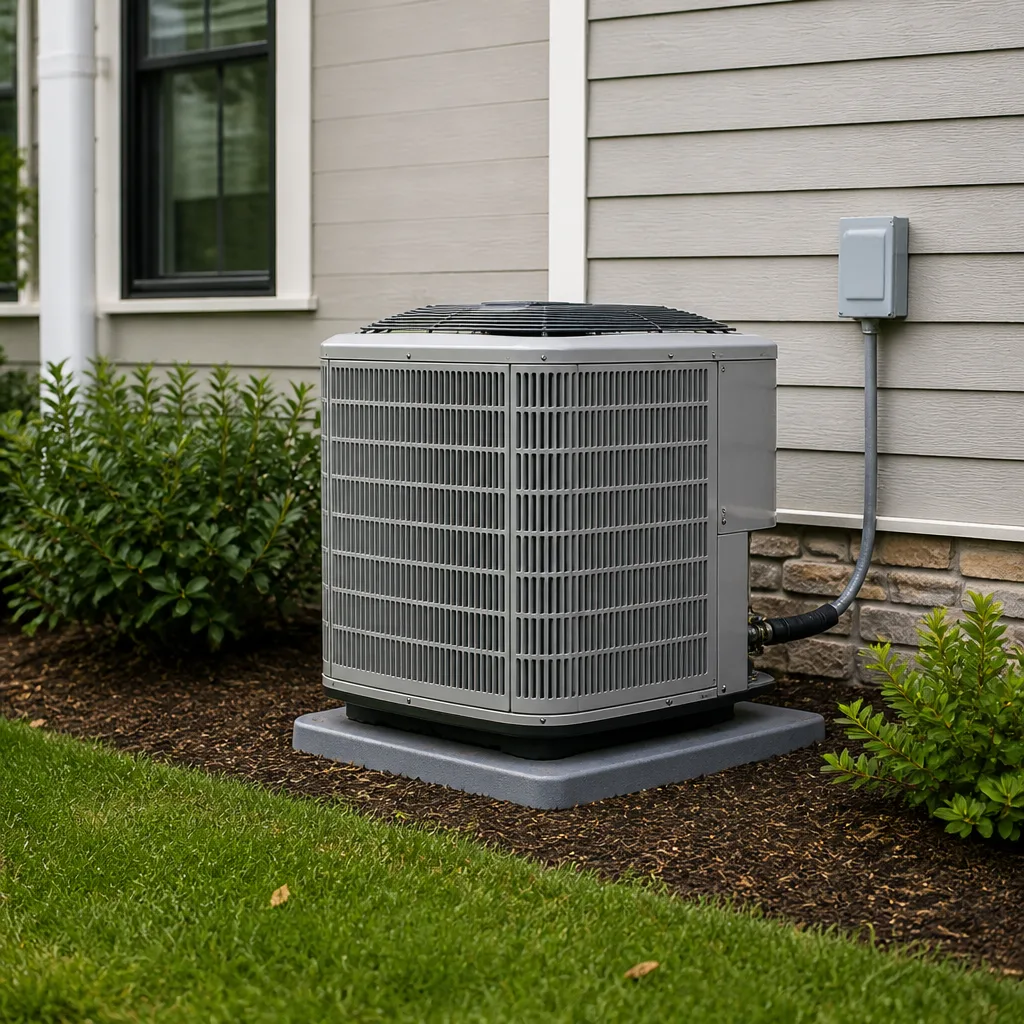 Carrier
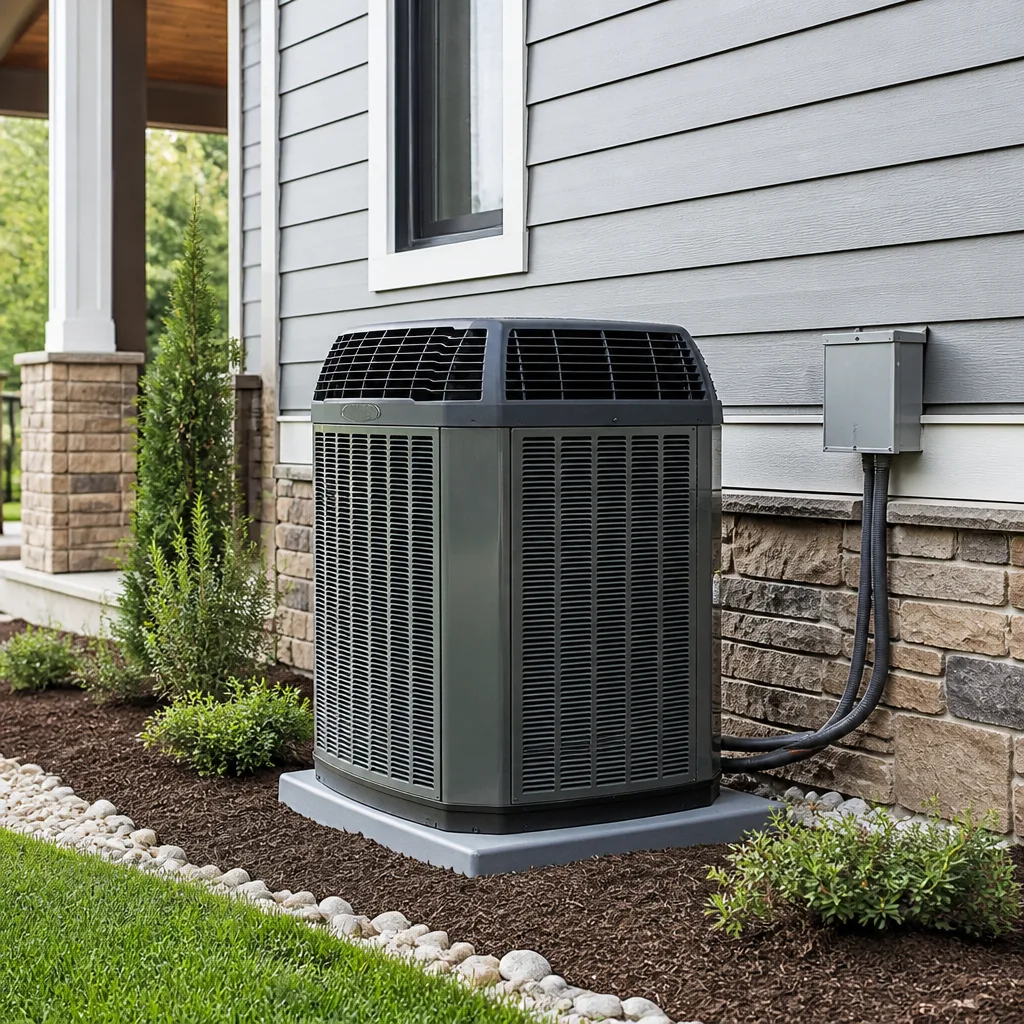 Trane
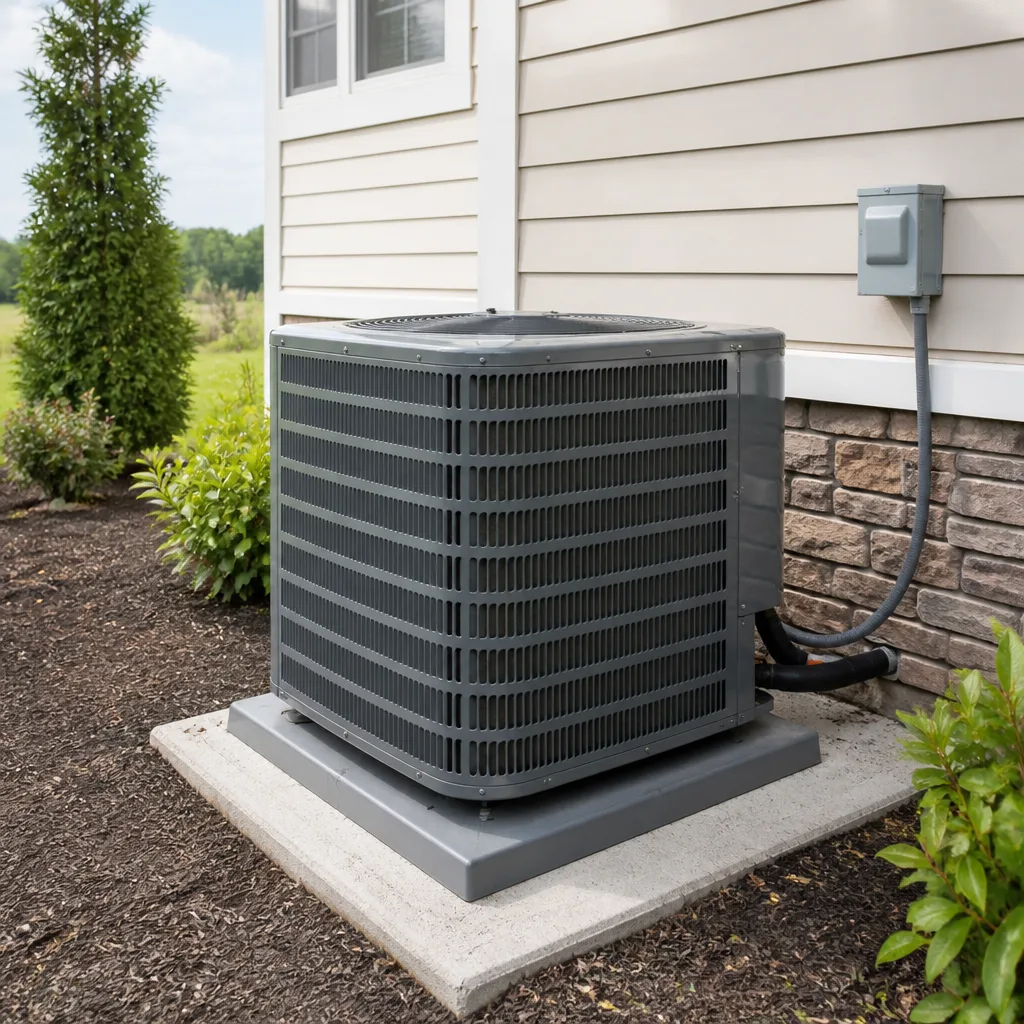 Goodman
Seasonal tune-up and full diagnostic on your Carrier, Trane, or Goodman system - readings shown to you before any repair is proposed
Diagnosis first, numbers second - you approve the repair price before a single part goes in.
Get your free estimateDIY vs Professional HVAC: The Richardson Homeowner’s Decision Guide
Most DIY HVAC content online draws the line in the wrong place. It treats every repair as either “you can totally do this” or “call a pro immediately,” and it skips the part that actually matters: some HVAC work isn’t a question of skill at all. It’s a question of federal law. In Texas, handling refrigerant without an EPA Section 608 certification isn’t a gray-area liability call you can reason your way through. It’s a violation, and the fine is real. This guide maps the territory properly for Richardson homeowners: what you can safely and legally do, what needs tools but no license, what’s restricted no matter how handy you are, and how a wrong amateur fix turns one problem into three.
Quick Answer
Richardson homeowners can legally and safely handle air filter changes, thermostat settings and battery swaps, outdoor coil rinsing, and basic visual inspections of the indoor and outdoor units. Anything involving refrigerant – recharging, leak repair, line work – requires an EPA Section 608 certification and is off-limits to unlicensed homeowners under federal law. Electrical component swaps like capacitors and contactors are legal without a license but carry real shock risk and misdiagnosis risk, which is why most homeowners are better off having a technician do them.
Styles & brands we work with
- AC repair
- Furnace & heating
- Heat pumps
- Ductless mini splits
- Carrier
- Trane
- Goodman
Table of Contents
- Why the DIY vs Pro Debate Is Mostly a False Binary
- Where the Legal Line Actually Is in Texas
- The EPA 608 Boundary: What It Covers and Why It Matters
- The Definitive Task List: DIY, Gray Zone, and Hands-Off
- Cost-Benefit Math on the Most Common DIY Attempts
- How DIY Misdiagnosis Creates Compounding Repair Costs
- Tools Worth Owning in Richardson (and When to Ignore Them)
- When to Call a Professional
Why the DIY vs Pro Debate Is Mostly a False Binary
The framing most homeowners carry into this is a two-sided coin: fix it myself or pay someone. In practice, HVAC work splits into a much wider spectrum, and the useful question isn’t “can I do this?” but “is this task restricted, risky, or routine?” Three categories matter here, and they aren’t the ones people expect.
The first category is genuinely routine. Changing a filter, adjusting a thermostat schedule, clearing debris from around the outdoor condenser, rinsing the coil with a garden hose – none of this requires certification, specialized training, or a tool you don’t already own. It’s homeowner work, and doing it consistently is one of the cheapest ways to extend the life of a system.
The second category is mechanical work that’s legal but carries risk. Capacitors, contactors, fan motors, blower assemblies, and igniters all fall under this. A licensed technician isn’t required to swap a capacitor in Texas. But these components sit in circuits that can hold a fatal charge long after the disconnect is pulled, and the diagnosis that comes before the swap is usually harder than the swap itself. This is the category where homeowners most often get in over their heads, and it’s where a Juniper AC Repair technician’s familiarity with the exact system saves the most money over time.
The third category is federally restricted. Refrigerant handling is the big one, and it deserves its own section because it’s the part most YouTube HVAC content glosses over. No amount of confidence or mechanical aptitude puts you on the legal side of that line.
What makes this matter specifically in Richardson is the local climate. Summers put serious load on a cooling system for months, and a system that limps through with a homeowner fix often fails hard in August. Knowing which category you’re in – before you touch anything – is the whole game.
Where the Legal Line Actually Is in Texas
Here’s the part that surprises most homeowners: Texas does not require a state HVAC contractor license for the trade as a whole. That doesn’t mean HVAC work is unregulated. It means the regulation lives elsewhere – in local permitting requirements, in electrical code for the parts of the system that are electrical, and most importantly in federal refrigerant law, which applies everywhere and doesn’t care whether Texas licenses HVAC contractors.
What that means for a Richardson homeowner:
- Refrigerant work is federal, not state. The EPA Section 608 rule is a national law. It applies whether you’re in a licensed state or not, and it covers all refrigerant circuits in residential systems.
- System replacement usually requires a permit through the City of Richardson. A full AC or furnace replacement generally requires a permit and often an inspection. This is true in most Texas cities, and it’s worth confirming with the city’s building department before any replacement work begins.
- Electrical components fall under general electrical code. The low-voltage control side is unregulated, but high-voltage work – capacitors, contactors, compressor wiring – is where a wrong move is dangerous regardless of what’s legal.
- Warranty terms are a separate legal layer. Many manufacturer warranties on a Rheem, York, Daikin, or Bryant system require installation and major repairs by a qualified technician. Tampering with the sealed refrigerant circuit can void the refrigerant side of the warranty.
In our experience, the homeowners who get into real trouble are the ones who assume “Texas doesn’t license HVAC, so I can do anything.” That’s a misunderstanding with expensive consequences.
The EPA 608 Boundary: What It Covers and Why It Matters
The EPA Section 608 certification is a federal credential required for anyone who maintains, services, repairs, or disposes of equipment that could release ozone-depleting refrigerants or their substitutes into the atmosphere. In plain English for a Richardson homeowner: if the job involves opening the refrigerant circuit, adding refrigerant, recovering refrigerant, or repairing a leak in the system, it requires certification.
What Section 608 covers in practical terms:
- Any refrigerant recharge or top-off. Adding R-410A, R-32, or any other refrigerant to a system requires the certification.
- Leak detection and repair on the refrigerant circuit. Diagnosing and fixing a leak – even if the fix is just a Schrader valve – is included.
- Recovery and disposal. When a system is replaced, the old refrigerant has to be recovered and disposed of properly. This is certification-required work, full stop.
- Brazing and line work. Soldering or brazing refrigeration lines, evacuating a system, and charging it back up all fall under 608.
What Section 608 does not cover: air filter changes, filter drier replacements on the air side, thermostat wiring on the low-voltage side, outdoor coil cleaning, and blower/belt service on the air side. Those are separate.
The reason this boundary matters so much is that homeowners frequently misdiagnose “my AC isn’t cooling” as “the system needs a recharge.” That’s the most common amateur conclusion in HVAC, and it’s almost always wrong. A system low on refrigerant is low because it leaked – which means an unlicensed homeowner hassling with a can of refrigerant from an auto parts store at best wastes money and at worst vents refrigerant into the atmosphere in violation of federal law and doesn’t fix the underlying leak. In Richardson’s heat, the system limps through another cycle, the leak gets worse, and eventually the compressor fails from running with too little refrigerant.
That’s a task for a certified technician, and it’s the clearest example of a category where confidence doesn’t matter. Furnace repair has its own hands-off zone for the same reason – gas side components require a technician familiar with the exact system.
The Definitive Task List: DIY, Gray Zone, and Hands-Off
Here’s the list to bookmark. It’s organized by category, and the boundaries reflect both what’s legal in Texas and what’s realistically safe for a homeowner with standard tools.
Safe to Do Yourself (no tools beyond the basics)
- Replace the air filter. Every 1-3 months in Richardson’s dusty seasons. This is the single highest-value routine task on the list.
- Adjust thermostat schedules. Schedules and setpoints are fully in the homeowner’s domain.
- Change thermostat batteries. Low batteries cause more “dead system” complaints than any other single issue.
- Clear vegetation and debris around the outdoor unit. Two feet of clearance on all sides lets the condenser breathe.
- Rinse the outdoor coil with a garden hose. Power off first. Rinse, don’t pressure wash – the fins are fragile.
- Check the condensate drain line for clogs. A wet/dry vac on the outdoor end clears most clogs.
- Confirm the indoor unit’s access panels are seated. A panel left off from prior service is a common performance problem.
Gray Zone: Legal but Risky (require tools and electrical confidence)
- Capacitor replacement. A common failure in Texas heat, but the capacitor holds a charge that can hurt you if you don’t know how to discharge it safely.
- Contactor replacement. Same electrical hazard, plus the diagnosis is often wrong – a bad contactor usually means a bad low-voltage control circuit.
- Condensate pump replacement. Low-voltage, but miswiring can create a short that damages the control board.
- Fan motor replacement. Physically doable for a skilled homeowner, but the motor has to match specs and the diagnosis has to be right.
- Thermostat replacement on a low-voltage system. Straightforward on a basic system, trickier on communicating systems and on any system with a heat pump or dual-fuel setup.
Hands-Off: Professional Required
- Any refrigerant work (recharge, leak repair, recovery, line replacement, evacuation)
- Compressor replacement
- Any work on the sealed refrigerant circuit
- Full system replacement (permit-required in most Richardson cases)
- Any work inside the furnace gas valve, heat exchanger, or flue assembly
- Any work on the electrical panel or high-voltage disconnect
- Diagnosis of intermittent failures that have already resisted one or two homeowner attempts
If you’re not sure which column a task sits in, that’s usually a sign it belongs in the professional column. Juniper AC Repair handles AC installation and furnace repair and replacement across the nine major brands we’re qualified to work on, including Rheem, York, Daikin, and Bryant – which means when a job does need a technician, we already know the exact system in front of us.
Cost-Benefit Math on the Most Common DIY Attempts
Here’s where the category system pays off in practical terms. Not every DIY attempt is worth the same. Some are pure wins. Some are a wash. And some are the kind of financial sinkhole a homeowner walks into because they don’t see the math until the compressor fails.
Filter replacement: always worth it, likely the best dollar-for-dollar task in HVAC
Filters cost what they cost – a common filter runs a few dollars in bulk. The return is enormous. A clogged filter restricts airflow, drives up compressor current, and shortens the life of a system that’s otherwise healthy. In Richardson’s summer load, a neglected filter is the single most common root cause of a premature capacitor or compressor failure. DIY all the way, and none of the professional volume matters here because the task is genuinely routine.
Capacitor replacement: neutral to negative for most homeowners
The capacitor itself is cheap, and this is the task most DIY HVAC videos lead with. What the videos don’t emphasize is the misdiagnosis rate. In our experience, a “bad capacitor” symptom – the outdoor fan not spinning up, or the compressor short-cycling – is frequently a different problem wearing the same costume: a failing fan motor, a bad contactor, a low refrigerant charge, or a control board issue. The homeowner replaces the capacitor, the system runs for three days, fails again, and now has a new capacitor plus an unresolved root cause. That’s not a wash – the delay has often done damage by the time the real problem is found.
Refrigerant recharge: never a DIY task, and the “cheap” version is illegal
This is where the false-binary framing collides with clean-sounding marketing. Auto-parts-store refrigerant cans and quick-recharge kits exist, but using them on a residential system without certification is a federal violation – and about the only thing the homeowner achieves is a short-term pressure bump. The system still has a leak. It will leak back down. The refrigerant added is unrecoverable, which means a later technician has neither the charge accounting nor the leak evidence needed to solve the problem properly. The DIY “savings” here isn’t savings at all – it’s a tax on the eventual repair.
AC installation and system replacement: not a DIY category at all
A full system installation requires a load calculation, a permit in most Richardson cases, refrigerant line work under EPA 608, electrical work on the disconnect, and a manufacturer-compliant install to keep the warranty intact. AC installation in a market like this is quantifiably a professional job – the closest thing to a homeowner-only option is picking which contractor to hire.
How DIY Misdiagnosis Creates Compounding Repair Costs
This is the section most DIY HVAC content never writes, and it’s the reason the middle “gray zone” category deserves so much caution. A wrong amateur fix almost never stays a single problem. It tends to chain.
Consider the most common chain, which starts with “the AC isn’t cooling.”
- Symptom: The system runs but doesn’t cool. The homeowner assumes low refrigerant, so they buy a recharge can and top off.
- Result 1: The pressure bump masks the symptom for a week or two. The underlying leak is unchanged.
- Result 2: The added refrigerant overworks the compressor. In Richardson’s summer heat, this happens fast.
- Result 3: The compressor runs hot, cycles on thermal overload, and eventually fails. What was a $200-ish leak repair becomes a compressor replacement in the multiple thousands.
- Result 4: The compressor failure takes the capacitor with it, and frequently the contactor too – so a technician now has three failed parts to replace where there was originally one.
The same chain plays out on the electrical side. A homeowner swaps a capacitor for no good reason, the system runs, then fails again, and the next attempt targets the contactor. Each attempt “worked” for a few days and each attempt added a part. By the time a technician arrives, the original diagnosis has to account for three non-original parts in the system and the homeowner’s account of what was done.
There’s also a subtler cost: the technician loses the diagnostic signal. An untouched system tells a clear story. A system that’s been partially disassembled and partially replaced has to be re-diagnosed from scratch, and the time that takes gets priced into the visit. In our experience, the fastest way to make a repair expensive isn’t the repair itself – it’s the two failed attempts that came before it.
Tools Worth Owning in Richardson (and When to Ignore Them)
A small set of monitoring tools genuinely pays for itself in a Richardson home. The trick is knowing what the readings mean and when a reading justifies a call.
Worth owning
- A digital thermostat with a schedule. The single best HVAC upgrade a homeowner can install themselves on most systems. Programming a broader setback while the house is empty lowers runtime without sacrificing comfort when it matters.
- A cheap infrared thermometer. Point it at a supply register and a return register. A large gap between the two means the system is working. A small gap means it isn’t, and it’s worth a call.
- A multimeter, if you’re comfortable with one. Useful for confirming the system is getting power, and for checking a capacitor before you replace it. Not useful if you aren’t confident working around live circuits – the high-voltage side is a genuine hazard.
- A wet/dry vac. Clears condensate drain clogs, which are common in Richardson’s humidity. The vacuum costs less than a technician visit.
Where monitoring ends and a call begins
The infrared thermometer is the highest-value homeowner tool because it creates a clear boundary. If the supply-return delta is healthy, your system is working and there’s nothing to fix. If it’s consistently small, that’s the reading that justifies a callback – because the causes (low charge, restricted airflow, failing compressor) are all professional-diagnosis territory. The same goes for a multimeter reading that shows a compressor pulling far more current than it should. That reading is not “call the parts store.” It’s “stop using the system and call a technician.”
What no homeowner tool will tell you is why the system is failing. That’s where Richardson homeowners benefit from a company that’s already familiar with their exact equipment. Our technicians have up to 14 years of experience, and we work on the major brands most Richardson homes already have, so the diagnostic conversation starts at the actual issue rather than at brand familiarity.
See the difference
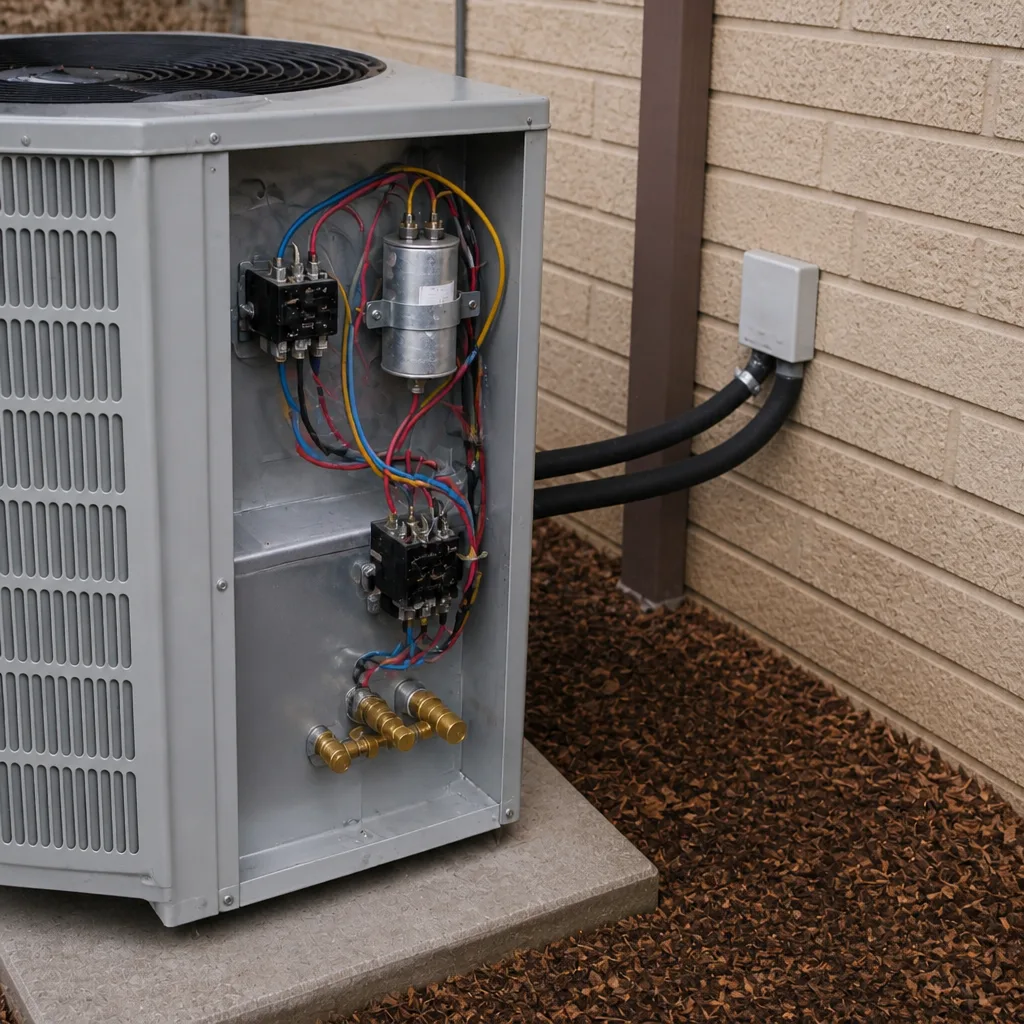
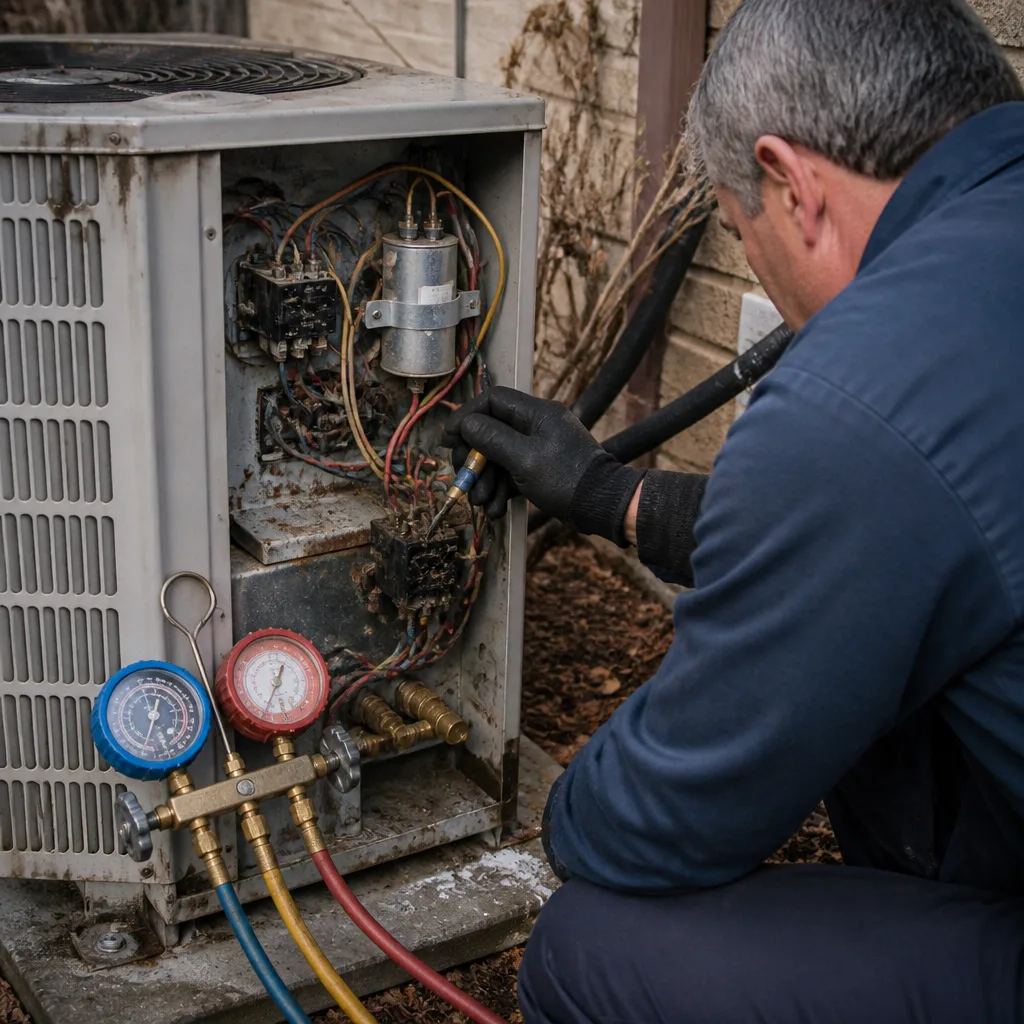 Before
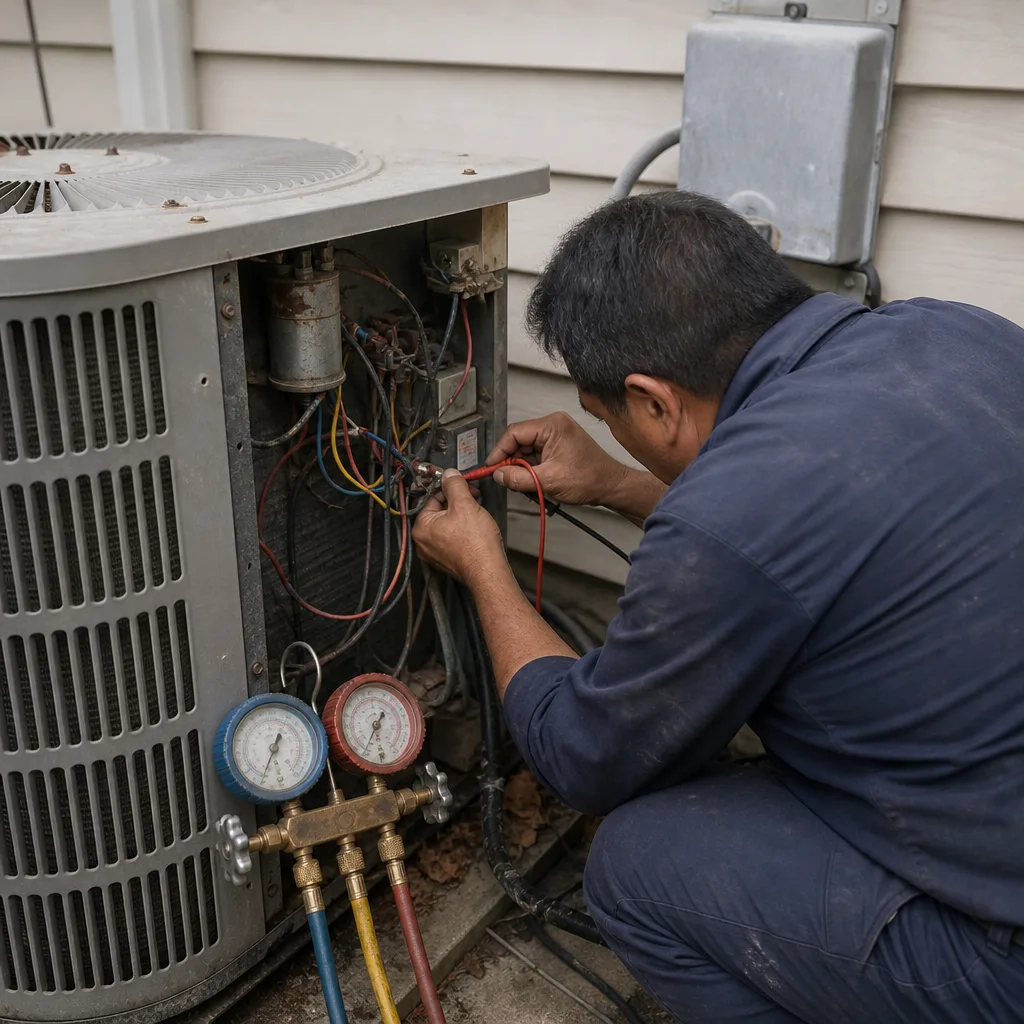
 After
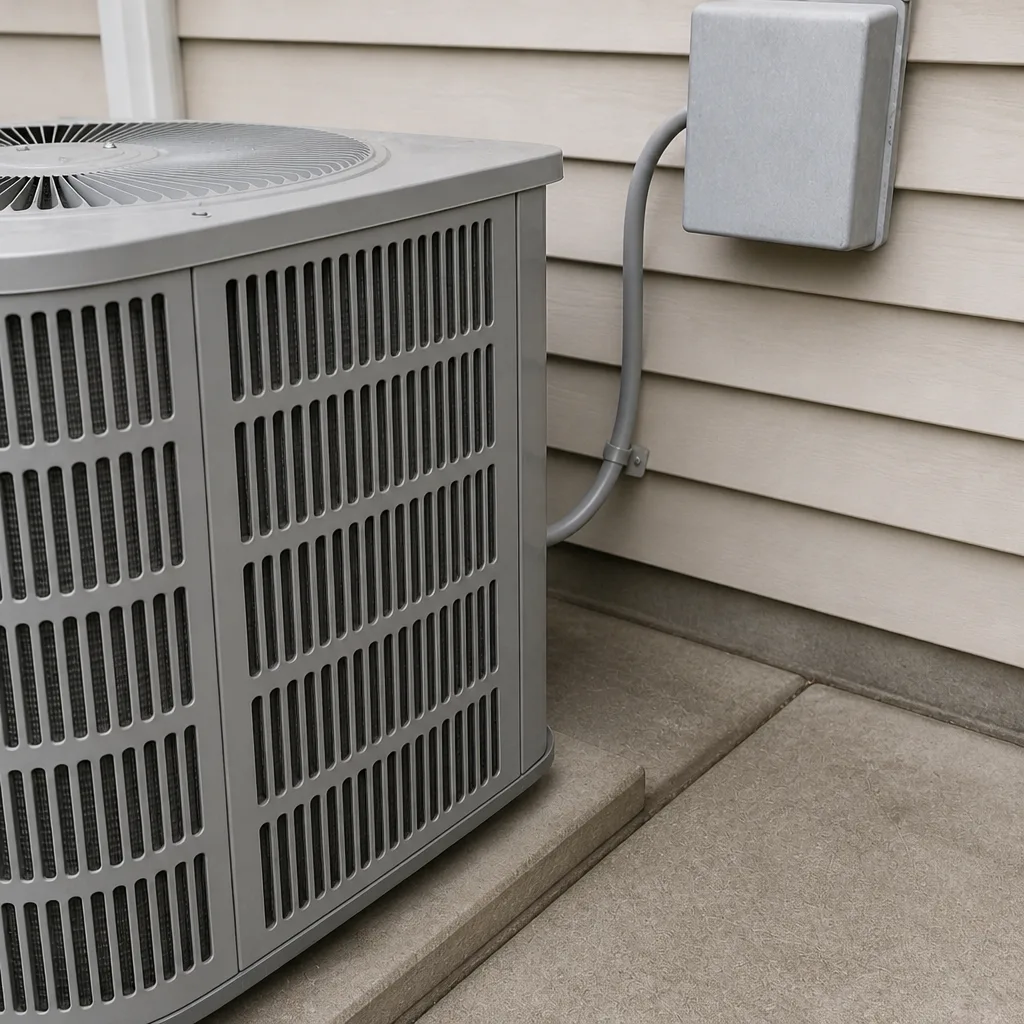
 Before
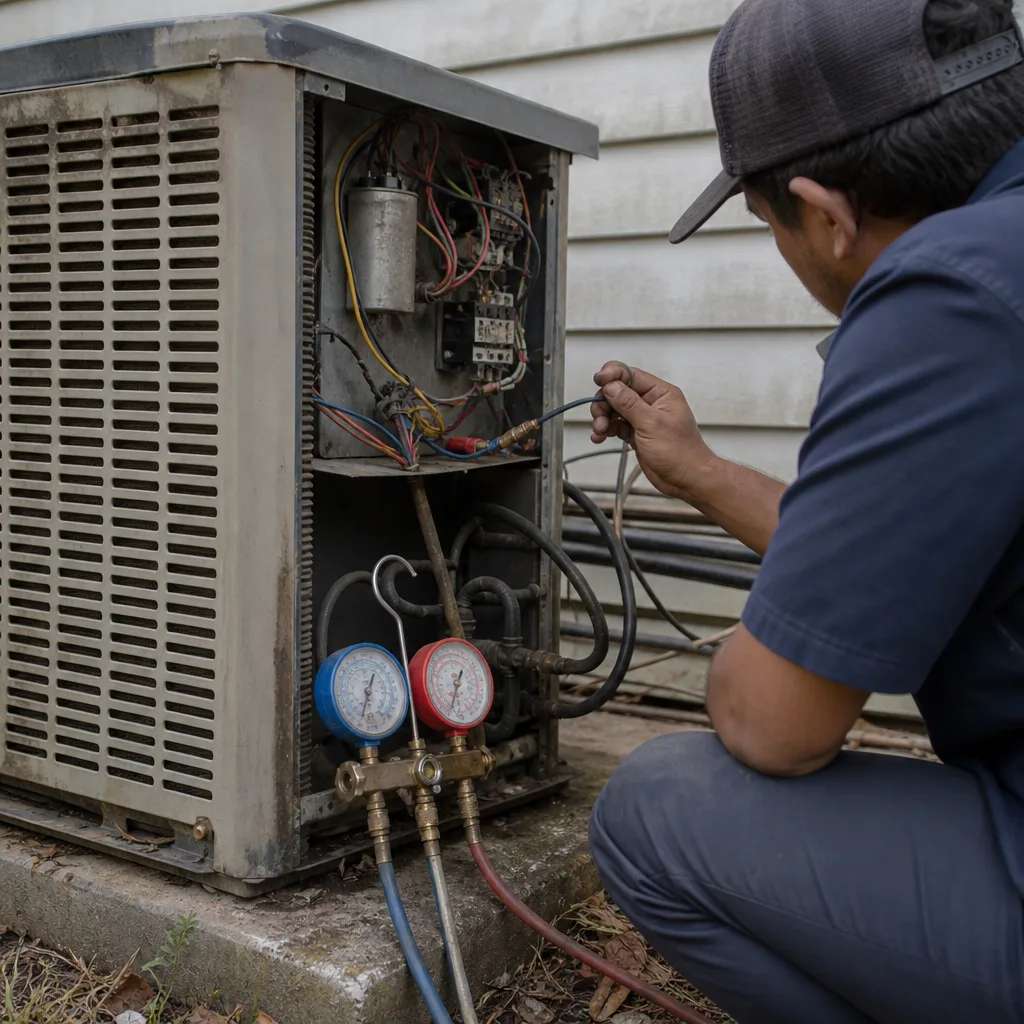
 After
 Before
 After
Common Mistakes to Avoid
- Buying a refrigerant can and topping off the system yourself. This is a federal violation under EPA Section 608 and the single most common DIY mistake we see in Richardson. It also makes the eventual leak diagnosis harder and more expensive.
- Replacing parts before diagnosing. The “shotgun” approach – swap the capacitor, then the contactor, then the control board – is expensive and often leaves the actual root cause unfixed. Diagnosis has to come before the part.
- Assuming any non-cooling symptom means low refrigerant. Most of the time it doesn’t. The most common causes in our experience are airflow restriction, a failed capacitor, or a dirty condenser coil.
- Pulling the disconnect but not discharging the capacitor. A disconnected capacitor can still hold enough charge to hurt you. Never swap one without knowing how to discharge it safely.
- Skipping the permit on a system replacement. Most Richardson replacements require one, and an unpermitted install can complicate the home sale later.
- Running the system to “see if it recovers” after a misdiagnosis. In Richardson’s July and August, a struggling system usually degrades rather than recovers. Stop using it and get a diagnosis.
- Ignoring the filter for months. A single neglected filter is the most common root cause on this entire list, and it’s the easiest to prevent.
When to Call a Professional
You should call a technician the moment a problem falls into the hands-off category, when a gray-zone attempt has already failed once, or when the system is showing symptoms that don’t match a simple fix. In our experience, the specific triggers are: any refrigerant-related symptom (ice on the lines, low cooling, unusual gurgling), any gas smell or furnace igniter issue, any electrical panel work or high-voltage disconnect work, any full system replacement, and any intermittent failure that has resisted more than one attempt. Call Juniper AC Repair. We offer free estimates in Richardson and honest diagnosis before we recommend any part. The service is (855) 419-6908. We answer 24/7. Fast dispatch from 7am to 7pm, Sunday through Friday.
Frequently Asked Questions
No. Recharging a residential AC system requires an EPA Section 608 certification regardless of the state. Texas doesn’t issue a state HVAC license that overrides this – the federal rule applies everywhere, and using an unlicensed recharge kit is a violation even if the system seems to work temporarily. Call (855) 419-6908 for a certified diagnosis and estimate.
Usually not, because capacitor misdiagnosis is common and the “bad capacitor” symptom is often caused by a different failing part. A capacitor can also hold a dangerous charge after the disconnect is pulled, which makes the swap a safety risk. A free estimate from Juniper AC Repair is the safer way to find out what’s actually wrong – call (855) 419-6908.
Filter replacement, thermostat adjustments and battery swaps, two-foot vegetation clearance around the outdoor unit, garden hose rinsing of the outdoor coil with the power off, and condensate drain clearing are all genuinely homeowner-legal and homeowner-safe. Everything else should be examined by a technician.
Potentially, yes – most manufacturer warranties on Rheem, York, Daikin, Bryant, and other major-brand systems require installation and major repairs to be done by a qualified technician. Tampering with the sealed refrigerant circuit is the most common way homeowners void the refrigerant portion of their coverage. When in doubt, have a technician touch it.
In most cases, yes. A full system replacement in Richardson typically requires a permit through the City of Richardson and often an inspection. Confirm the specifics with the city’s building department before replacement work begins – a technician familiar with the permitting process will know the steps.
Point an infrared thermometer at a supply register and a return register. A large temperature split means the system is working and cleaning the filter and coil may resolve it. A small split means the system has a real problem and a technician diagnosis is the next step. Call (855) 419-6908 for a free estimate and we’ll sort it out.
The Bottom Line
The DIY vs professional HVAC question isn’t a binary. Richardson homeowners have three legitimate categories to work with: things you can do well and safely, things you can technically do but probably shouldn’t, and things the law restricts to certified technicians. The refrigerant circuit is the bright line, and it’s the part most DIY content glosses over. Our recommendation for Richardson homeowners: own the routing work (filters, thermostat, coils, drains), leave gray-zone electrical to a technician, and never touch a sealed refrigerant system. The math is on the side of getting the gray-zone diagnosis right on the first attempt. If you’re not sure which category your situation falls into, call us and we’ll tell you straight.
Ready for a free estimate? Call Juniper AC Repair at (855) 419-6908. We answer 24/7. Fast dispatch from 7am to 7pm, Sunday through Friday. We work on major brands including Rheem, York, Daikin, and Bryant, and we handle both AC installation and furnace repair and replacement under one name.
Written by the team at Juniper AC Repair.