
Last updated November 15, 2026
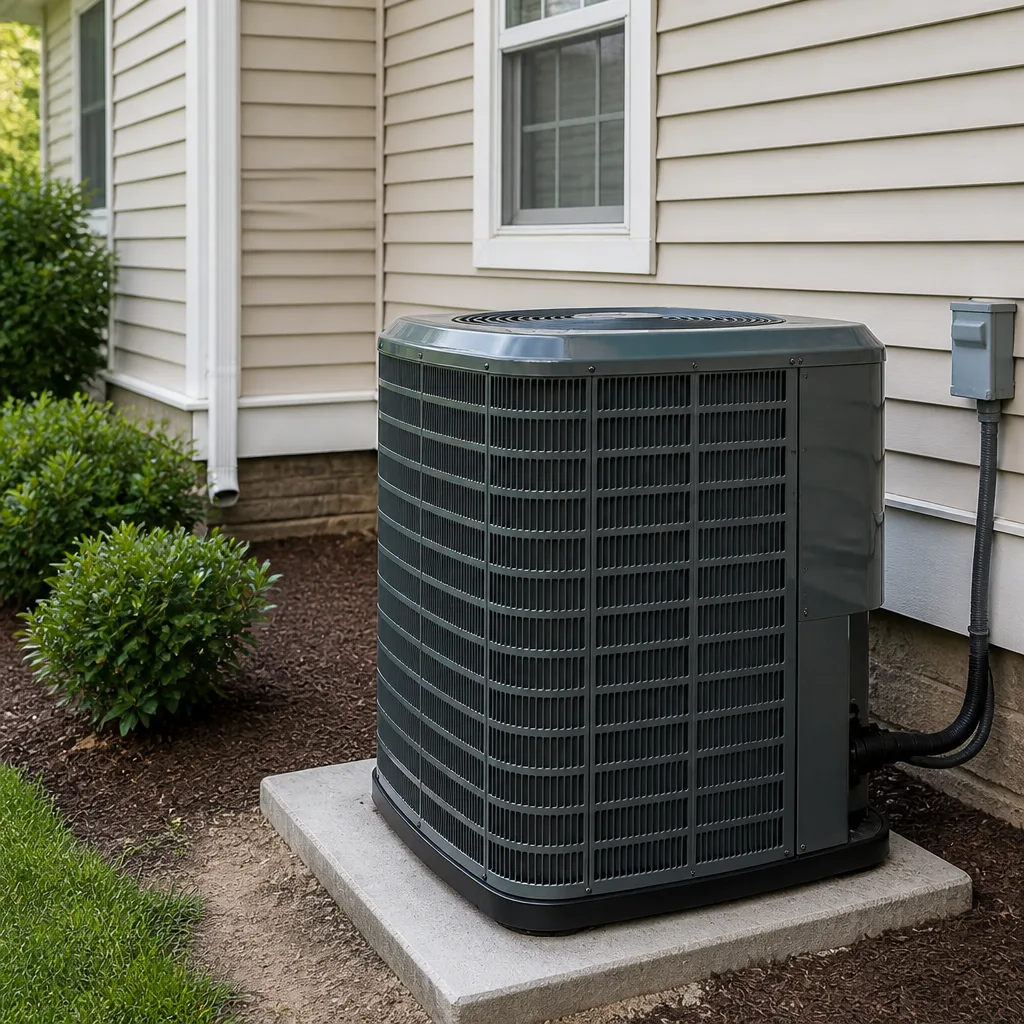 AC repair
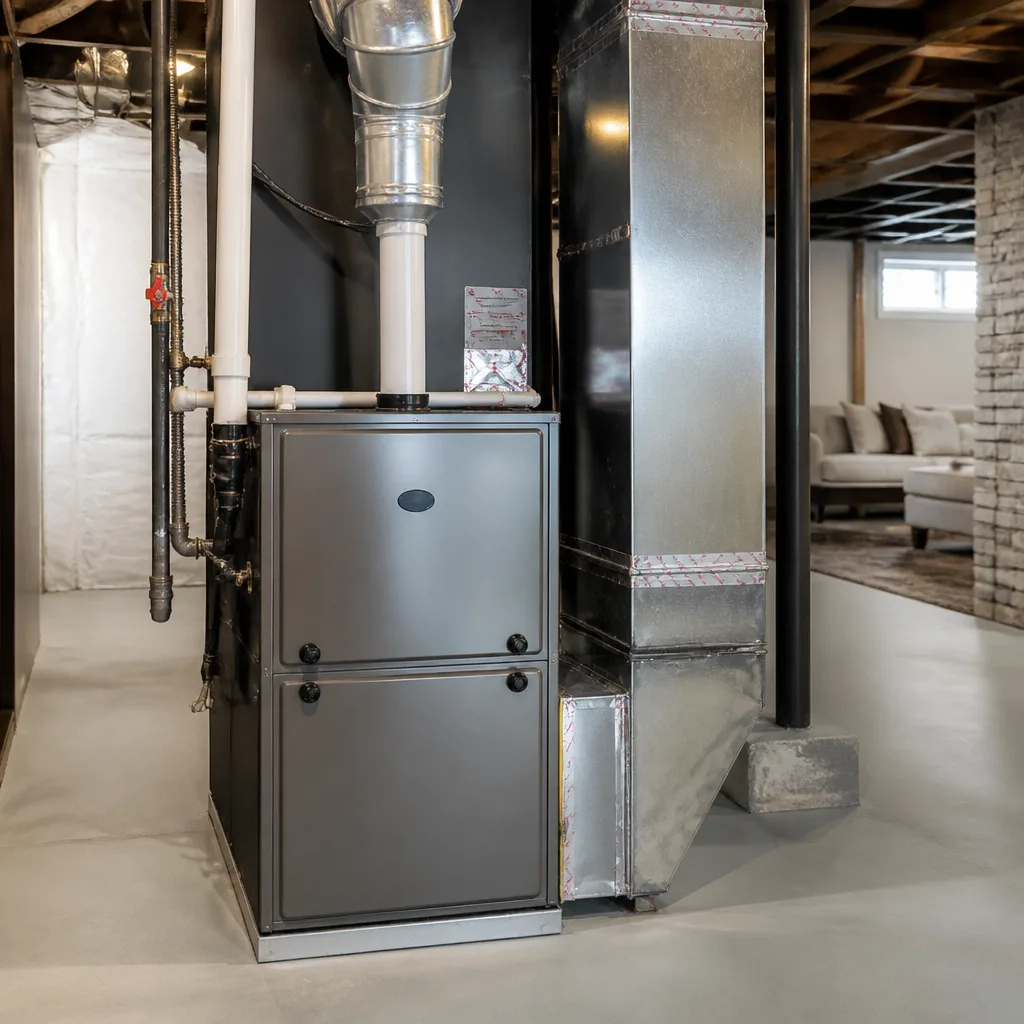 Furnace & heating
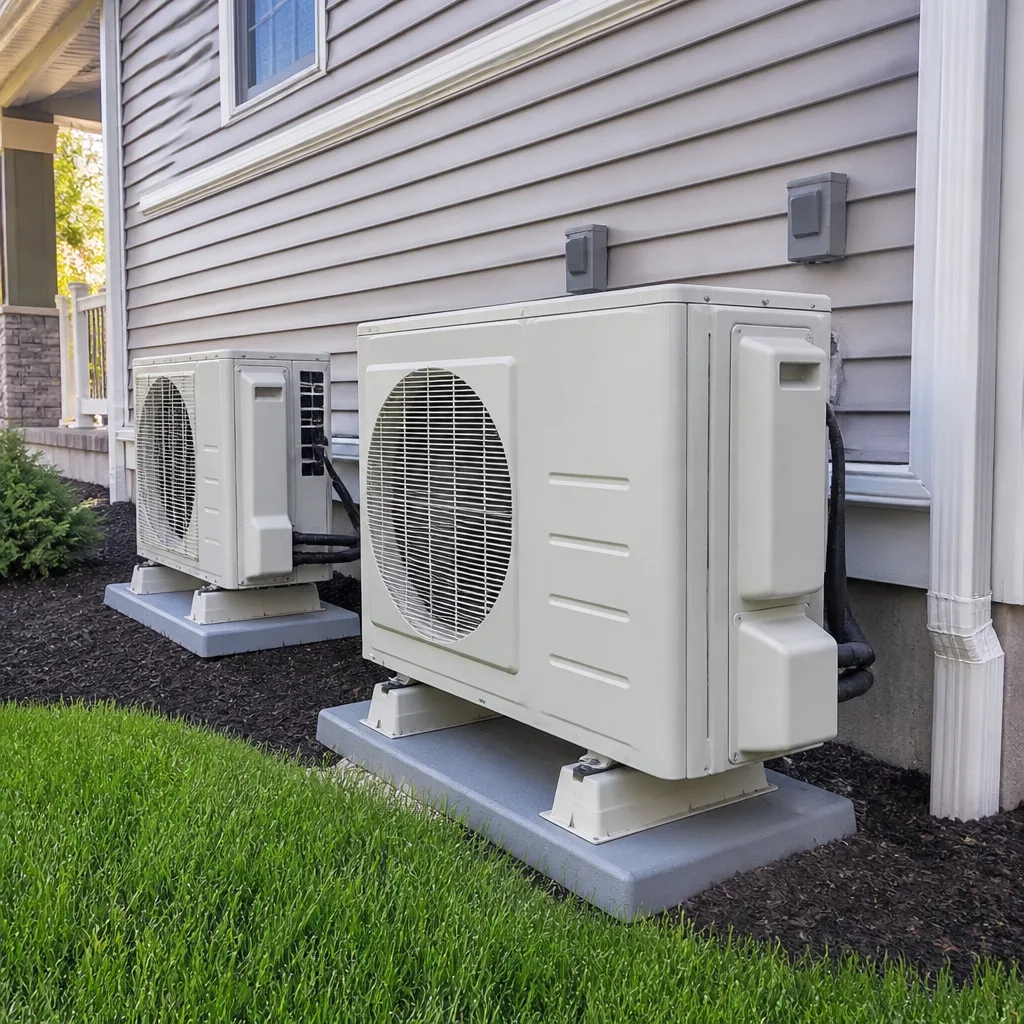 Heat pumps
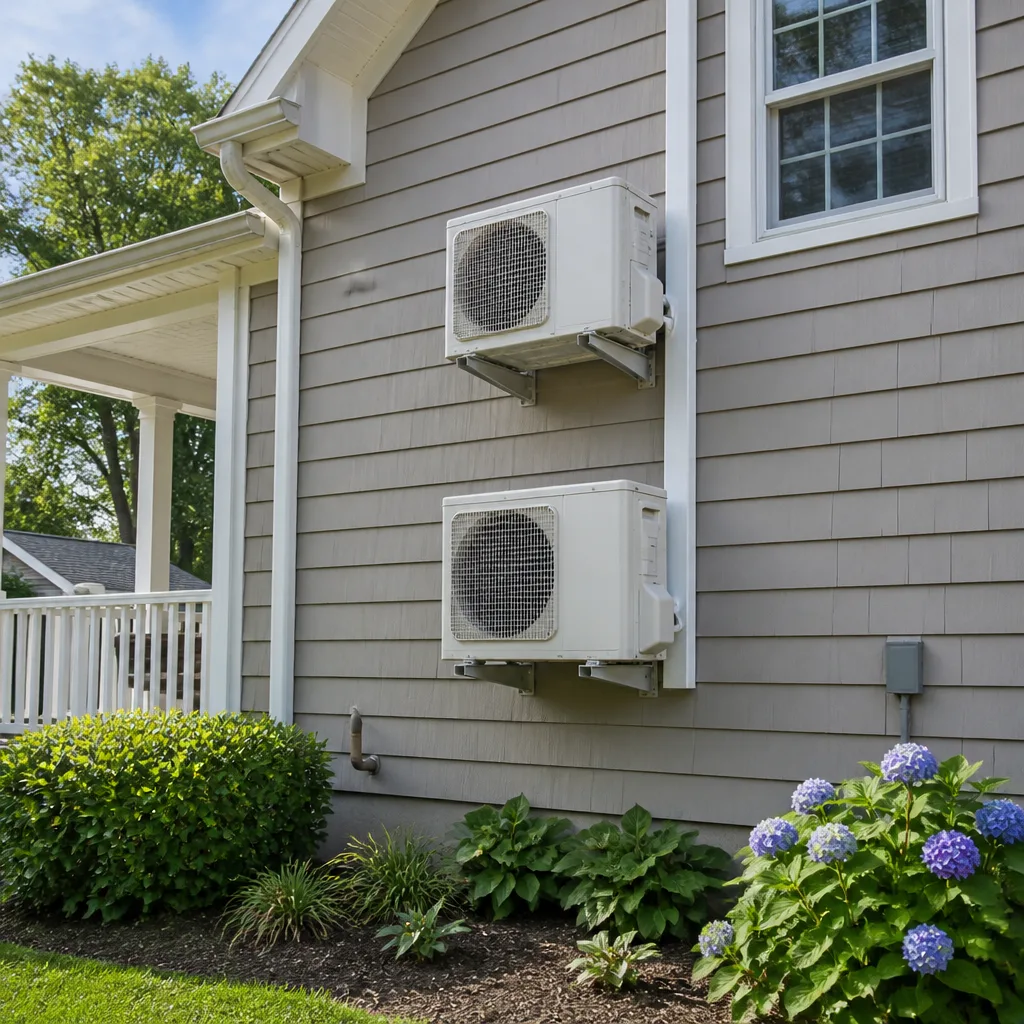 Ductless mini splits
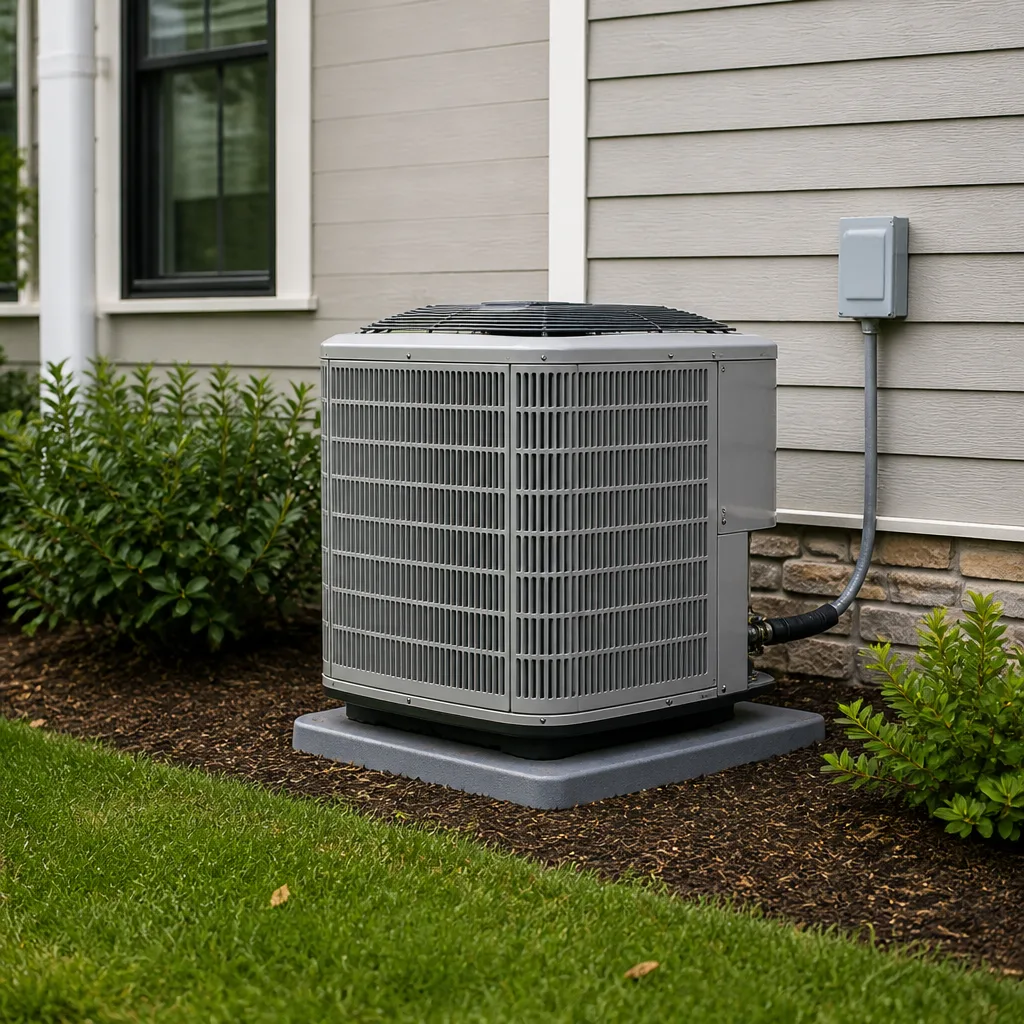 Carrier
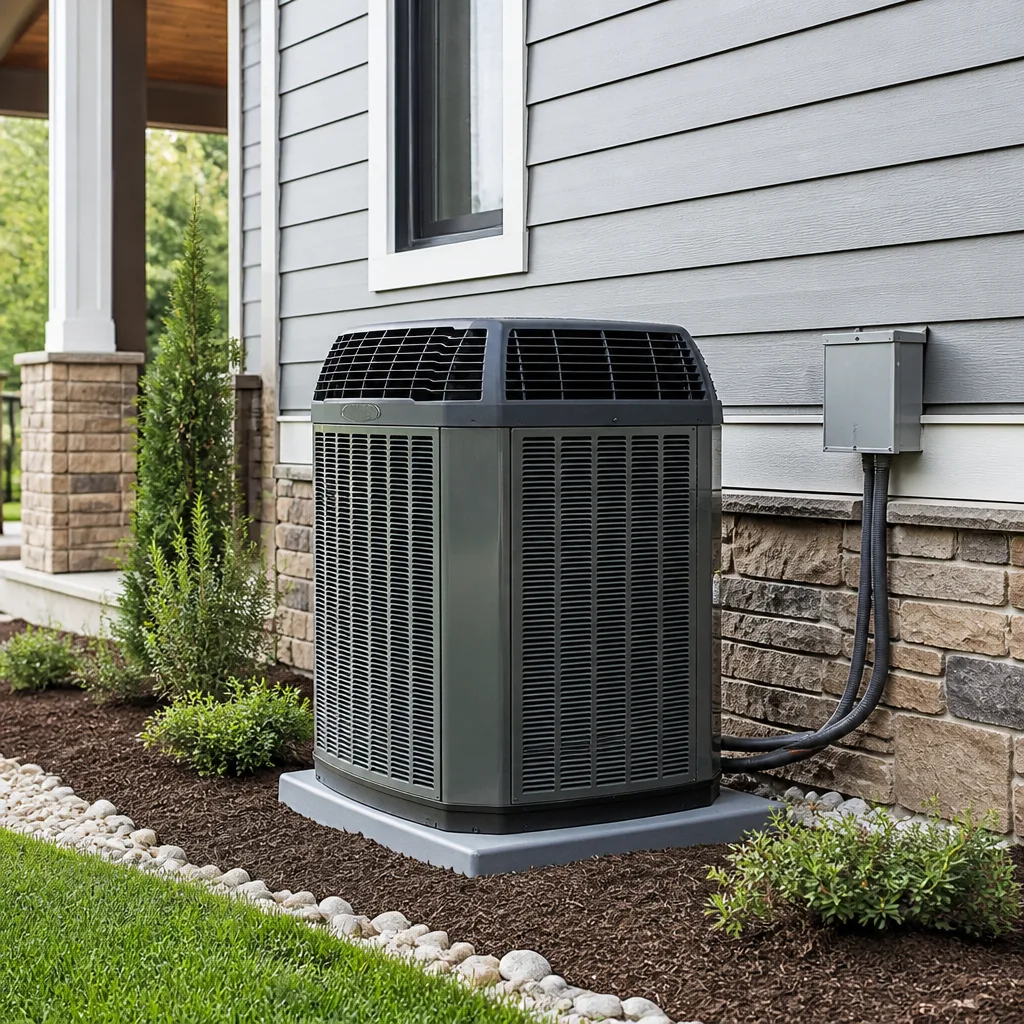 Trane
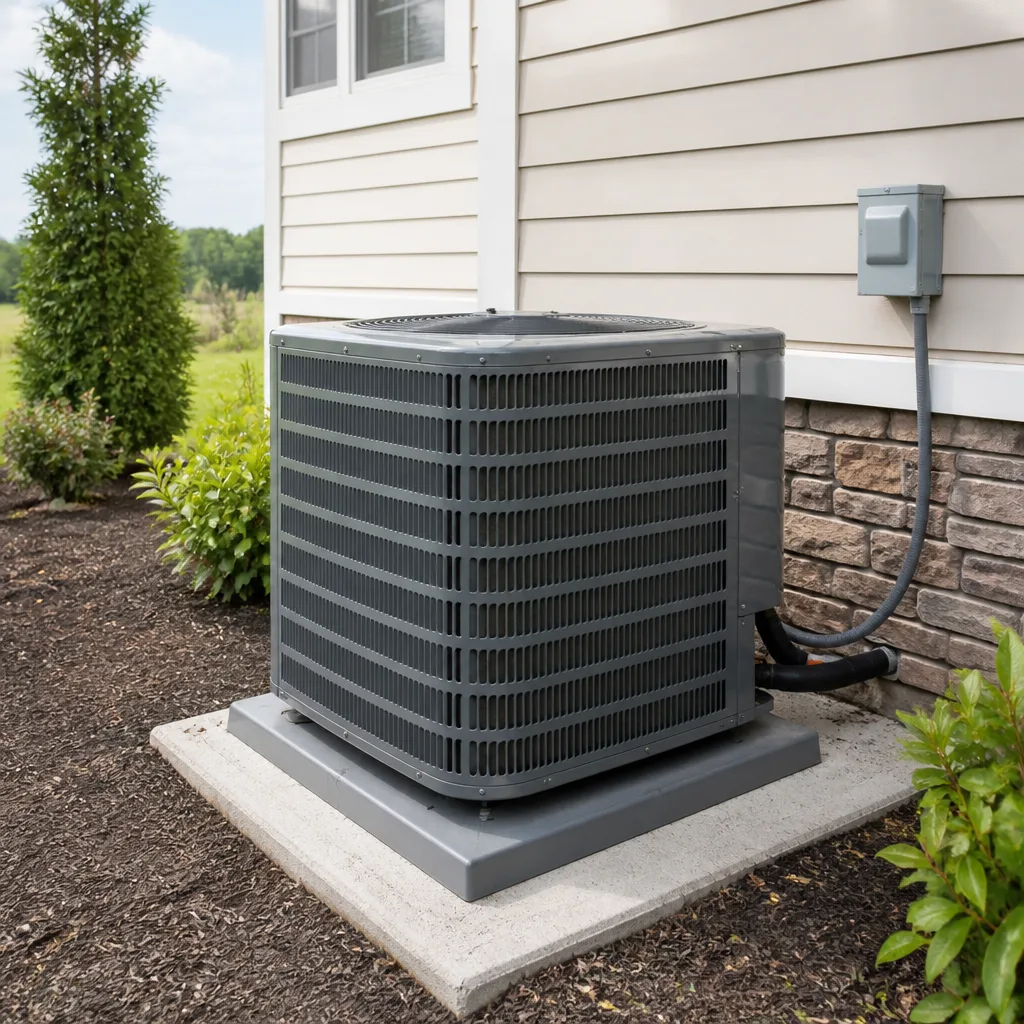 Goodman
Seasonal tune-up and full diagnostic on your Carrier, Trane, or Goodman system - readings shown to you before any repair is proposed
Diagnosis first, numbers second - you approve the repair price before a single part goes in.
Get your free estimateHVAC Warning Signs: A Richardson Homeowner’s Reference Guide
A system short-cycling at the height of a Texas summer is a reason to shut it down and call in the same day. Uneven cooling in one back bedroom in early fall might only need a damper nudged into balance. The mistake most homeowners make is treating every symptom the same way – panicking over something harmless, or letting a real failure grind along for a month because the house is still “sort of” comfortable. What follows is a tiered reference guide so you can tell the difference. We’ll walk through what each warning sign actually means, which ones are urgent, which are watch-and-wait, and which are the ones contractors sometimes use to sell you a system you don’t need yet.
Quick Answer
HVAC warning signs in Richardson range from urgent to harmless, and the trick is sorting them. A buzzing condenser, burning smell, or gas odor means shut the system down today. Ice on the coils, water pooling near the indoor unit, or a steadily climbing electric bill means schedule service within 72 hours. Mild rattles, faint airflow complaints in one room, or a single weak cold snap mean monitor for 30 days before calling. Our technicians have up to 14 years of experience, and that split – urgent, soon, or watch – is how we approach almost every service call.
Styles & brands we work with
- AC repair
- Furnace & heating
- Heat pumps
- Ductless mini splits
- Carrier
- Trane
- Goodman
Table of Contents
- The Three-Tier Action System
- Refrigerant Leaks vs. Normal Condensation in Richardson’s Humid Springs
- Gas Furnace Warning Signs Texas Homeowners Overlook
- What Your Electric Bill Tells You Before Any Symptom Appears
- The Sounds That Mean Nothing vs. The Sounds That Mean Call Now
- Airflow and Comfort Complaints: When It’s the System, When It’s the House
- A Simple Maintenance Check You Can Do Each Season
- Common Mistakes to Avoid
- Frequently Asked Questions
The Three-Tier Action System
Almost every HVAC symptom fits into one of three action tiers, and knowing which tier a symptom belongs to is the difference between a reasonable repair bill and a replacement quote you didn’t need. The tiers aren’t about how dramatic the symptom looks. A loud noise might be nothing; a quiet hiss might be a refrigerant leak. The tiers are about what the symptom means for your equipment, your safety, and your wallet if you wait.
Tier 1 – Immediate shutdown. If you see or smell any of the following, turn the system off at the thermostat and call for service right away. Don’t keep running it to “see if it sorts itself out.”
- Burning, scorched, or “hot plastic” smell from vents or the indoor unit
- Rotten egg or sulfur smell (a sign of a gas issue)
- Buzzing from the outdoor unit combined with a tripping breaker
- Ice on the refrigerant lines or coil while the system is running
- Water pouring out of the indoor air handler or a wet ceiling below it
- Any visible smoke or sparking at the electrical disconnect
Tier 2 – Schedule within 72 hours. These are problems that won’t hurt anyone today, but they will get worse and cost more if you ignore them for weeks.
- Weak or inconsistent cooling in some rooms
- Rising electric bill without a change in habits
- Frequent startup and shutdown (short cycling)
- Furnace that lights but shuts off before reaching setpoint
- Mild, occasional rattles that have started recently
Tier 3 – Monitor for 30 days. These are mild and often don’t need a service call at all once you rule out simple causes.
- Faint hum or tick that only happens in certain weather
- One room slightly warmer or cooler than the rest
- Slight musty smell that fades after the system runs a while
If anything on the Tier 3 list becomes more frequent or turns into a Tier 1 or Tier 2 symptom, move it up. The whole point is that you’re allowed to watch the small stuff. You’re not allowed to watch the dangerous stuff.
Refrigerant Leaks vs. Normal Condensation in Richardson’s Humid Springs
Richardson’s spring months are humid enough that a certain amount of moisture around the air handler is normal. The trick is telling healthy condensation apart from a refrigerant leak, because the two look similar from across the yard and they mean very different things. Refrigerant is a sealed-loop gas. It doesn’t get used up. If you’re low, you have a leak, and it needs to be found and fixed – not just topped off.
Here’s how to tell them apart.
Normal condensation
- Water drips from the condensate line near the indoor unit, especially on humid days
- The outdoor unit’s copper lines are cool or damp to the touch but not frosted
- You hear a faint trickle or drip near the indoor drain
- The indoor evaporator coil cabinet feels cool with no ice on it
Signs of a refrigerant problem
- Ice forming on the copper lines at the outdoor unit or on the indoor coil cabinet
- A hissing or bubbling sound right at the base of the outdoor unit
- The system runs constantly but barely cools the house
- You see oily residue around a fitting or valve (refrigerant oil often travels with a leak)
- The house feels humid and clammy even when the thermostat reads the set temperature
Ice on the lines is the one that surprises people. It looks reassuring – cold means it’s working, right? – but icing usually means low refrigerant pressure or restricted airflow, and both are problems. Turn the system off, let the ice thaw naturally, then schedule service. Don’t run a frosted system for days hoping the house will cool.
If you smell a faint, sweet chemical odor near the outdoor unit, treat it as a Tier 1 issue and call right away. Most residential systems in the area, whether American Standard, Carrier, Lennox, or Trane, use the same class of refrigerant and show the same warning signs.
Gas Furnace Warning Signs Texas Homeowners Overlook
Here’s the blind spot we see again and again. Because Richardson winters are mild, a lot of homeowners treat their furnace as an afterthought. The furnace gets ignored for nine months and then gets switched on for the first cold snap without a second thought. But a gas furnace carries risks that an air conditioner simply doesn’t, and a gas problem isn’t seasonal. It’s a safety issue any month it’s running.
These are the warning signs worth taking seriously on a gas furnace in Richardson:
- Rotten egg or sulfur smell. That’s the odorant added to natural gas. Leave the house, don’t flip switches, and call from outside. This is the textbook gas-leak response for good reason.
- Yellow or lazy flame. A healthy gas flame burns blue. A yellow, flickering, or sooty flame points to incomplete combustion, and that means carbon monoxide is a concern.
- Rust, soot, or water stains inside the furnace cabinet. Soot is a strong indicator of a combustion problem. Rust points to moisture ingress somewhere it shouldn’t be.
- A CO detector going off. Treat it as real, not a false alarm. Leave the house and call.
- Headaches, dizziness, or nausea that improve when you leave the house. These are classic carbon monoxide symptoms. Do not ignore a pattern like this.
- Repeated ignition lockouts. Modern gas furnaces try to light three times before locking out. Repeated lockouts mean the igniter, flame sensor, or gas valve is misbehaving, and it’s worth a service call before the next cold snap.
- Furnace cycling off before reaching temperature. Short-cycling on the heating side usually points to a flame sensor, high-limit switch, or airflow problem.
A furnace that’s showing any of signs 1 through 5 should be shut off and serviced immediately. Sign 6 or 7 is a Tier 2 issue – schedule it within a few days. Don’t run a furnace you don’t trust. Our furnace repair team treats gas-side calls as priority work for exactly this reason, and if the unit is old enough that repair no longer makes sense, we can walk you through a replacement.
What Your Electric Bill Tells You Before Any Symptom Appears
Your electric bill is the only HVAC diagnostic that shows up before you notice a problem. When no other symptom is visible – no noise, no hot rooms, no weird smells – a bill that jumps without an obvious explanation almost always points to a system working harder than it should. In our experience, homeowners catch major efficiency losses on their bill weeks before they call us. The bill is the early warning.
Some of the bill increases are just part of living in Richardson. Summer heat ramps up runtime, and a stretch of 100-degree days costs more no matter what. So the useful signal isn’t the absolute number – it’s the change relative to the same season last year. If July cost noticeably more than last July and nothing about your habits or your rates changed, that’s your cue to look at the HVAC.
The usual causes of an unexplained bill increase are:
- A clogged air filter that’s choking airflow and forcing longer runtimes
- A dirty outdoor condenser coil that’s struggling to reject heat
- A refrigerant charge that’s drifted low, making the compressor work harder
- A failing capacitor that’s slowing the compressor and blower
- Duct leaks that are dumping cooled air into the attic
- A thermostat that’s calibrating badly and calling for cooling too often
Start with the filter. If it’s been more than 60 days, replace it and see what next month’s bill looks like. If the bill stays high, that’s a Tier 2 issue – schedule a diagnostic. A capacitor or a dirty coil is a small repair when it’s caught early; a struggling compressor that fails is not. Our AC installation team sees the flip side of this constantly, so it’s worth checking the small stuff first.
The Sounds That Mean Nothing vs. The Sounds That Mean Call Now
Generic warning-sign lists always say “listen for banging, clanking, or rattling,” which is useless. Everything bangs, clanks, and rattles in some form. What you need to know is which specific sounds come from which parts, and whether each one is normal, minor, or a reason to shut down. Here’s a version that actually tells you what you’re hearing.
Sounds that usually mean nothing
- A soft whoosh when the system starts. That’s the blower coming up to speed. Normal.
- A faint tick at the outdoor unit when the contactor closes and opens. Normal electrical switching.
- A rhythmic drip or trickle near the indoor unit during humid weather. That’s the condensate draining.
- A low hum that fades about a minute after startup. Normal blower and compressor vibration.
- A small pop or tick at the thermostat when the system cycles. Normal relay.
Sounds that mean “watch it”
- A new, steady rattle coming from the indoor cabinet. Often a loose panel or a piece of debris. Worth checking next time you walk past.
- Occasional light tapping at the outdoor unit. Could be a fan blade brushing debris, or a loose screw.
- A whistle at high blower speed. Usually a too-restrictive air filter. Check and replace, see if it goes away.
Sounds that mean shut it down and call
- A loud, rough banging at startup or shutdown. That’s usually metal-to-metal contact in the compressor or the fan assembly. Don’t run it.
- A high-pitched squeal or screech that runs continuously. This is very often a bad blower bearing or a belt on older equipment. It gets worse if you keep running it.
- A grinding, gravel-like noise that seems to come from inside the outdoor unit. Compressor or fan failure risk. Shut it down.
- Any buzzing that trips the breaker. Electrical fault. Stop.
- A loud pop or bang followed by no cooling. Could be a blown capacitor or a compressor issue. Call.
A lot of these calls end with a reasonable repair, not a replacement. Familiarity with the equipment matters here. If your unit is a Carrier, Trane, Lennox, or American Standard, we’re certified to work on that exact system, and that shortens the diagnostic step.
Airflow and Comfort Complaints: When It’s the System, When It’s the House
Not every comfort complaint is an HVAC problem, and knowing the difference can save you hundreds. If one room is always a few degrees off, or the upstairs feels warm while the downstairs is pleasant, the fix might be a damper, a duct issue, or even a door left open – not a system that needs refrigerant. The trick is figuring out which part of the puzzle is actually failing.
Start by ruling out the simple causes:
- Close every exterior door and window. Sounds obvious, but a worn door sweep or a window that doesn’t latch all the way is a surprisingly common culprit.
- Check the filter. A clogged filter drops airflow to every room, and the farthest rooms feel it first.
- Make sure every supply vent is open and unobstructed. A rug, a piece of furniture, or a child’s toy in front of a vent can deaden the airflow.
- Look at the return-air grilles. They need to be open and clear.
- Check the balance of the registers in the affected room. Some rooms need more airflow than others, and a partially closed damper may have drifted.
If the simple stuff doesn’t change anything, the next suspects are:
- Duct leaks or disconnected ductwork. In Richardson homes with attic duct runs, this is a common problem, and it usually shows up as one room that never quite cools.
- Undersized or compromised duct design. Some rooms have historically undersized ducts, and no amount of refrigerant will fix that.
- Bypass or static pressure issues. A system pushing against too much resistance will deliver less airflow overall.
- A blower running below spec. This is a mechanical issue that a technician needs to measure.
If airflow is a symptom that shows up alongside a rising electric bill, that’s a stronger signal than airflow alone. Start with the filter and grilles. Then, if it’s still off in 30 days, schedule a diagnostic. If you want to know more about the surrounding area, our Richardson page covers the neighborhood-by-neighborhood layout, and if all of this is new to you, Juniper AC Repair is where to start.
A Simple Maintenance Check You Can Do Each Season
The easiest way to head off these warning signs is a short inspection you can do before each season change. None of this is a substitute for professional service, but it catches the obvious problems early and tells you what to report when you do call.
- Replace or clean the air filter. Check it monthly during heavy-use seasons. A 1-inch filter usually needs replacing every 30 to 60 days.
- Clear the outdoor unit’s perimeter. About two feet of clearance on all sides keeps airflow clean. Trim back any shrubbery.
- Look at the condensate line. Water should drain freely. A slow or clogged drain shows up as water near the indoor unit.
- Check the outdoor disconnect. Confirm it’s on and no breaker is tripped.
- Turn the system on briefly between seasons. A furnace you haven’t run in nine months is worth a test run in October before the first cold snap.
- Look and smell. Soot, rust, corrosion, or a strange odor near the indoor unit is worth writing down and reporting.
- Test both modes. Run the AC and heat each season for a few minutes. A problem caught in October is cheaper than one discovered in January.
If a step turns up something that won’t clear up, that’s a scheduling trigger. Don’t let the checklist substitute for an actual diagnostic when something’s genuinely wrong.
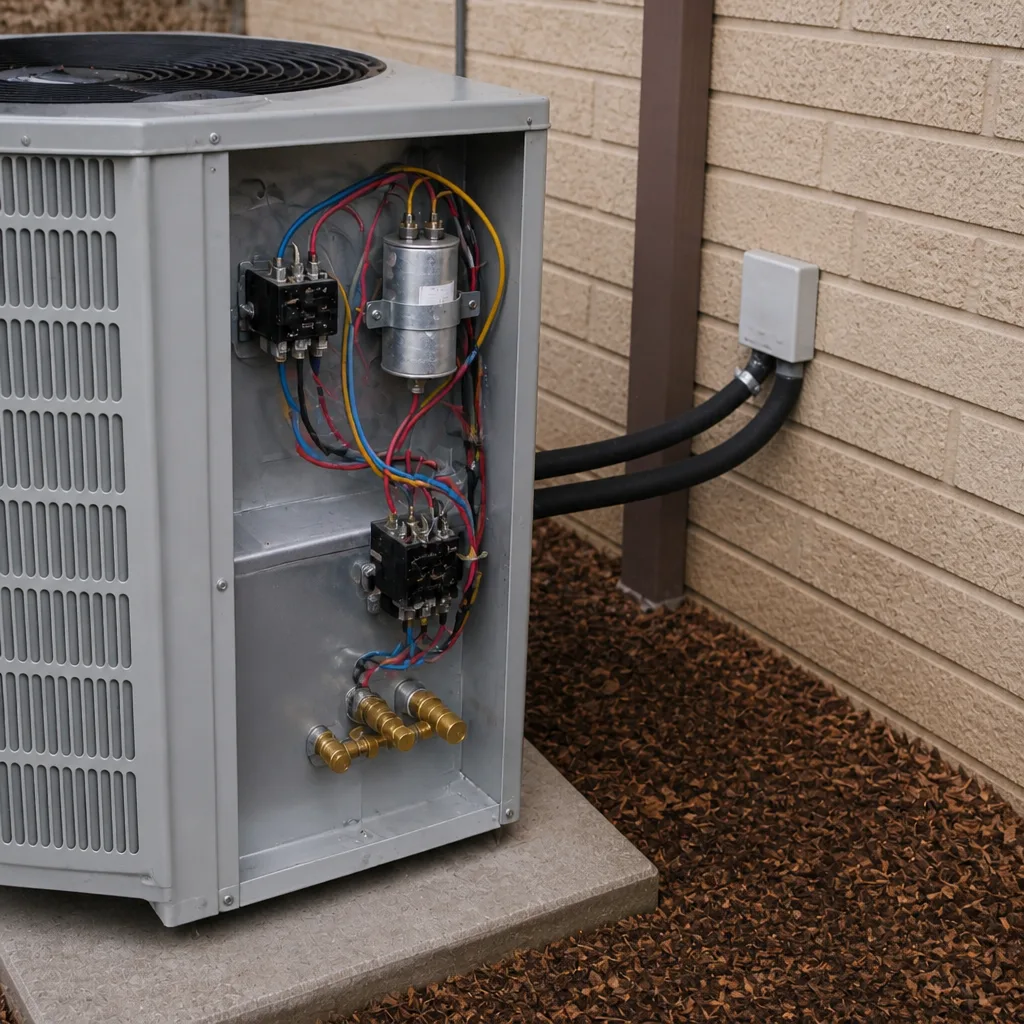
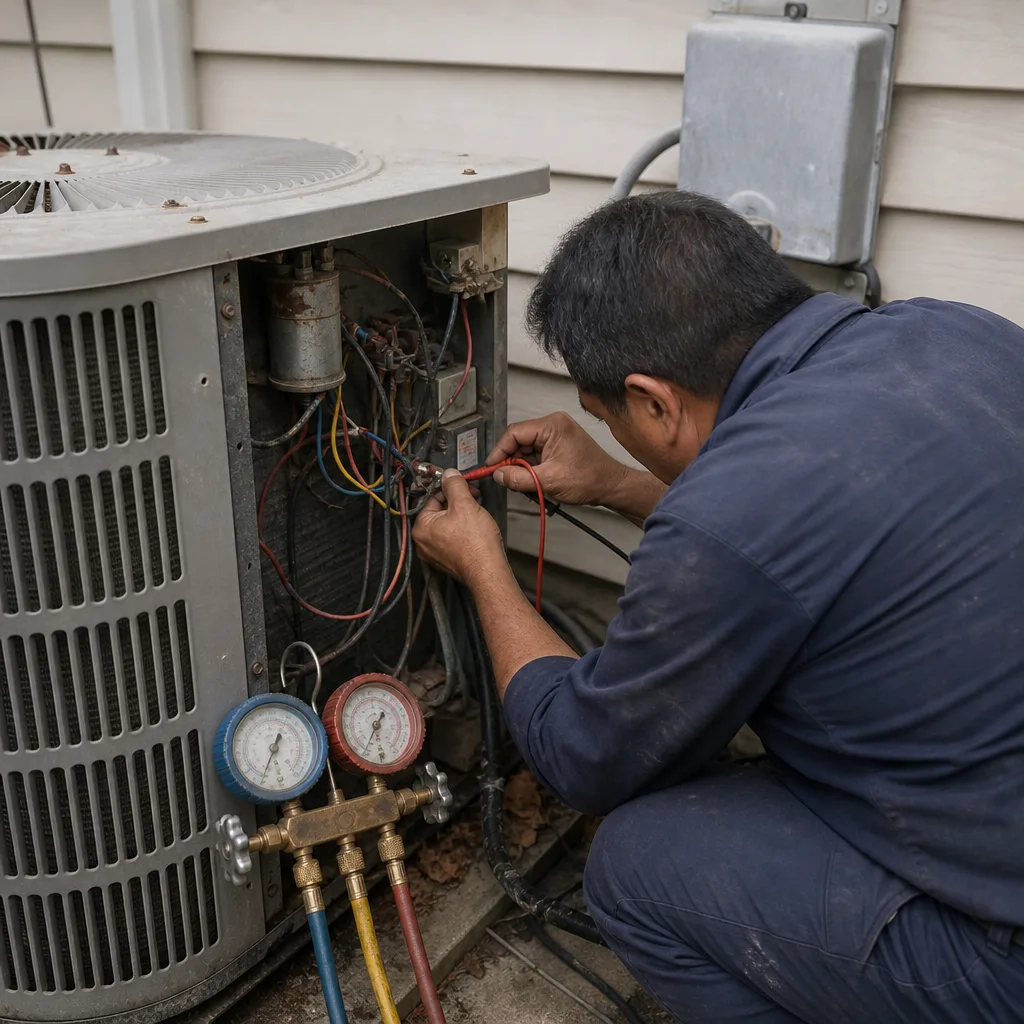
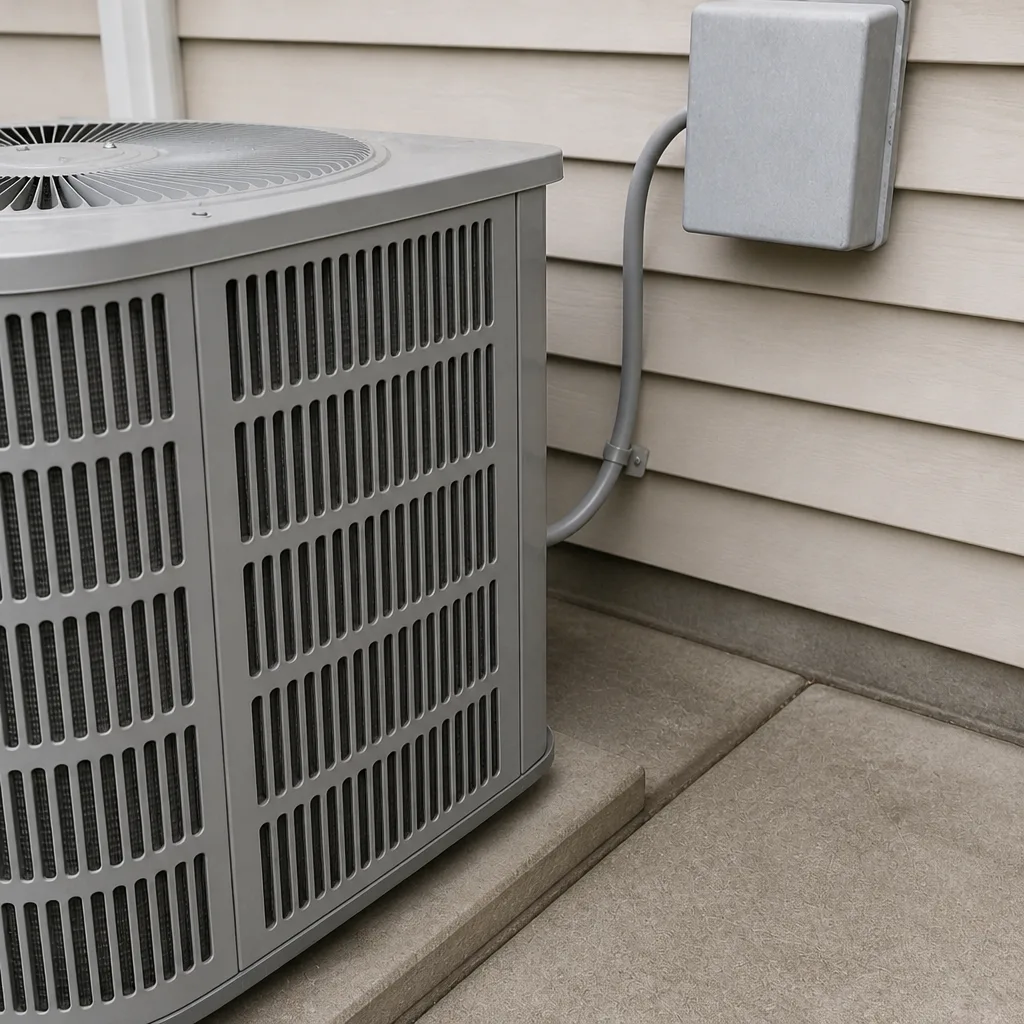
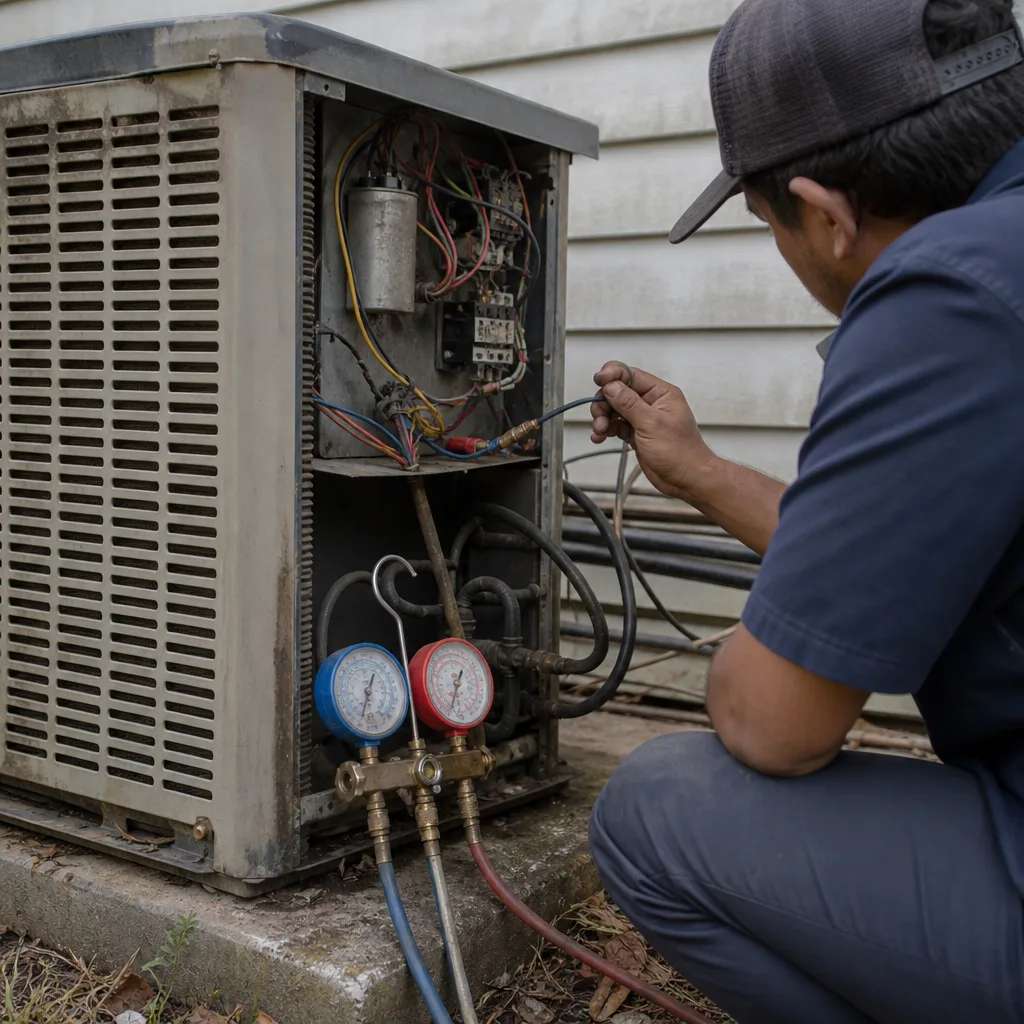
See the difference
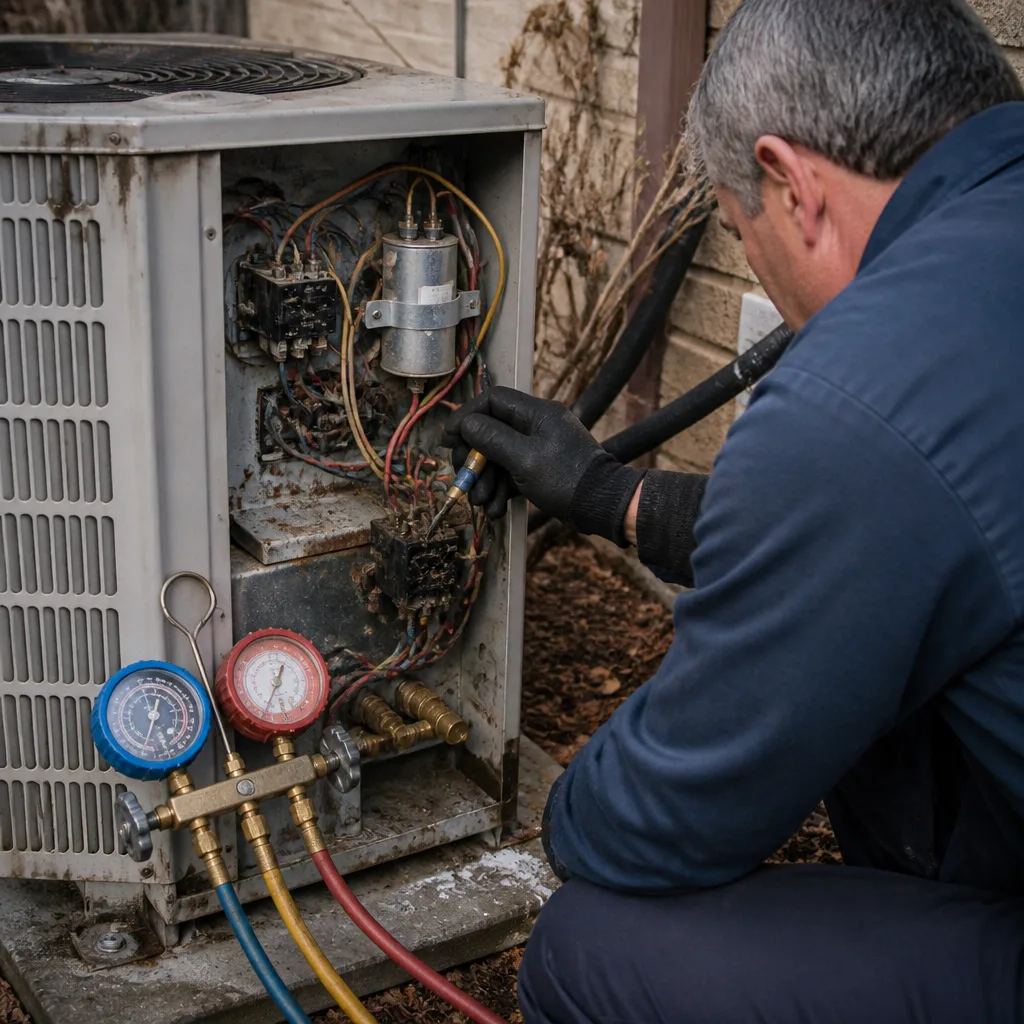 Before
 After
 Before
 After
 Before
 After
Common Mistakes to Avoid
- Treating every symptom as an emergency. Calling for a service visit every time the system makes a new noise wastes money and turns your schedule upside down. Use the three-tier system and let the small stuff sit for a month before deciding it’s real.
- Running a frosted or iced system. Ice on the coils isn’t a sign the system is working harder – it’s a sign it’s struggling. Turning the system off, letting it thaw, and calling is safer than letting the compressor grind all weekend.
- Topping off refrigerant without finding the leak. A sealed system doesn’t lose refrigerant unless something has failed. A recharge without a repair will just leak out again, and repeat top-offs are how a small repair becomes a replacement.
- Venting a gas furnace problem to “reset.” Resetting a furnace that’s shut off on its own and starting it back up hides the underlying issue. If a gas furnace keeps locking out, the answer isn’t more resets.
- Ignoring the electric bill. Bill creep is the cheapest diagnostic you have, and it’s the one most homeowners skip. A 20% jump from last summer is worth investigation even before any symptom appears.
- Assuming one contractor covers both seasons. Hiring an AC-only company for summer and a different heating contractor in winter means two companies, two sets of records, and no one who sees the whole picture. One company, every season, is simpler.
- Buying a replacement because the tech said so. Plenty of “your system is on its last legs” pitches come from a technician who hasn’t measured anything. Ask for the actual numbers – refrigerant pressures, static pressure, amp draw – before agreeing to a replacement. If the tech can’t explain the numbers, get a second quote.
When to Call a Professional
Call for service the same day if you smell gas, see smoke or sparking, or hear a loud banging or grinding that wasn’t there before. Call within 72 hours for ice on the coils, water pooling near the indoor unit, a furnace that won’t stay lit, or short cycling on either heat or cooling. If your bill has jumped and the filter isn’t the cause, that’s a Tier 2 call as well. And if you’re simply not sure which tier a symptom belongs to, call anyway – a quick conversation beats a guess.
Juniper AC Repair offers free estimates in Richardson. Call (855) 419-6908. We answer 24/7. Fast dispatch from 7am to 7pm, Sunday through Friday. An estimate is free, and the price is set per job by the written estimate.
Frequently Asked Questions
A gas smell, a burning smell, or any smoke or sparking at the outdoor disconnect is the most urgent sign. Shut the system off at the thermostat, leave the immediate area, and call from a safe spot. Anything involving gas or electrical smell belongs in Tier 1 without question. If you’re unsure whether something falls into that tier, treat it as urgent. Call (855) 419-6908.
You know by whether a technician finds and fixes the leak rather than just adding refrigerant. A sealed AC system doesn’t consume refrigerant, so a system that’s low has a leak somewhere. A responsible repair locates the leak, repairs it, and then recharges to the correct weight. A recharge without a repair is a short-term patch that will fail again. Call (855) 419-6908 for an estimate.
Mostly, yes, but a furnace that sits idle for nine months should be test-run before the first cold snap. Gas furnaces can develop issues – a clogged burner, a bad igniter, a failing flame sensor – during the off-season. A pre-season test run catches them while fixing them is easy. If your furnace hasn’t been run since last winter, call (855) 419-6908.
No. Uneven cooling is often a duct balance issue, a partially closed damper, or a filter that needs replacing, and none of those mean the AC itself is failing. Start with the simple checks, then monitor for 30 days. If the room stays consistently off and the filter and grilles are clear, then it’s worth a diagnostic. Call (855) 419-6908 for an estimate.
We don’t quote a diagnostic fee. Our estimates are free, and the price for any actual work is set per job by the written estimate. That way you see the number before you commit to anything. Line-item pricing is in the written estimate, not a verbal “it’ll be a few hundred.” Call (855) 419-6908 for a free estimate.
Repair first if the repair cost is well under half the cost of replacement and the system has years of useful life left. Replacement usually makes more sense when repair costs creep toward that half mark, when the equipment is showing multiple failing components at once, or when a major component like the compressor has failed on an older unit. Get the actual numbers before deciding. Call (855) 419-6908 for a free estimate and we’ll walk through the math with you.
The Bottom Line
The core of this guide is one idea: assign each HVAC warning sign to the right action tier. Burning smell, gas odor, ice on the coils, water pouring indoors – those are shutdown-and-call. Rising electric bills, short cycling, weak cooling in one zone – schedule within a few days. Faint rattles, one warm room, a musty smell that clears – monitor for a month. Our technicians have up to 14 years of experience across brands like Carrier, Trane, Lennox, and American Standard, and we can work on the equipment you already have. If you’re not sure which tier a symptom belongs to, err on the side of calling. We’ll tell you what’s actually going on.
Call (855) 419-6908 for a free estimate. We answer 24/7. Fast dispatch from 7am to 7pm, Sunday through Friday. Estimates are free, and the written estimate sets the final price.
Written by the team at Juniper AC Repair.