
Last updated November 15, 2026
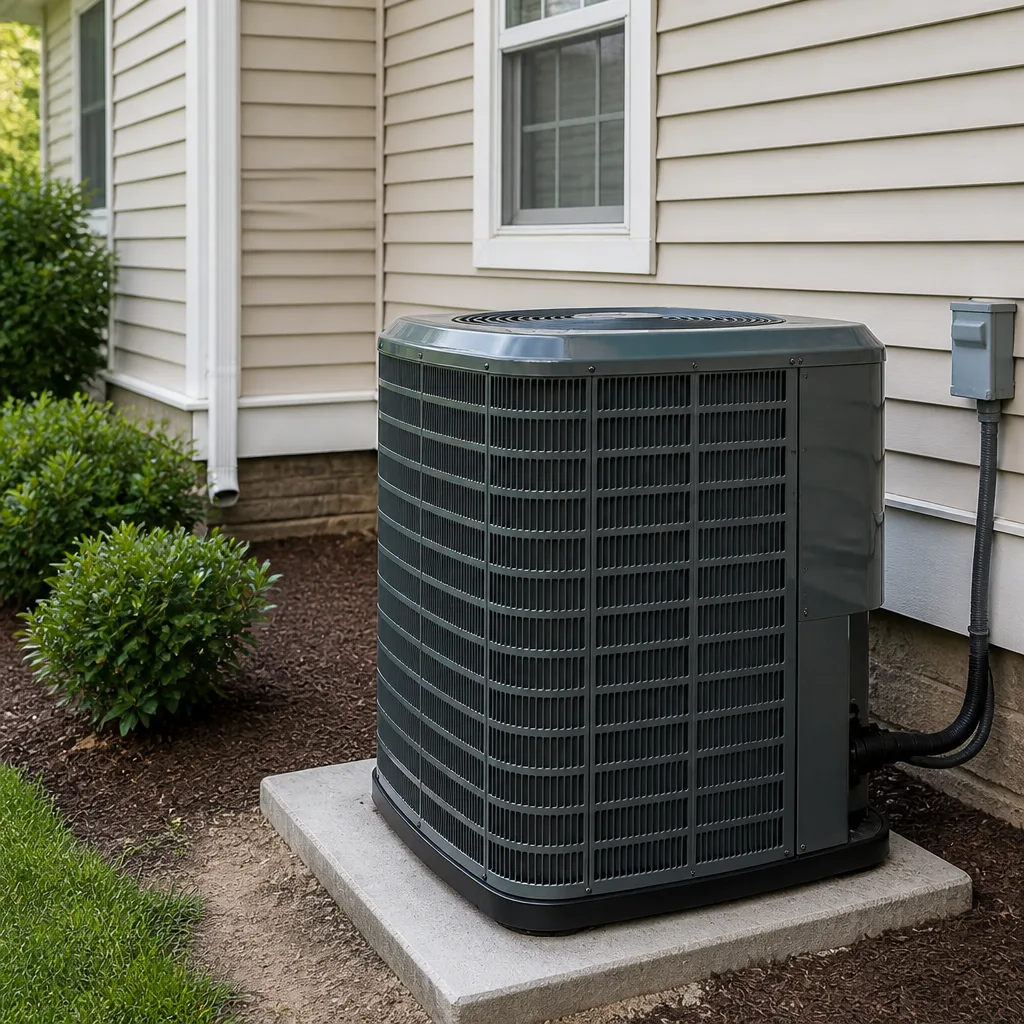 AC repair
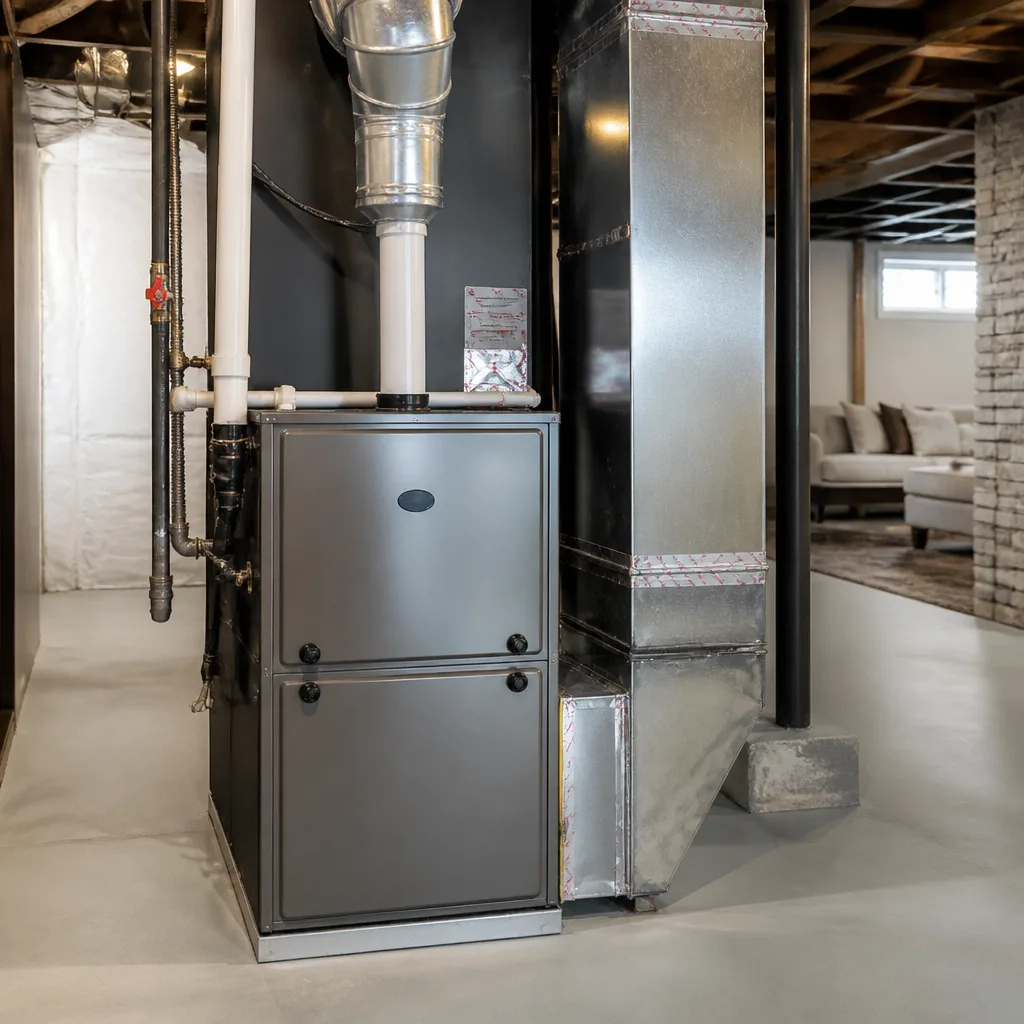 Furnace & heating
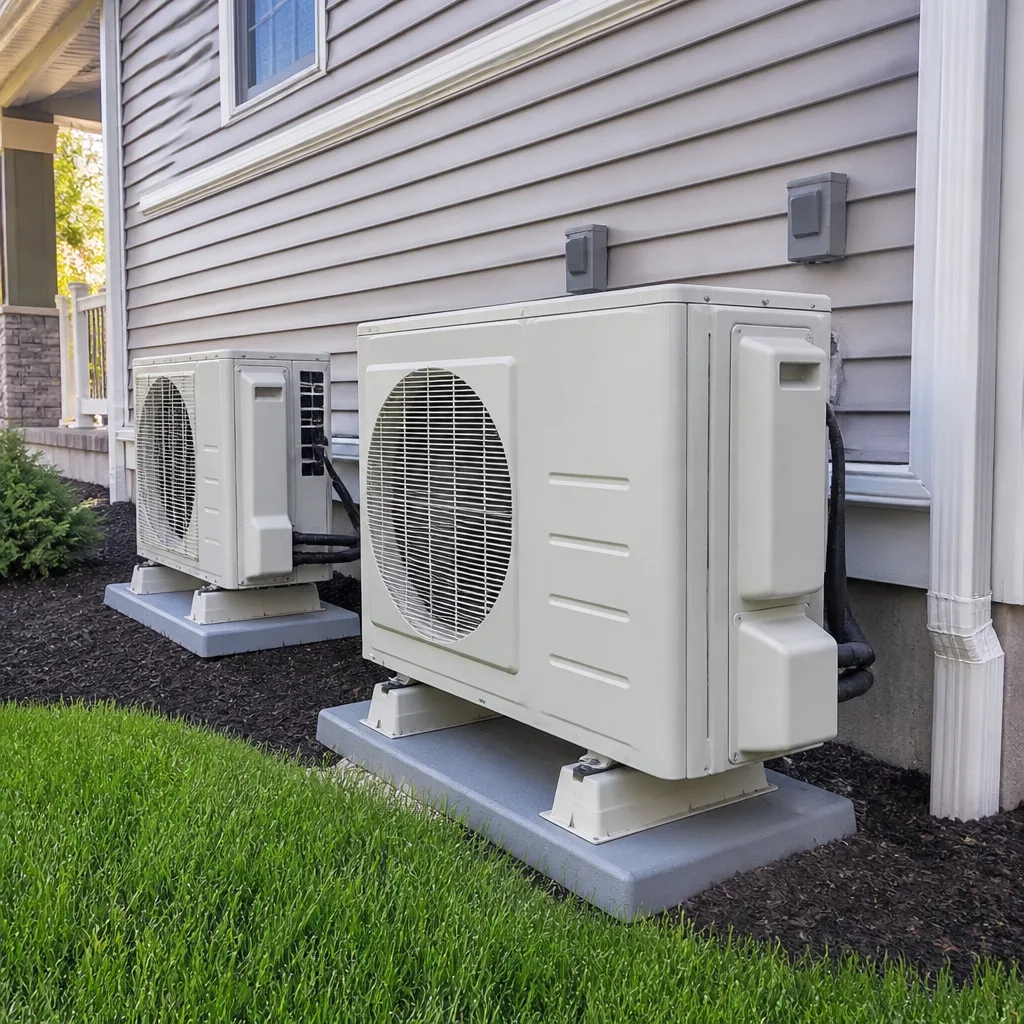 Heat pumps
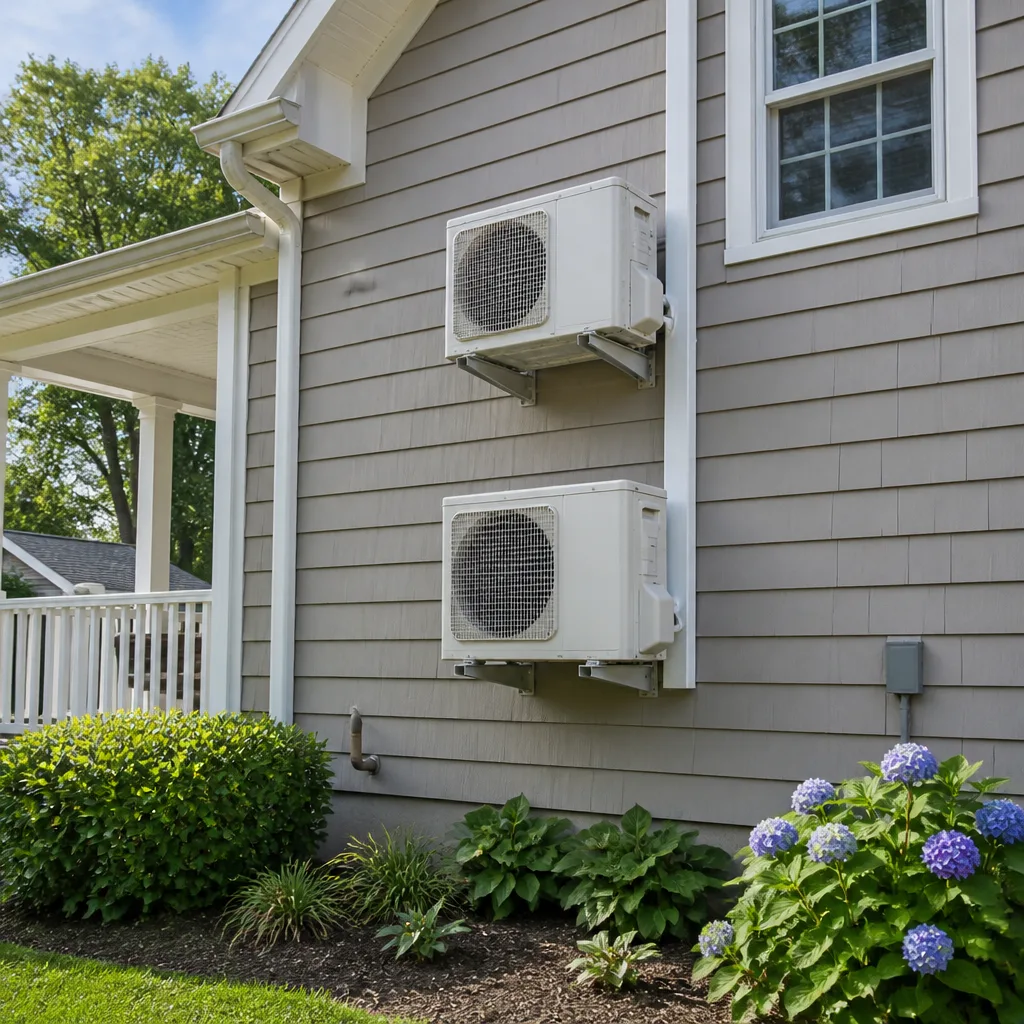 Ductless mini splits
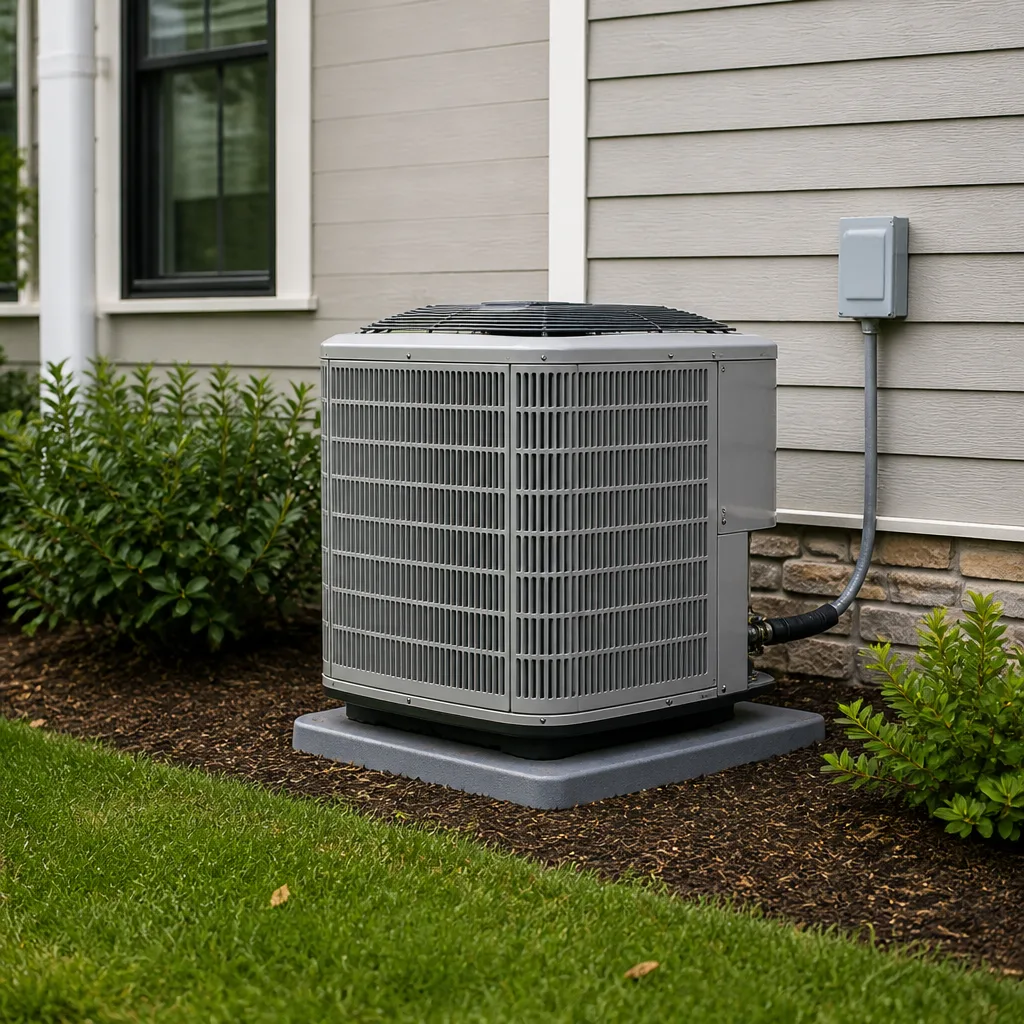 Carrier
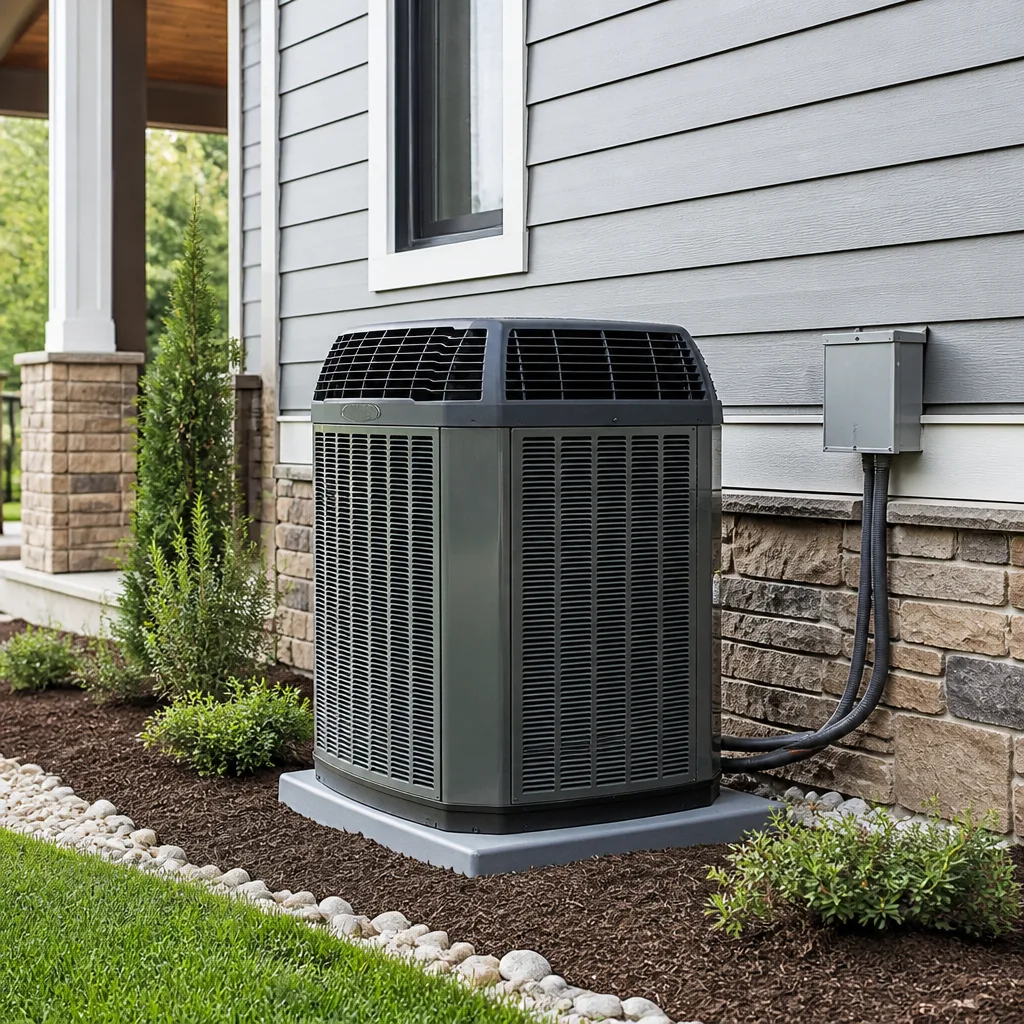 Trane
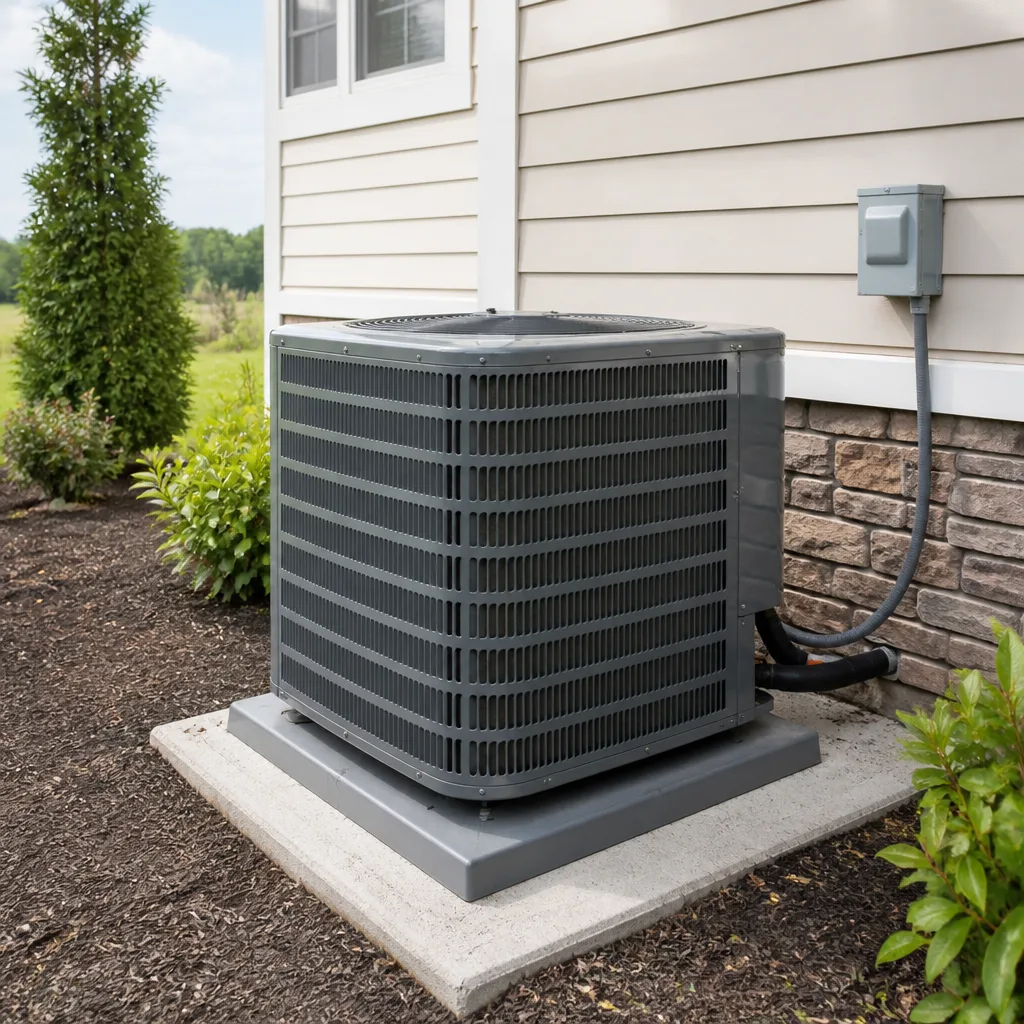 Goodman
Seasonal tune-up and full diagnostic on your Carrier, Trane, or Goodman system - readings shown to you before any repair is proposed
Diagnosis first, numbers second - you approve the repair price before a single part goes in.
Get your free estimateHow to Hire an HVAC Contractor in Richardson: A Step-by-Step Guide
Texas requires HVAC contractors to hold a state license, and most homeowners treat that license as a blanket guarantee that everyone who shows up at the door is fully trained. It doesn’t work that way. The license belongs to the business, not to the individual in your attic with a manifold gauge. The person handling your Lennox furnace or Goodman condenser may be a seasoned tech or someone a few weeks into the trade, and a rubber-stamped license number won’t tell you which. This guide walks you through hiring an HVAC contractor in Richardson the way an insider would: license lookups, the questions almost nobody asks, estimate red flags, payment milestones that protect you, and why a dealer tied to one brand may not recommend what your home actually needs.
Quick Answer
To hire an HVAC contractor in Richardson, verify the company’s TDLR license, ask who specifically will perform the work and what experience they have, demand a written estimate that includes a Manual J load calculation for any replacement, and structure payments so a meaningful portion is held until you sign off on the finished job. A free estimate and a clear scope of work matter more than the lowest bid. In our experience, the contractor who explains the diagnosis beats the one who quotes the fastest.
Styles & brands we work with
- AC repair
- Furnace & heating
- Heat pumps
- Ductless mini splits
- Carrier
- Trane
- Goodman
Table of Contents
- How to Look Up a Contractor’s TDLR License in Under Two Minutes
- What the TDLR License Tiers Actually Mean for Your Job
- The Three Questions to Ask About Who Will Actually Do the Work
- Red Flags in HVAC Estimates: Manual J and What a Missing Load Calculation Tells You
- How to Structure Payment Milestones So You Keep Leverage
- Why Brand-Loyal Contractors May Steer Recommendations
- What Richardson’s Climate and Housing Stock Mean for Contractor Choice
- When to Call a Professional
- Frequently Asked Questions
How to Look Up a Contractor’s TDLR License in Under Two Minutes
The Texas Department of Licensing and Regulation (TDLR) maintains a public database of licensed air conditioning and refrigeration contractors, and anyone can search it for free. Pull up the TDLR license search, enter the company name or license number from the estimate, and confirm the record matches the business asking for your money. The whole lookup takes about ninety seconds.
Here’s what the record tells you:
- License status. “Active” means the company is current. “Expired,” “suspended” or “revoked” is an immediate no.
- License type. Most residential work falls under an Air Conditioning Contractor license. A company pulling a limited or restricted license may not be authorized for the full scope you need.
- Expiration date. A license on the verge of lapsing is worth asking about before you sign anything.
- Business name and location. Match the name on the estimate to the name on the license. Mismatches happen in subcontracted work and can leave you with a warranty from a business you never hired.
- Insurance. TDLR requires proof of liability insurance for the license to stay active, so an active license is a reasonable starting proxy for insurance – but ask for the certificate directly for larger jobs.
When you’re comparing contractors in Richardson, a company that hands you its license number before you ask has nothing to hide. One that fumbles the question is telling you something.
What the TDLR License Tiers Actually Mean for Your Job
Not every HVAC license is the same. Texas divides the licensing structure into tiers, and the tier determines what kind of job the company can legally take on. Understanding the difference helps you match contractor to scope.
The Tiers, Roughly
- Air Conditioning Contractor. The broadest residential license. Covers the design, installation, repair and maintenance of air conditioning and heating systems, including refrigeration. This is what you want for replacement work.
- Air Conditioning Technician. Licensed to work on systems under the supervision or direction of a licensed contractor. A licensed tech is qualified, but the regulatory chain runs back to the contractor.
- Limited licenses. Cover narrower scope – certain types or sizes of equipment. Ask what’s limited before signing for a full replacement.
The critical nuance: an Air Conditioning Contractor license can be held by an individual or a business entity. When it’s held by a business, the owner has met the requirements but the techs they send out may hold different credentials. In our experience, most homeowners assume the license covers everyone on the crew. It doesn’t. When you hire for AC installation in Richardson, ask what credentials the techs who will be in your home actually hold.
The Three Questions to Ask About Who Will Actually Do the Work
This is the blind spot in nearly every hiring guide. Homeowners vet the business, confirm the license, check reviews, then hand the job to whoever shows up. The person in your attic doing the brazing, the evacuation and the charge is the one whose work determines whether your system lasts. Ask these three questions, in this order, before you sign.
- “Who specifically will be in my home, and what credentials do they hold?” Get a name and a license or experience level. If the answer is vague – “our best guy” – push back. A licensed company should know exactly who it’s sending and be able to describe the tech’s background.
- “How much experience does that technician have, and on this equipment?” A tech with substantial time in the trade is a different animal than one still learning. Our technicians have up to 14 years of experience, and we’re happy to say so because we know it matters.
- “If something goes wrong during the install, who is responsible?” The answer should be the company, in writing, without wavering. A contractor who hedges here is shifting risk onto you.
For furnace repair in Richardson, that last question matters more than ever. A failed heat exchanger is a serious safety issue, and the person diagnosing it needs both training and authority to call it correctly. A junior tech under pressure to clear a call may miss what a seasoned one catches.
Red Flags in HVAC Estimates: Manual J and What a Missing Load Calculation Tells You
The single clearest signal of a sloppy contractor is an estimate for a full replacement that never mentions a load calculation. A Manual J – the industry-standard sizing calculation that accounts for square footage, insulation, window area, orientation and local climate – is what tells a contractor how many tons your home actually needs. Skip it, and you’re guessing.
Here’s why the guess matters in Richardson. Oversized systems cool the space too quickly, cycle too often, and never run long enough to dehumidify properly. Undersized systems run constantly and never quite keep up in a hot July. Both problems show up slowly, and both trace back to a quote that was priced by eyeballing the existing unit rather than calculating what the house needs.
Estimate Red Flags to Watch For
- No Manual J. A tonnage quote taken from the existing nameplate with no calculation.
- No duct assessment. A new system feeding undersized or leaky ducts won’t perform. A reputable contractor inspects the ductwork.
- No written scope. Itemized equipment, labor and what’s included (line flush, pad, thermostat, permits) should all appear in writing.
- Verbal-only pricing. Any estimate that isn’t written down is a starter for a later change order.
- One-price-fits-all phone quotes. Without seeing the home, no honest contractor can quote a replacement.
- Pressure to sign today. Legitimate contractors don’t need to rush you into a decision before you’ve compared options.
We do the load calculation before we price a job, because that’s what tells us what your home needs rather than what we want to sell you. Call (855) 419-6908 for a free estimate in Richardson – we answer 24/7.
How to Structure Payment Milestones So You Keep Leverage
Payment terms are where homeowners give up leverage without realizing it. A large deposit up front, or full payment on the day the equipment is set and before the final inspection, leaves you with no negotiating position if something’s wrong. The fair structure pays the contractor enough to cover materials without handing over the whole job before it’s done.
A reasonable milestone structure for a replacement in Richardson:
- Modest deposit at signing. Enough to cover the equipment order and lock the schedule, not the majority of the job.
- Second payment at rough-in or equipment delivery. Once the equipment is on site and the install has begun, releasing a portion is fair. This is a good point to confirm the equipment matches the written scope.
- Final payment after walk-through and inspection sign-off. Hold a meaningful balance – ten to twenty percent is a common range – until you’ve seen the system run, the thermostat controls both heating and cooling, and any required inspection has been signed.
Get the sequence in writing, and make sure the final payment is conditional on your satisfaction, not on the tech’s departure. If a contractor demands full payment on completion day with no inspection window, treat that as a signal. The estimate sets the price; the payment schedule sets the leverage. Both should be in writing before anyone touches your equipment.
Why Brand-Loyal Contractors May Steer Recommendations
Some contractors are factory-authorized dealers for a single manufacturer. That relationship often comes with training, warranty support and access to parts – real benefits. It also comes with an incentive: a dealer’s margins and their relationship with the manufacturer typically favor the brand on their truck. When every quote ends in the same brand name, the recommendation may reflect the dealership more than your home.
A brand-agnostic contractor works on whatever you already own and quotes what fits the job. That flexibility matters when:
- Your existing system isn’t the brand the dealer is tied to.
- You want to compare a value-tier unit against a premium one for the same house.
- Your budget calls for a Goodman where the quote is leaning toward a Trane, or vice versa.
- You need a repair rather than a replacement, and the dealer’s route is to sell new.
We work across value and premium equipment, including Rheem, York, Lennox and Goodman, which means our recommendation is shaped by the house and the budget, not by which brand pays the dealership. That range is why homeowners call us back in winter after we installed their AC in summer. One company, every season, no second contractor to vet.
What Richardson’s Climate and Housing Stock Mean for Contractor Choice
Richardson summers are punishing – long stretches above 95 degrees, weeks of sustained heat, and evenings that barely dip below 80. That pattern stresses cooling systems harder than most of the country, which means the contractor you hire needs to be thinking about equipment longevity, not just installation day. A well-sized, well-installed system in Richardson should last its rated life; a rushed install can shave years off.
Winters here are mild, but not absent – January and February bring enough cold snaps to make a functioning furnace non-negotiable. A contractor who only sells and installs AC will hand you off to someone else when the heat goes out. Look for a company that covers both sides of the system so your relationship isn’t seasonal.
The local housing stock reinforces the point. Richardson’s neighborhoods span mid-century ranch homes through newer construction, and the older homes often have ductwork that hasn’t been touched in decades. A contractor who inspects and corrects duct issues before installing new equipment will deliver better comfort than one who swaps the box and leaves the ducts alone. When you’re comparing bids, ask what the contractor noticed about your ducts – the answer tells you how closely they’re looking at your house.
If you want to see what we cover in the area, start with our Richardson page, and read about how we handle AC installation when you’re ready to compare.
Common Mistakes to Avoid
- Trusting the company license as a tech credential. The license covers the business, not the individual in your attic. Ask who is coming and what experience they hold before you sign.
- Choosing on price alone. The lowest bid often comes from a contractor who skipped the load calculation. Paying less up front rarely ends up cheaper over the life of the system.
- Skipping the Manual J. A tonnage quote eyeballed from the old unit is a guess. If the estimate doesn’t mention a load calculation, the sizing is unverified.
- Paying the bulk of the job up front. Holding a real portion of the total until after inspection sign-off is your leverage. Give it up on day one and you lose it.
- Assuming one brand is the answer. A dealer tied to a single manufacturer may steer every recommendation toward their line, even when a value-tier unit would suit your home and budget better.
- Ignoring the ductwork. New equipment on old, leaky ducts performs like old equipment with a nicer label. Ask what the contractor saw and what they’ll do about it.
- Calling for a furnace only in the cold. The best time to find a heating contractor you trust is before the system fails. Set up the relationship while the weather is warm and the schedule is open.
See the difference
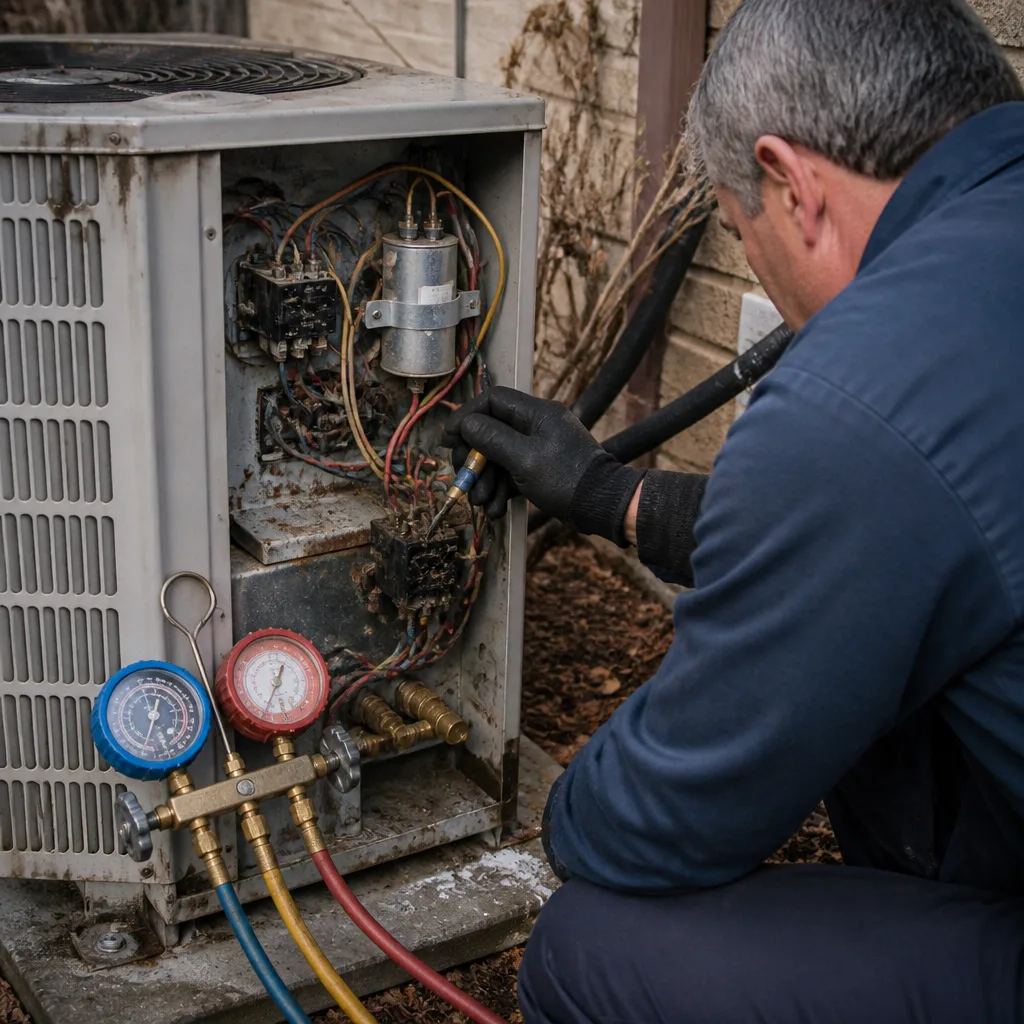 Before
 After
 Before
 After
 Before
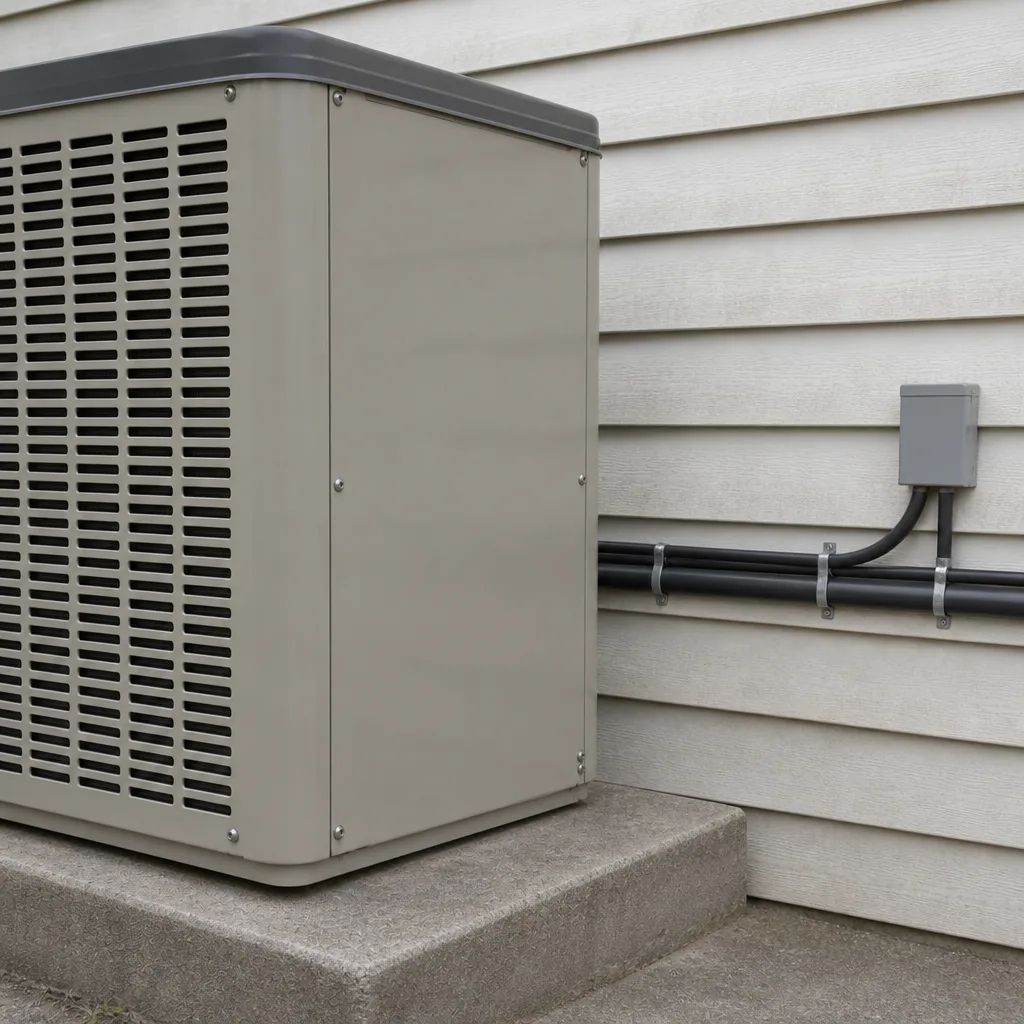 After
When to Call a Professional
Some HVAC problems are genuinely dangerous to touch. Heat exchangers can crack and release carbon monoxide, and refrigerant handling requires tools and training you don’t need to own. If you smell gas, hear a popping or grinding from the furnace, see visible soot, or notice the blower running without heat, stop and call a licensed professional. On the cooling side, a system that trips the breaker repeatedly, blows warm air, or ices the outdoor unit needs a diagnosis, not a reset button. If your AC fails mid-summer, the heat becomes a health concern fast – same-day service matters. We answer 24/7. Fast dispatch from 7am to 7pm, Sunday through Friday. Juniper AC Repair offers free estimates in Richardson – call (855) 419-6908.
Frequently Asked Questions
Search the Texas Department of Licensing and Regulation (TDLR) database for the company’s license number or business name. Confirm the license status is active, the license type matches your job, and the business name matches the name on the estimate. The lookup is free and takes about two minutes.
Not necessarily. Texas HVAC licenses belong to the business or owner – they don’t certify every technician the company sends out. Ask specifically who will perform the work and what credentials or experience that person holds. Our technicians have up to 14 years of experience, and we say so because it should be a question you’re already asking.
Manual J is the standard load calculation that determines exactly how much heating and cooling capacity your home needs based on size, insulation, windows and climate. A quote without one is a guess based on your existing equipment. Without a load calculation, you risk an oversized system that short-cycles and doesn’t dehumidify or an undersized one that never keeps up.
A dealer tied to one manufacturer may recommend that brand regardless of your home’s needs, because the dealership relationship carries incentives. A brand-agnostic contractor works with what you have – Goodman, Rheem, Lennox, York or another major brand – and can recommend based on fit and budget. Ask both to show you the load calculation and the equipment options.
A modest deposit at signing, a second payment when equipment is delivered, and the balance after your walk-through and inspection sign-off. Hold ten to twenty percent until you’ve seen the system run and any required inspection has cleared. Get the payment schedule in writing before work starts. Call (855) 419-6908 – we answer 24/7, fast dispatch from 7am to 7pm, Sunday through Friday.
Cost depends on system size, equipment tier, ductwork condition and whether a load calculation calls for changes. A written estimate is the only reliable number – and it should be free. We set our price per job by the written estimate, and the estimate is free. Call (855) 419-6908 to schedule one.
We can, which is the point. Our furnace repair coverage and our AC installation work run under the same name, so you have one relationship instead of two. If you hired us for a summer install, we’re already familiar with your system when winter comes.
A diagnosis identifies what’s wrong with your system; an estimate prices what it will cost to fix. Reputable contractors deliver both clearly – in writing – with a scope you can compare line by line. If you’re getting numbers with no explanation attached, slow down and ask for the diagnosis behind the quote.
The Bottom Line
Hiring an HVAC contractor in Richardson is less about finding the lowest bid and more about vetting the person who shows up. Verify the TDLR license, then ask the three questions that most homeowners skip – who’s coming, what experience they have, and who answers if the job goes sideways. Insist on a Manual J, get the payment milestones in writing, and don’t let a single-brand dealer steer the recommendation without a load calculation behind it. A free written estimate, a clear scope of work, and a company that covers both cooling and heating is the standard to hold every contractor to. Call (855) 419-6908 for a free estimate. We answer 24/7. Fast dispatch from 7am to 7pm, Sunday through Friday.
If you want to know more about how we run a job, start at Juniper AC Repair and read from there.
Written by the team at Juniper AC Repair.