
Last updated November 15, 2026
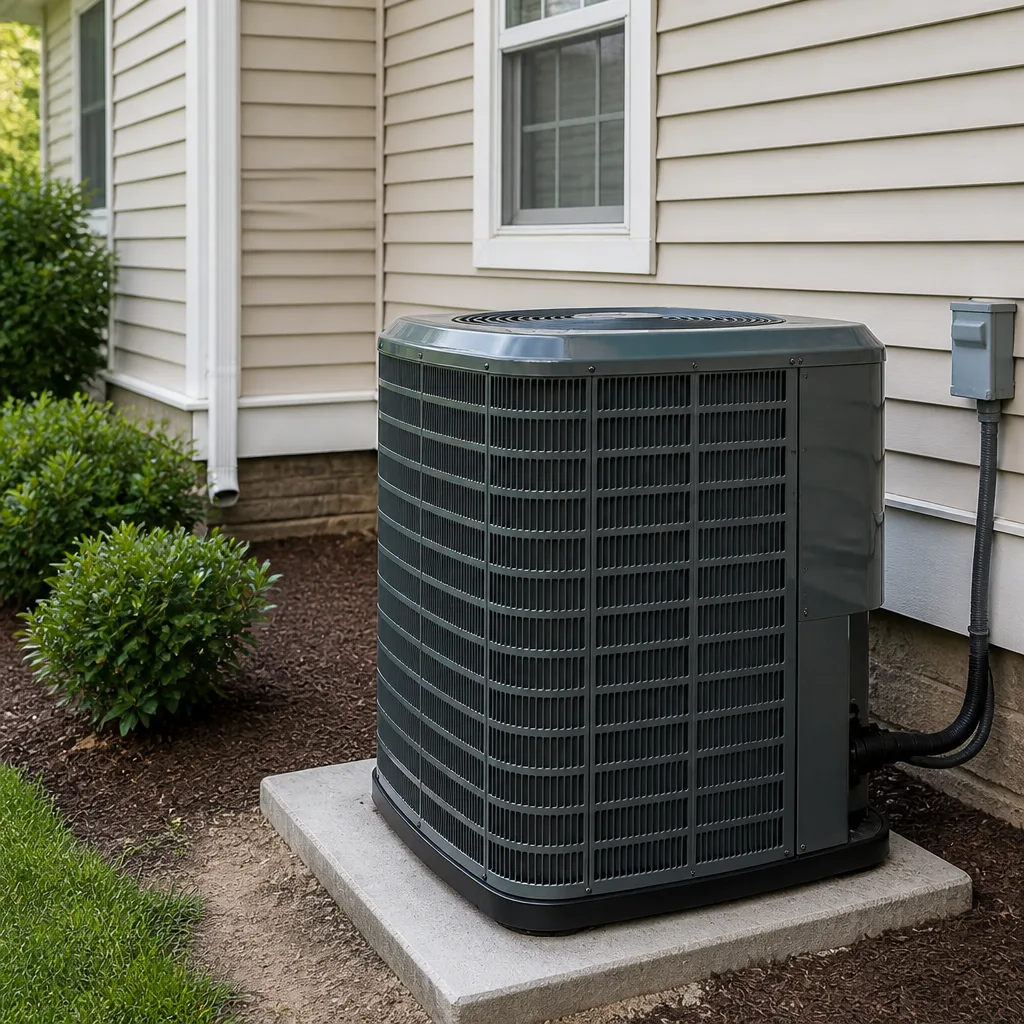 AC repair
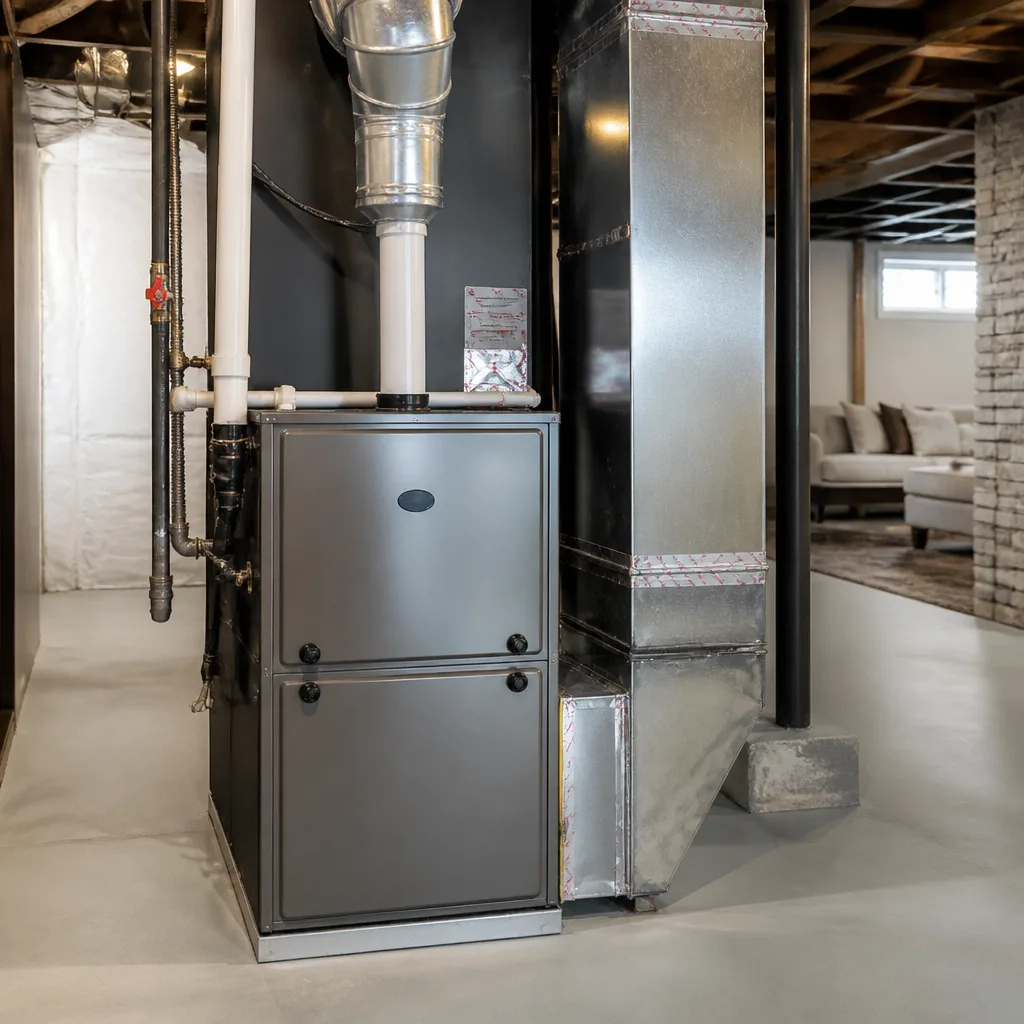 Furnace & heating
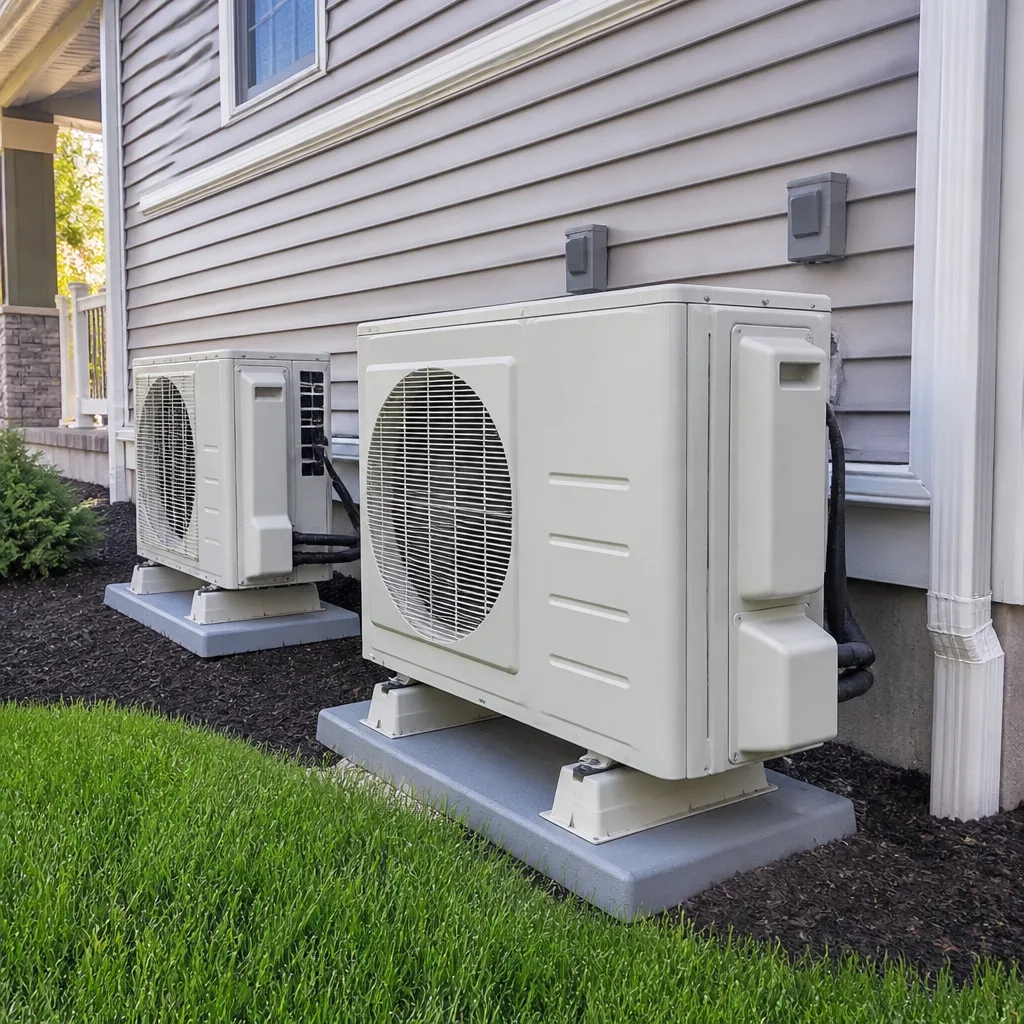 Heat pumps
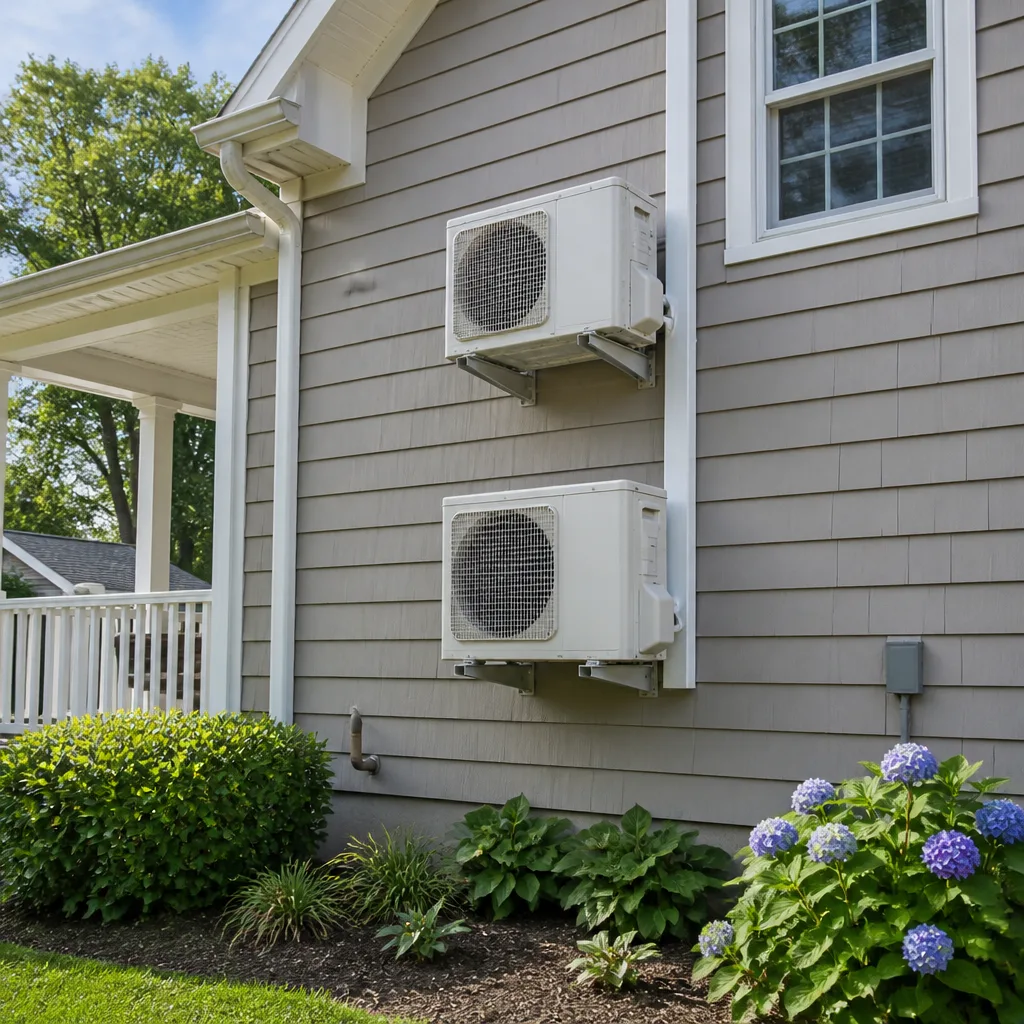 Ductless mini splits
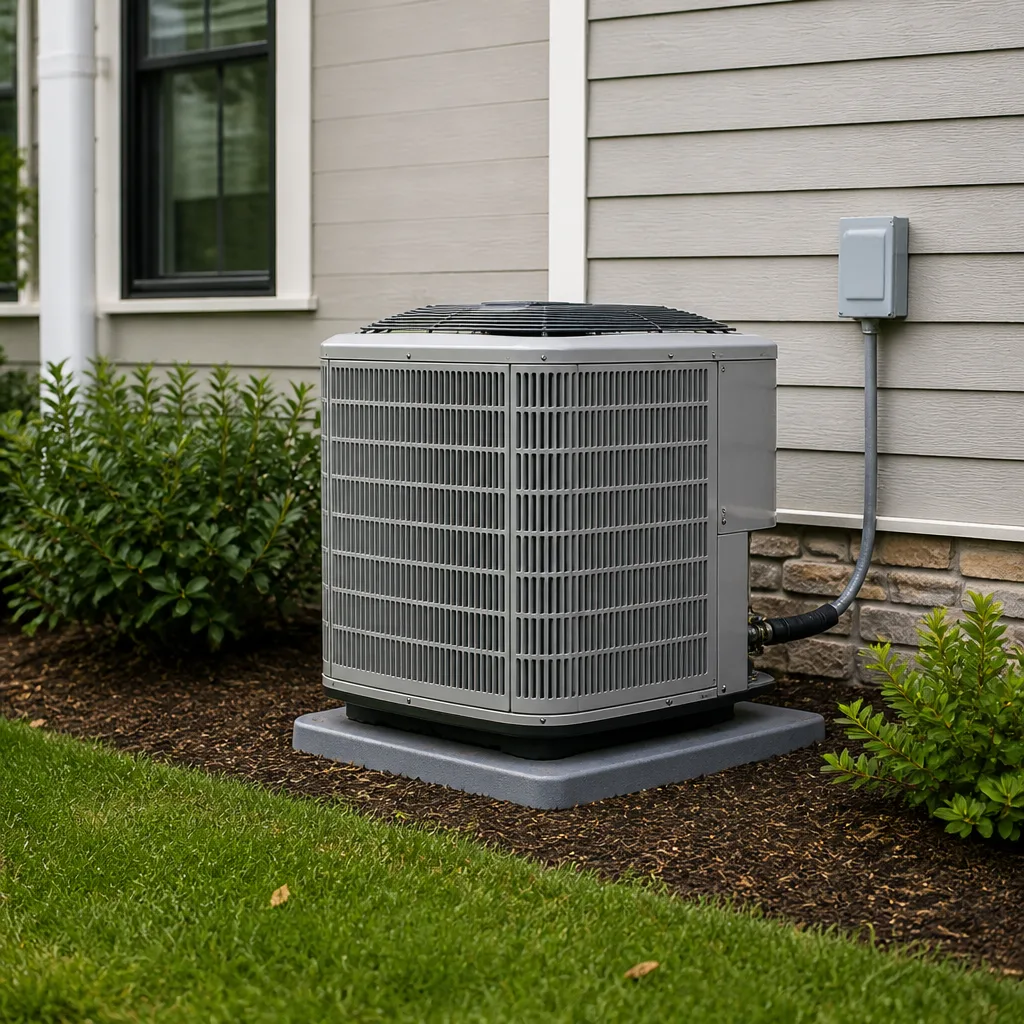 Carrier
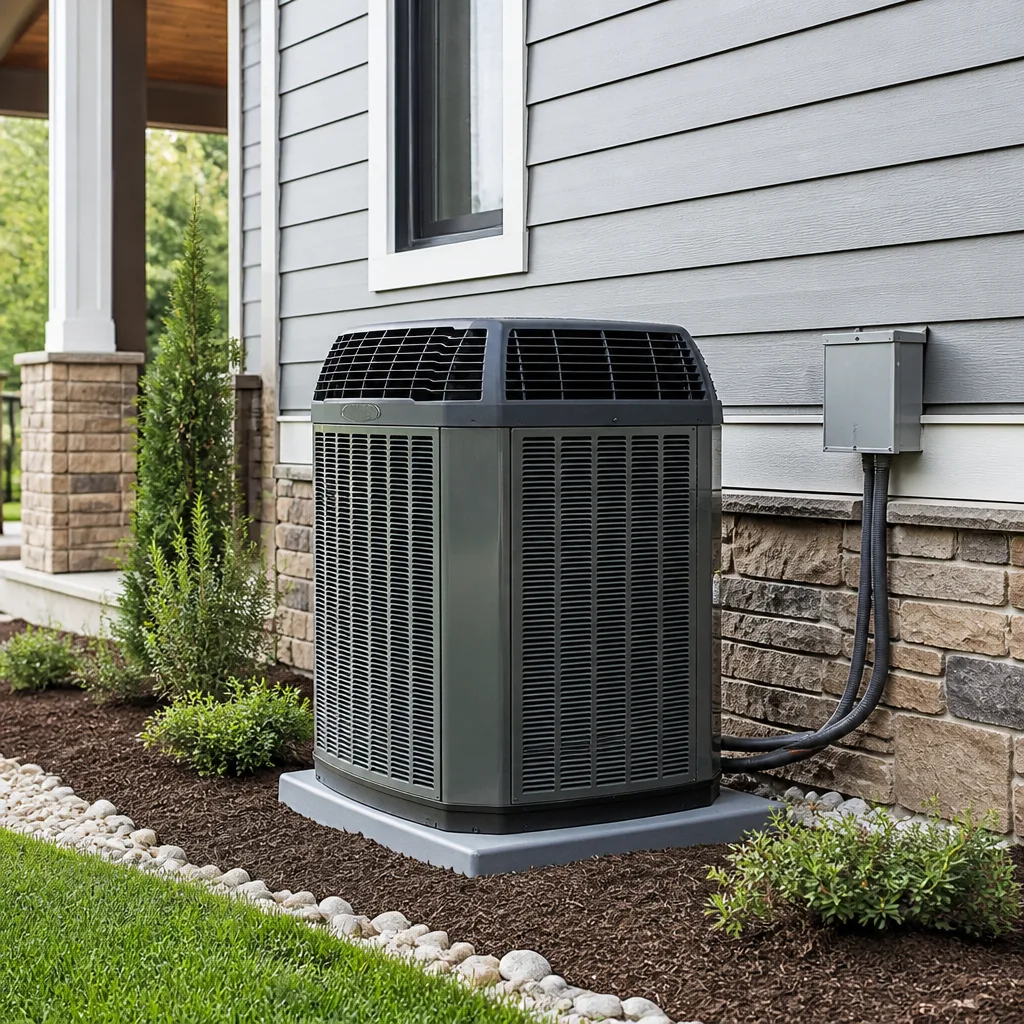 Trane
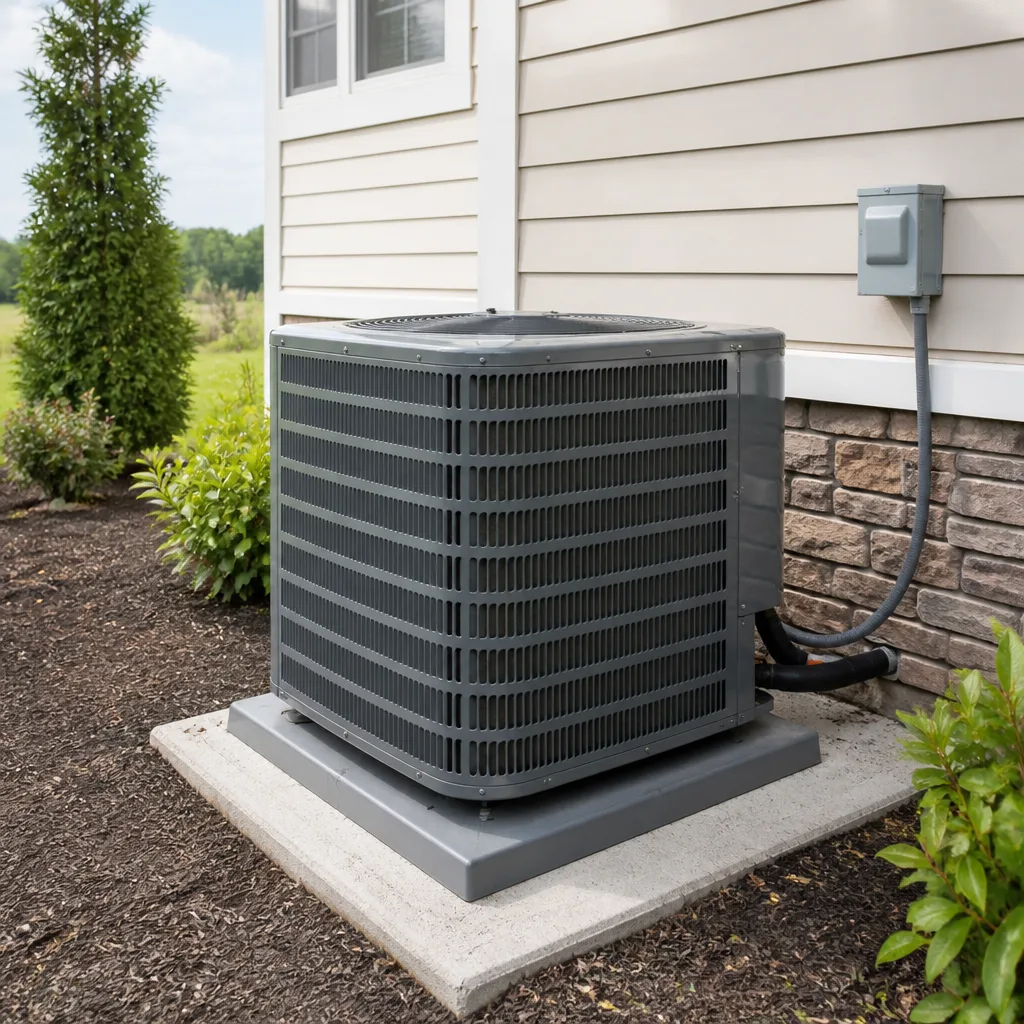 Goodman
Seasonal tune-up and full diagnostic on your Carrier, Trane, or Goodman system - readings shown to you before any repair is proposed
Diagnosis first, numbers second - you approve the repair price before a single part goes in.
Get your free estimateHVAC Permits, Codes & Inspections in Richardson, TX: What You Need to Know
Most homeowners assume the contractor handles the paperwork, and that assumption is where trouble starts. In Richardson, an HVAC permit is issued to the property, not to the contractor – which means when a sale, a refinance, or an insurance claim goes sideways years later, the person answering questions is the homeowner, not the company that skipped the filing. A heating and cooling system can work perfectly and still be a problem on paper. This guide walks through which Richardson jobs need a permit, how the inspection stages actually run, how to check permit history on a house you’re buying, and what you should ask any contractor before work starts. By the end you’ll know the process well enough to hold anyone on the job to it, including us.
Quick Answer
In Richardson, replacing or installing a heating or cooling system, running new refrigerant or electrical lines, and any work that changes the system’s capacity or layout requires a permit and inspections before the system is signed off. Straight repairs that swap a part – a motor, a capacitor, a thermostat – generally don’t. The permit goes through the City of Richardson’s building department, the contractor should pull it in their name and list you as the property owner, and the job isn’t finished until the final inspection passes.
Styles & brands we work with
- AC repair
- Furnace & heating
- Heat pumps
- Ductless mini splits
- Carrier
- Trane
- Goodman
Table of Contents
- Which HVAC jobs in Richardson require a permit?
- Which HVAC jobs are exempt?
- How the Richardson HVAC permit process works, step by step
- What happens during a rough-in vs. final inspection
- How to verify permit status on a home or on completed work
- Your right to request the permit
- Richardson code points that catch homeowners off guard
- Permits when you’re buying or selling in Richardson
Which HVAC jobs in Richardson require a permit?
Any job that installs a new system or changes the mechanical, electrical, or refrigerant side of an existing one requires a permit in Richardson. Think of the permit line this way: a part swap is a repair, and a system change is construction. The city wants eyes on construction.
These jobs typically require a permit:
- Full system replacement – a new condenser and air handler, or a new furnace, even when the ductwork stays.
- New construction and additions – any new HVAC system serving new conditioned space.
- Duct replacement or major duct redesign – new trunk lines, relocated runs, or added zones.
- Refrigerant line work – new line sets, relocated indoor units, or a change in refrigerant type that requires new components.
- Electrical work tied to the system – new disconnects, new circuits, or panel work serving the equipment.
- Change-outs that alter capacity – upsizing or downsizing tonnage, or converting from one fuel source to another.
- Mini-split and ductless additions – adding a head or a whole new zone.
Richardson’s housing stock runs from 1960s and 1970s ranch homes near the Heights and Canyon Creek areas to newer builds out toward the eastern side of town, and that matters. Older homes are more likely to need duct modification, electrical upgrades, and sometimes a gas line change during a replacement, and each of those items pulls the job further into permit territory. When we look at ac installation on an older Richardson house, the scope question usually answers itself within the first walkthrough.
Bottom line: if the job involves more than unbolting a part and bolting a new one back on, ask for the permit.
Which HVAC jobs are exempt?
Routine repairs generally don’t require a permit. Swapping a failed capacitor, a blower motor, a contactor, a thermostat, or a fan blade is maintenance work, not construction, and the city doesn’t need to inspect it.
Jobs that usually don’t need a permit:
- Replacing a thermostat or a control board.
- Repairing or replacing a condenser fan motor, blower motor, or capacitor.
- Cleaning coils, clearing a drain line, or recharging refrigerant to the manufacturer’s spec after a leak repair.
- Replacing an ignitor, flame sensor, or inducer motor on a furnace.
- Sealing accessible duct joints or replacing flex runs at a register.
- Routine maintenance and tune-ups.
There’s a gray zone worth naming. Repairing a gas-fired furnace component may or may not need a permit depending on how deep the work goes; replacing the heat exchanger or the entire unit does. If a technician tells you a furnace repair is exempt, that can be true. If they tell you a furnace replacement is exempt, ask them to show you the code section. That conversation should be short and uneventful if their answer is honest.
One more exemption note: if the homeowner is doing the work themselves on their own primary residence, some jurisdictions allow owner-builder permits. In practice, nobody should be installing a refrigerant system as a DIY project. Refrigerant handling requires certification under federal rules, and the electrical and gas connections are dangerous. That’s not a rule about paperwork, it’s about safety.
How the Richardson HVAC permit process works, step by step
The process runs application, plan review, rough-in inspection, final inspection, and sign-off – usually with the system installed between plan review and rough-in. Total time from application to final varies with how quickly the crew schedules inspections, but a straightforward residential replacement typically completes in a normal job timeline once the permit is issued.
Here’s how it goes in practice:
- Application. The contractor submits a permit application to the City of Richardson with the address, the scope of work, equipment specs, and the contractor’s license and registration information. The property owner should be named on the application.
- Plan review. The city reviews the scope. A simple like-for-like change-out often clears quickly; a change in capacity, a fuel conversion, or a duct redesign draws more review.
- Permit issued. The permit gets posted where an inspector can see it and the number gets recorded against the property address.
- Rough-in inspection. This happens after the equipment is set, lines are run, and ductwork is installed, but before everything is sealed up. The inspector looks at what will be hidden later.
- Corrections, if any. Inspectors commonly flag small things – a missing disconnect label, an unsupported line set, a duct termination that isn’t sealed. The contractor fixes them and requests a re-inspection.
- Final inspection. The system is running, refrigerant charge is set, electrical connections are closed up, and the inspector verifies the completed installation against the approved scope.
- Final sign-off. The permit is closed. That record is the proof that the work was done to code, and it stays attached to the property.
Two things Richardson homeowners should know about timing. First, the inspection stage is the part contractors have the least control over, so any contractor who promises you a precise final-inspection date before the permit is even issued is guessing. Second, a permit that’s pulled but never finaled is worse than no permit at all, because an open permit shows up in the record as unfinished work. “We’ll get it inspected later” is how permits go stale.
If you’re comparing bids and one contractor’s price is dramatically lower, ask whether the permit is included. It’s often one of the first line items to disappear when a bid gets trimmed.
What happens during a rough-in vs. final inspection
A rough-in inspection checks what will be hidden; a final inspection checks what is finished. The rough-in is the harder one to pass, and it’s the one homeowners never see because it happens before the drywall, insulation, and finishing touches go in.
Rough-in inspection – what the inspector checks:
- Equipment location, clearances, and access for future service.
- Duct sizing, routing, support spacing, and sealing at connections.
- Refrigerant line routing, support, and protection where it passes through framing.
- Condensate drain routing, slope, and termination.
- Electrical disconnects, wiring methods, and junction box installation.
- Gas piping and connections on a furnace replacement (if applicable).
- Vent and flue routing, clearances to combustibles, and flue termination.
Final inspection – what the inspector checks:
- System operates on call for heat and call for cool.
- Refrigerant charge and airflow verified against manufacturer specifications.
- Temperature split and static pressure within expected range.
- Electrical connections closed out, covers in place, labels on disconnects.
- Combustion air and venting verified on the furnace side.
- Equipment nameplate matches the permit application.
- Manufacturer literature and any required labels left on the unit.
What the inspector is really doing is confirming that the system they can’t see anymore was built the way the plan said it would be. In a Richardson summer, when attic temperatures push past 130 degrees, the rough-in stage is the last reasonable chance to catch a problem before it becomes a return visit.
How to verify permit status on a home or on completed work
You can check permit history on any Richardson property through the city’s permit records, and you should – whether you’re buying, refinancing, or just trying to understand work that was done before you owned the house. It’s a public record and it takes minutes.
- Go to the City of Richardson’s online permit search or call the building department directly. Have the property address ready.
- Search by address, not by contractor name. Contractor names change and companies get reorganized; the address doesn’t.
- Read the permit list for anything mechanical – HVAC permits, electrical permits, gas permits, and plumbing permits.
- Check the status of each one. You’re looking for “finaled,” “closed,” or “complete.” An open permit on a system that was installed years ago is a red flag.
- Match the scope. If the record shows a 2-ton replacement and the condenser outside is a 3.5-ton, ask why.
- Request the inspection history if anything looks off. A permit that shows failed inspections with no re-inspection record is unfinished work.
When you’re buying in Richardson, this is one of the cheapest due-diligence steps available. A title company will flag open permits during closing – and that’s the worst possible time to find out, because you’re already under contract and the seller is already counting the money. Better to know before you make an offer.
If you find unpermitted work on a home you already own, don’t panic. It can be corrected. The usual path is a permit application for the existing installation, an inspection, and any corrections the inspector requires. It’s more expensive and slower than having done it right the first time, but it beats discovering it during a sale.
Your right to request the permit
You have the right to ask for the permit number, the contractor’s name as listed on it, and a copy of the final inspection sign-off. You also have the right to ask for these before work starts, not after.
Why do some contractors resist? Because a permit creates a paper trail with their name on it. An inspector is a third party reviewing their work, and a failed inspection is a documented event. That accountability is exactly the reason you want it. A contractor who’s confident in the work shouldn’t mind being checked on it.
The tell is in the language. Watch for these responses:
- “You don’t need a permit for a change-out.” (Ask them to name the code section.)
- “Permits just slow things down.” (Yes, and the slowdown is the point.)
- “We’ll do the permit at the end.” (That’s not how it works; the rough-in inspection happens before the job is sealed up.)
- “It’s a homeowner permit, you pull it.” (That shifts liability to you, the person with the least technical knowledge of the work.)
- “Our price doesn’t include permits.” (A scoped bid should say so in writing; ask for the line item.)
Our position on this is simple. When we work through a job in Richardson, the permit is part of the job, not an extra. When we walk a homeowner through a Juniper AC Repair estimate, the scope of work and the permit scope should match line for line. We’ve seen too many homeowners discover the gap years later during a sale to treat permits as a technicality.
If you’re working with a different contractor and they decline, that’s information. It’s not a negotiation.
Richardson code points that catch homeowners off guard
Richardson follows the mechanical and energy codes the city adopts by ordinance, which track the International Codes with local amendments. You don’t need to know the code section numbers to hold a contractor accountable, but you do need to know what inspectors are looking at closely. These are the items that show up on correction lists around town.
Duct sealing in attic spaces. In a Richardson attic, duct sealing matters for more than efficiency. Unsealed joints pull attic air – hot in July, cold in January – into the system and drive up your bills. Sealing is required in most install scopes and inspectors check it.
Combustion air for gas furnaces. A furnace needs enough air for combustion. In a closet installation or a tightly sealed utility space, the code requires specific venting or openings. Inspectors check this on the furnace side, and it’s a frequent correction item on older Richardson homes that were built before the current standard.
Electrical disconnects. Every condensing unit needs a disconnect within sight, labeled. That’s routine for a competent installer and a frequent flag for a rushed one.
Condensate safety switches. A primary and secondary drain, or a drain pan with a switch. In a Richardson attic, a clogged drain line runs right through the ceiling of the room below, and the safety switch is what stops it.
Access panels. A furnace or air handler needs enough clearance to service it. When we replace a Rheem or a Bryant system in an older home with a tight closet, one of the most common corrections is adding a larger access opening. That correction has to happen before the final inspection, not after.
Equipment nameplate vs. permit. The unit installed needs to match the equipment listed on the permit. Swapping from a 3-ton to a 4-ton because the crew decided on the day is not a permitted substitution.
If your contractor mentions that your house may have been built before certain efficiency requirements were amended into the code, yes – that’s common on Richardson’s older interiors. A replacement doesn’t trigger a retrofit of the whole house, but the portions you touch do need to meet current code. That’s a conversation worth having up front, not at the final inspection.
Permits when you’re buying or selling in Richardson
Unpermitted HVAC work is one of the most common reasons Richardson home sales get delayed, and the reason is simple: it surfaces late. A buyer’s inspector notes a much newer condenser than the home’s age, or a furnace that doesn’t match the permit history, and the transaction goes sideways. The seller’s options shrink to: pull a permit on the existing work, negotiate a credit, or lose the deal.
If you’re selling, order your permit history before you list. Pull it yourself through the city, identify any gaps, and either correct them or disclose them. A corrected permit is a non-issue in a sale. An open permit is a problem the buyer will find and you’ll be negotiating under pressure.
If you’re buying, ask your agent to pull the permit history for the address as part of due diligence. Look specifically for HVAC, electrical, and gas permits from the last decade and their status. If a system was replaced recently with no permit on record, that’s a conversation to have before the inspection period closes. Then note the risk: any break-fix on that installation later still involves service on equipment with no paper trail, which is not a problem for Richardson homeowners most of the time, but it does complicate an insurance claim.
One more consideration on our end: when we see a recent replacement with no permit, we’ll often recommend the homeowner pull a permit on the existing install before doing anything else. It’s a short process on already-finished work and it clears the record. If you’re unsure how to start, we’re glad to point you to the right page on the city’s site.
Common Mistakes to Avoid
- Assuming the contractor pulled the permit. Never assume. Ask for the permit number and confirm it against the address through the city’s search before the crew shows up. Verbal confirmation is not confirmation.
- Pulling the permit yourself as an owner-builder. It saves a few dollars on the front end and puts the inspection risk on you. When a correction comes up, the person who has to fix it and defend it at final is you, not the licensed contractor.
- Letting a permit go un-finaled. An open permit attached to your address is a red flag on any future sale, refinance, or insurance claim. It doesn’t go away on its own, and the city doesn’t forget.
- Skipping the permit on a “quick” replacement to save a week. A permit-less replacement is fast until it isn’t. When you list the house, the buyer’s agent will pull the record and find the gap, and you’ll be the one negotiating.
- Mismatching equipment to the permit. If the installed system doesn’t match what was permitted – the tonnage, the model, the fuel type – an inspector can and will flag it. Match the paperwork to the equipment, every time.
- Not saving the final inspection paperwork. The city has a record, but the file that proves the work was inspected and signed off is the one in your hand at closing. Keep a PDF and a paper copy.
- Trusting a contractor who “handles it later.” In our experience, permits get dropped at the busiest time of year – late summer, early winter – when every contractor is stretched. If a crew is slow to file, they’ll be slower to final, and the delay sits on your property record, not theirs.
See the difference
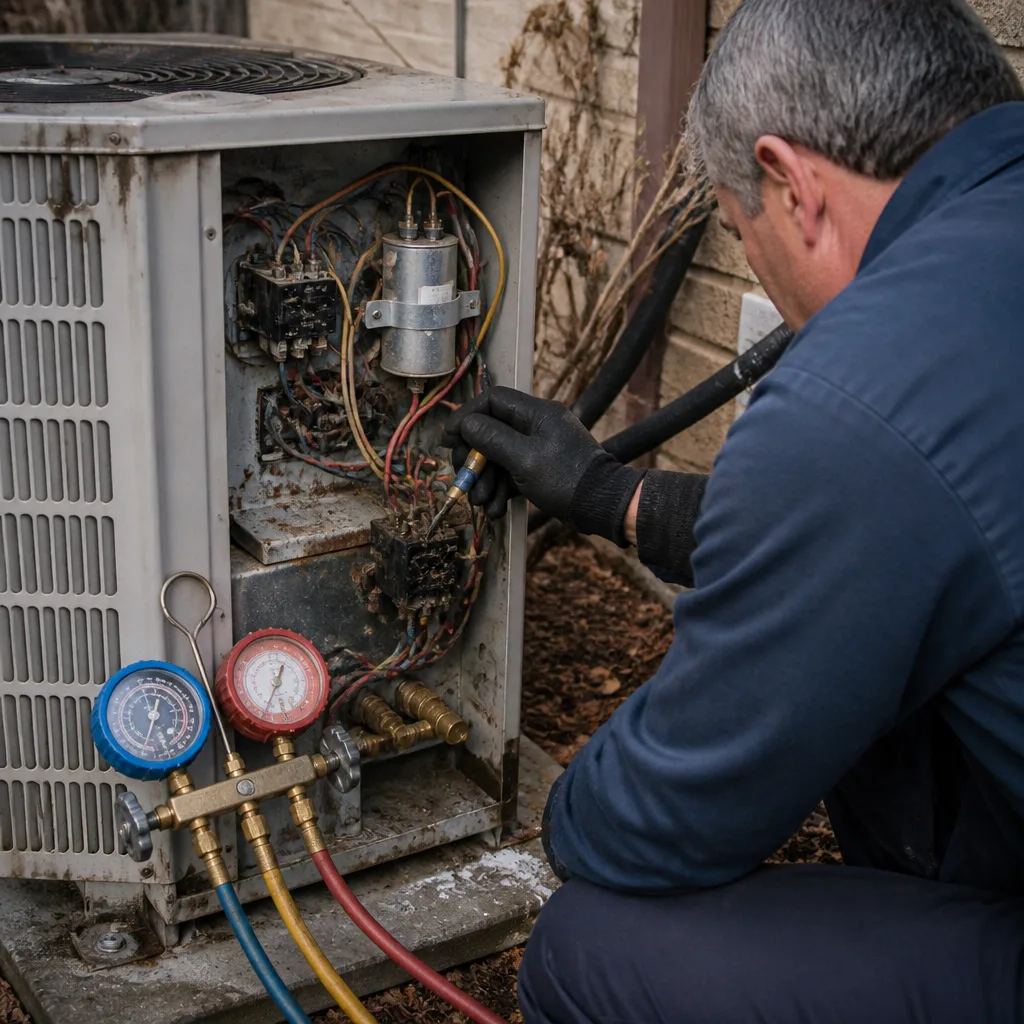 Before
 After
 Before
 After
 Before
 After
When to Call a Professional
Call a licensed technician when the work involves refrigerant, gas, electrical connections, or system controls – which covers basically any replacement or significant repair. This is about safety as much as it is about code. Refrigerant handling requires certification under federal rules and can cause serious injury if vented or mishandled. A furnace’s heat exchanger, venting, and combustion air are a carbon monoxide risk if done wrong. A condenser’s electrical disconnect carries line voltage. The residential code exists mostly because these failures are not theoretical.
Call a professional if you’re facing a replacement and you want a bid that includes the permit as a scope line. Call if you’re buying or selling a Richardson home and the permit history has gaps. Call if you’ve inherited a system from a previous owner with no paper trail. Juniper AC Repair offers free estimates in Richardson – call (855) 419-6908. Our technicians have up to 14 years of experience, and we’re qualified to work on major brands including Carrier, Trane, Lennox, Goodman, Rheem, York, Daikin, Bryant, and American Standard. We answer 24/7. Fast dispatch from 7am to 7pm.
Frequently Asked Questions
Yes, typically. A full AC replacement is a permitted installation in Richardson and requires a rough-in and final inspection. Routine part repairs generally don’t require a permit. If your contractor says the replacement doesn’t need one, ask them to name the exception in writing. Call (855) 419-6908 for a free estimate on any Richardson AC or furnace job.
Yes, a furnace replacement requires a permit and inspection, including the gas connection, venting, and combustion air verification. A repair of a single component – an ignitor, a flame sensor – generally doesn’t. When in doubt, ask the contractor to put “permit included” in the written scope. Call (855) 419-6908 and we’ll walk through the scope of your job.
The timeline varies from job to job, but the general sequence is application, plan review, permit issued, rough-in inspection, corrections if any, final inspection, and final sign-off. Like-for-like replacements usually move faster than jobs that change capacity, fuel, or duct layout. If a contractor quotes a fixed final inspection date before the permit exists, treat that as a guess.
Yes. You can search permit records through the City of Richardson by property address, and you should before you make an offer. Look for HVAC, electrical, and gas permits from the last decade and confirm each one is finaled. An open permit on an old installation is a red flag worth resolving during the inspection period, not at closing.
The work still functions, but it isn’t on record as code-compliant. If you sell, the missing permit surfaces during due diligence and complicates the deal. If you file an insurance claim involving the system, the lack of a permit can complicate coverage. And any homeowner inheriting unpermitted work has to navigate the correction process themselves. The permit is the cheapest insurance policy attached to a job.
Ask for the permit number and the name on the application, the scope of work in writing, whether the permit is a line item in the bid, and what happens if an inspection requires a correction. A contractor who’s organized will answer these in minutes. A contractor who dodges them is telling you something. Call (855) 419-6908 for a free estimate that answers all four questions up front – we answer 24/7, and dispatch runs fast from 7am to 7pm, Sunday through Friday.
The Bottom Line
An HVAC permit in Richardson is a piece of paper with your address on it, and that address is what makes it your problem to verify. The permit covers which jobs require inspections, how the process runs from application to final sign-off, and how a broken-down record surfaces during a sale or a claim. The rough-in inspection checks what will be hidden. The final inspection closes the loop. You have the right to request the paperwork, and a contractor who’s confident in the work shouldn’t hesitate to provide it. If your next job involves a furnace repair or a full replacement, the paperwork should be part of the plan, not an afterthought.
When you’re ready to get a free estimate on a Richardson HVAC job, call (855) 419-6908. We answer 24/7. Fast dispatch from 7am to 7pm, Sunday through Friday. Our technicians have up to 14 years of experience, and the estimate is free. We already know your system.
Written by the team at Juniper AC Repair.